Malvinas Soccer Fields Chileans, Faces British Troops, and Dreams Across the Atlantic
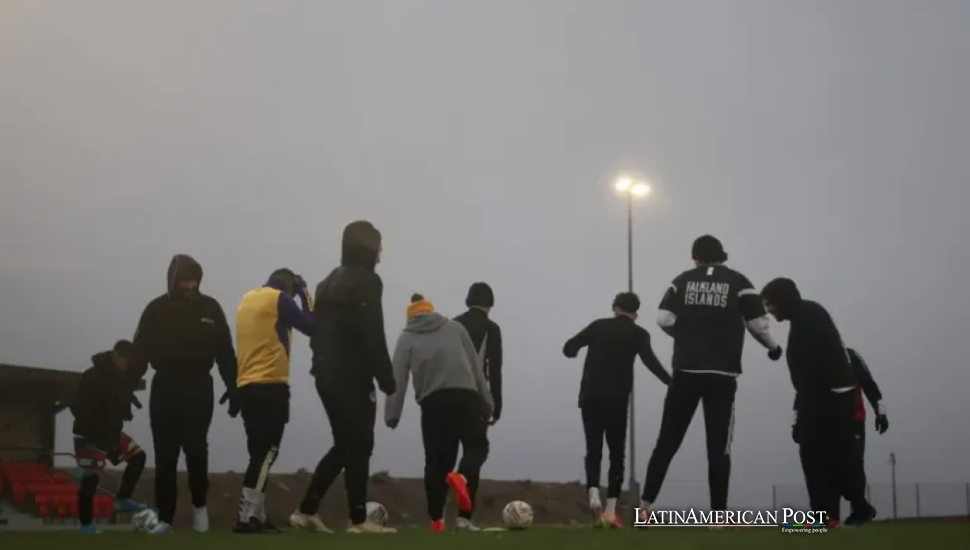
On the Malvinas Islands, a tiny amateur soccer team brings Chileans, Peruvians, Britons, and islanders together. Between military opponents, vanishing players and a 2027 journey to the Faroes, the game reveals how migration, isolation and contested belonging shape everyday life.
First, Find Eleven
Two seasons ago, the islands’ 11-a-side league ended early because players stopped showing up. Before worrying about who would lift a trophy, organizers had to find enough people willing to finish the competition.
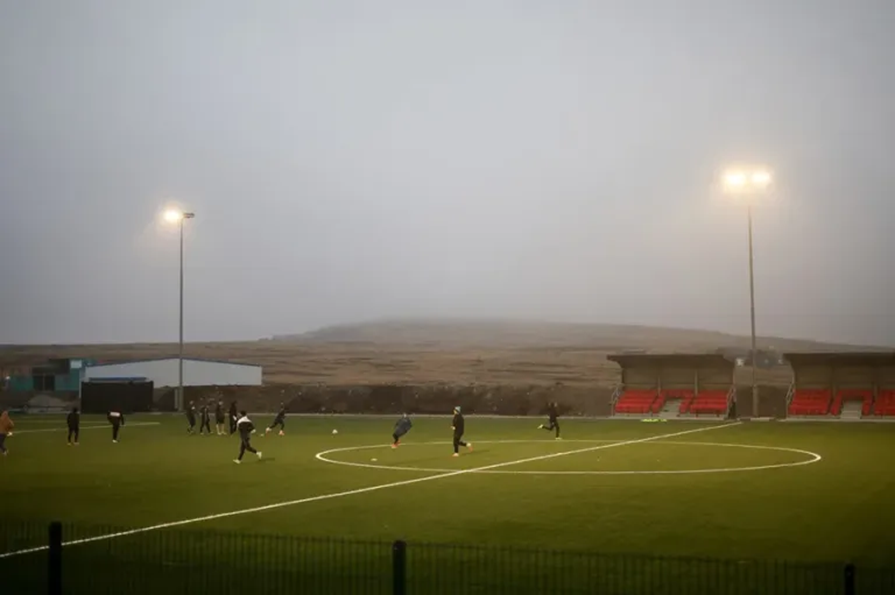
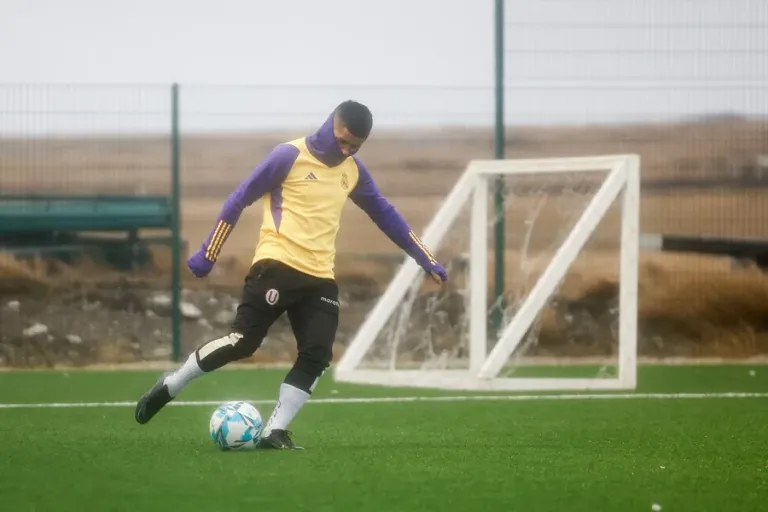
The Malvinas, also known as the Falkland Islands, have fewer than 4,000 residents and just four league teams. Wind, rain, and snow traditionally compress outdoor soccer into about six months. A recently opened synthetic field has extended play into part of winter, but better drainage cannot manufacture another midfielder.
Troyd Bowles, who coached the representative side for about seven years and now works with women’s soccer, describes a squad shaped by the people who have made homes here. Islanders play alongside English and Scottish arrivals, Chileans, people from St. Helena and Peruvians.
“The population is quite diverse,” he told EFE, mentioning “a couple of Peruvians who play very well.”
Many young islanders leave for Britain to study after secondary school. Migrants help fill the spaces they leave, on the field as in the labor market. Their presence makes this British-administered archipelago’s soccer story partly Latin American, not just British soccer transplanted south.
Bowles estimates that only about 20 players combine the age, fitness and ability needed for the representative team. On that estimate, one unavailable player removes 5% of the pool; a starting eleven uses 55%. Those numbers explain why maintaining participation matters as much as discovering talent.
With four clubs, a complete round-robin offers only six distinct pairings. Repeating them can fill a calendar, but it cannot supply unfamiliar opposition. The new field solves part of the weather problem; it does not solve the shortage of different teams.
Seven-a-side games, futsal, youth teams and developing women’s soccer broaden participation. The challenge is continuity: keeping people playing when work, departure or weather can unravel a fixture.
An Away Game Across the Atlantic
Finding opponents requires another kind of resourcefulness. The islands belong neither to FIFA nor a continental confederation. Bowles considers FIFA membership unrealistic, citing both territorial status and the tiny player pool, although he leaves open the possibility of joining CONIFA, which organizes football outside FIFA.
Territorial status alone is not a blanket explanation: the Cayman Islands, another British overseas territory, already belong to FIFA. That does not establish the Malvinas’ eligibility, but distinguishes institutional recognition from the practical problem of sustaining a team.
The principal international destination is the biennial Island Games. Opponents include Greenland, the Cayman Islands, Bermuda and St. Helena. Bowles told EFE that his side sits among the less competitive teams, but hopes improved facilities will help narrow the gap.
The next Games run July 3–9, 2027, in the Faroe Islands. For the Malvinas players, that means a journey of more than 13,000 kilometers, roughly 8,100 miles, to the North Atlantic. These are unpaid athletes already seeking donations and sponsorship from local families and businesses.
Bowles earns his living flying for the islands’ small airline. For him, distance is work. Yet the sporting arithmetic is unforgiving: a short tournament requires an intercontinental journey, and every place on the traveling squad carries costs before producing a minute of competition.
At home, the representative team’s regular outside opposition comes from British military personnel stationed in the archipelago. The force maintained after the 1982 war with Argentina also supplies something the local soccer structure lacks: another pool of players.
“If they have some good footballers, the team can be very strong,” Bowles told EFE. Personnel rotations can change an opponent’s strength. A military posting can therefore alter the standard of the next practice match.
A 2025 tour to Punta Arenas, Chile, offered a different connection. According to EFE, it brought the first meetings between an adult island team and South American clubs in almost 30 years. The contrast is striking: nearby continental opposition has been exceptional, while distant islands provide the main international calendar.
The Flag Beyond the Touchline
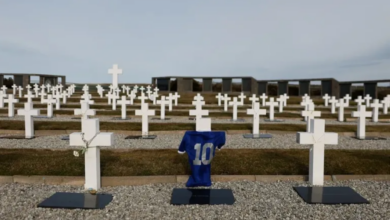
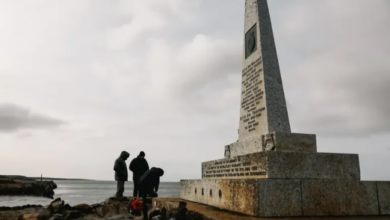
Argentina enters this story without sending a team. Britain administers the archipelago; Argentina maintains a sovereignty claim rooted in the dispute over Britain’s 1833 takeover. London emphasizes islanders’ self-determination, while Buenos Aires seeks negotiations over what it calls a colonial situation.
That disagreement acquired another soccer image after Argentina defeated England in the 2026 World Cup semifinal. Argentine players displayed a banner declaring, “Las Malvinas son argentinas,” meaning the islands are Argentine. For islanders watching in local pubs, many backing England, the celebration carried a message about their homes.
“The banner prompted a mixture of sadness and anger,” Bowles told EFE. His family has lived on the islands for generations. He described the discomfort of people elsewhere claiming the place he considers his own.
His account illuminates one response, not the views of every resident. Nor does a multinational squad resolve the sovereignty dispute. Chileans and Peruvians sharing a jersey with islanders demonstrate something narrower: everyday participation can cross boundaries that national rivalries preserve.
For now, the team’s next international ambition depends on something more practical than a slogan. Somebody must raise the fares. Enough players must remain available. And after crossing an ocean, eleven people still have to step onto the field together.
Also Read: Montevideo City Torque Crashes Sudamericana Semifinals with Cinderella Drama and Famous Relatives