Bolivian Justice Meets Evo Morales Inside a Dangerous Empty Courtroom
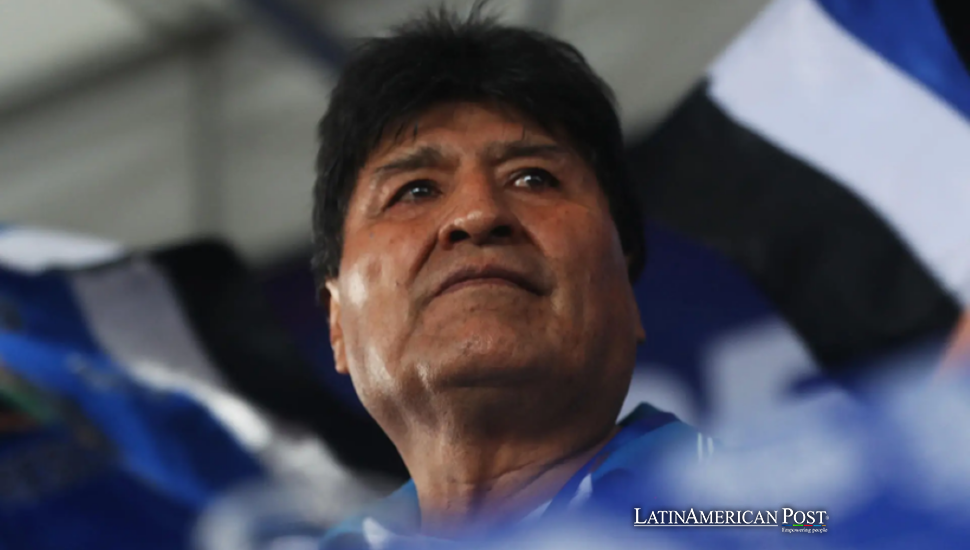
Evo Morales’s suspended trafficking trial has become Bolivia’s newest political fracture, with judges demanding his arrest, supporters guarding him in Cochabamba, and a country asking whether justice can still move when history, loyalty, and power block the road.
An Empty Chair in Tarija
The courtroom in Tarija opened at 8:30 on Monday morning, but the man at the center of the case was not there. Evo Morales, Bolivia’s former president, the coca-grower leader who ruled from 2006 to 2019 and reshaped the country’s political imagination, did not appear. His lawyers did not appear either. By the end of the hearing, the tribunal had declared him in contempt, suspended the trial, and issued orders for his arrest.
The accusation is severe. Morales is facing trial for alleged aggravated human trafficking, tied to claims that he maintained a relationship with a minor with whom he purportedly had a daughter while he was president in 2016. The trial is now frozen until he appears before the court or the police execute the warrant against him.
The decision also imposed arraigo, a travel ban intended to keep him from leaving Bolivia. Under the order from the Tarija Prosecutor’s Office, the National Directorate of Migration was instructed to apply a nationwide restriction on Juan Evo Morales Ayma as part of the criminal proceeding filed by the Attorney General’s Office.
On paper, this is a legal case. In Bolivia, it is already much more than that. Morales is not an ordinary defendant. He is one of the most consequential figures in modern Latin American politics, a man whose presidency became a symbol of Indigenous ascent, resource nationalism, and rural power entering the presidential palace. To his followers, he remains a historical correction. To his critics, he represents a leader who bent institutions to his will.
That is why the empty chair mattered so much. It did not look empty. It looked occupied by Bolivia’s unresolved past.
The Stronghold That Still Shields Him
Lesly Alemán, departmental coordinator for the Tarija Prosecutor’s Office, said the accused failed to appear before the judicial authority without justification, either personally or through a third party. As a result, prosecutors requested confirmation of the contempt declaration and the arrest warrants.
Morales’s defense rejects the court’s move. Wilfredo Chávez, one of his lawyers, told the media in La Paz that the former president had not been personally notified to attend the start of the trial, but instead through a judicial edict. In his view, that created a fundamental procedural defect. He also argued that the case had been “dusted off” while social protests were unfolding against President Rodrigo Duterte’s government, making it, in his words, a political issue.
That argument will resonate among Morales loyalists because it fits a familiar Latin American script: courts used as political tools, former leaders prosecuted at convenient moments, justice turning into another battlefield. But the opposite fear is just as strong: that political power can become a shield, that a former president can avoid the same system any ordinary citizen would be forced to face.
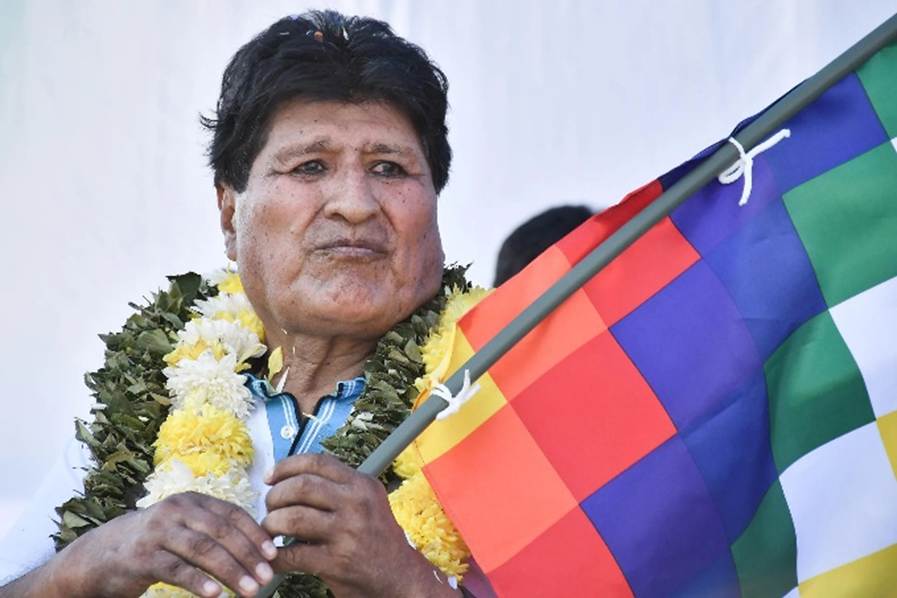
Morales has remained in the Tropics of Cochabamba since October 2024, the coca-growing region in central Bolivia that has long served as his political and union fortress. It is not simply where he is hiding. It is where his story began. Long before he became president, Morales built his national power through coca-grower unions, rural organizing, and the anger of communities historically treated as disposable by the Bolivian state.
Now that same terrain protects him. Hundreds of followers have reportedly surrounded him to prevent police from enforcing the arrest warrant. Between October and November 2024, officers were unable to enter the region because Morales’ supporters blocked roads for 24 days.
That detail cuts to the center of the crisis. Bolivia’s institutions have issued orders, but Morales’s movement controls space. The state speaks in documents. His followers answer with bodies on roads. It is an old contest in the Andes, where law, territory, and legitimacy do not always stand on the same side.
When Law Becomes a National Test
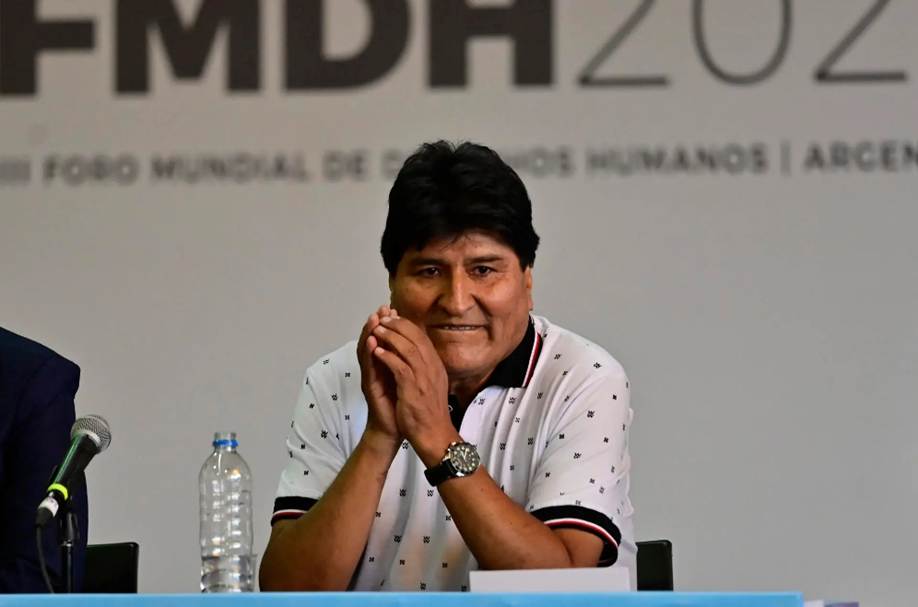
The allegations against Morales demand seriousness. They cannot be reduced to political theater or dismissed as just another fight between factions. If the case involves a minor, a former president, and possible abuse of power, Bolivia needs a rigorous, transparent, and credible process. The public deserves the truth. Any potential victim deserves protection and dignity. Morales, like any defendant, deserves due process.
That balance is hard enough in a stable country. In Bolivia, it is explosive.
During the preliminary investigation phase in early 2025, a judge had already declared Morales in contempt after he failed to appear twice at hearings meant to resolve the charges against him. At the time, he cited health problems. In October 2025, the Attorney General’s Office presented the formal accusation. The Tarija Prosecutor’s Office says it has gathered more than 170 pieces of incriminating evidence for the oral trial, including 39 witness statements.
Those figures give the prosecution weight, but they do not settle the matter. Evidence must be tested in court. Witnesses must be heard. Procedures must be clean. In a country where trust in institutions is fragile, one procedural flaw can become a political weapon. One sign of favoritism can become proof, for either side, that the system is rigged.
The greatest danger is that the case becomes swallowed by Morales himself. His political mythology is so large that it can eclipse the accusation. Supporters may see only persecution. Opponents may see only guilt. But justice cannot survive if everyone enters the courtroom having already chosen the ending.
Bolivia has lived for years in the shadow of Morales’s rise and fall. His presidency expanded recognition for Indigenous and rural communities, which had long been excluded from power. It also produced intense accusations of authoritarian drift, institutional pressure, and political overreach. His 2019 exit fractured the country. His continued influence has kept Bolivian politics from fully moving beyond him.
Now, the case in Tarija forces a harder question. Can Bolivia hold a former president accountable without turning the courts into a spectacle of revenge? Can Morales submit to institutions without treating every summons as an attack on his movement? Can the country distinguish between legitimate concerns about political use of justice and the dangerous idea that powerful leaders can choose when the law applies to them?
The suspended trial answers none of that. It only extends the standoff. Morales remains in the Tropics of Cochabamba. The warrant remains active. The court waits. The police have orders. His supporters have roads, loyalty, and memory.
In Latin America, former presidents often leave office without leaving power. They remain in parties, unions, courtrooms, protests, and family arguments. Morales is one of those figures, too large to disappear, too divisive to be handled quietly.
But this case is not only about Evo Morales. It is about whether Bolivia can still build a justice system strong enough to face power directly and careful enough not to become its mirror.
For now, the trial is suspended. The country is not.
Also Read: Mexico’s World Cup Glow Meets Mothers Searching for the Missing