Bolivia’s Cinema Archive Turns Fifty With Chaplin’s Youngest Memory Keepers
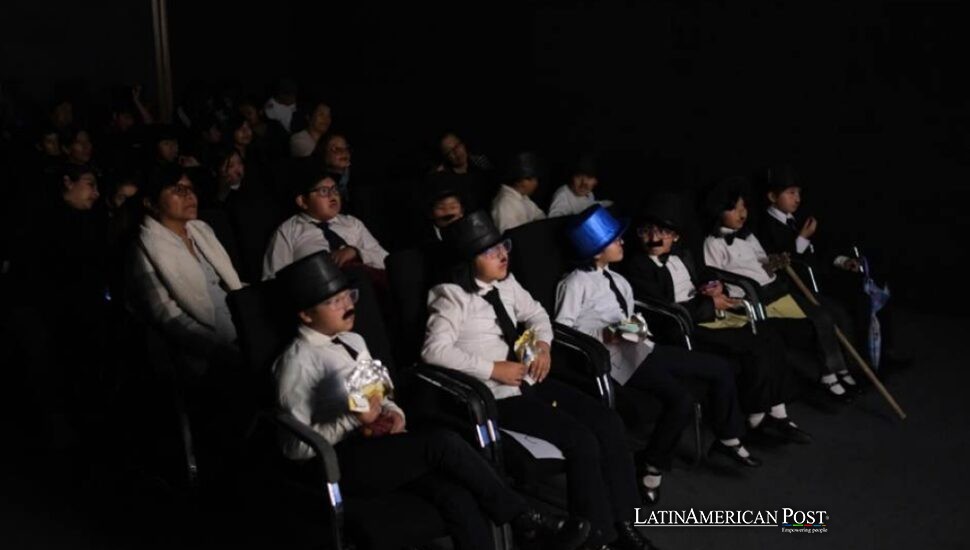
Children in bowler hats and painted mustaches filled La Paz’s Cinemateca Boliviana, celebrating fifty years of rescued reels, stubborn cultural work, and a national film memory that survived dictatorship, neglect, flammable nitrate, and the constant risk of vanishing unseen forever.
When Chaplin Walked Into La Paz Again
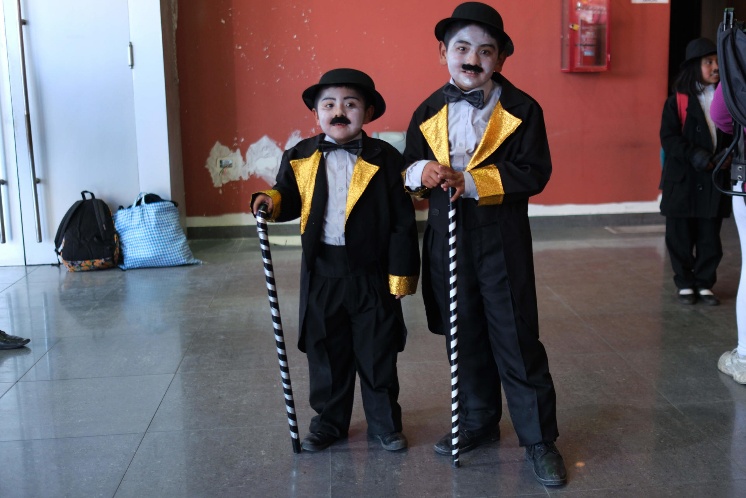
LA PAZ, Bolivia. They arrived in two-piece suits, bowler hats tilted over young foreheads, black mustaches drawn carefully above their lips. Some carried canes. Others brought umbrellas. For a morning, cinema’s most recognizable vagabond seemed to multiply across the high-altitude capital.
Dozens of children and teenagers had dressed as Charlot, Charles Chaplin’s Little Tramp, to mark the 50th anniversary of the Cinemateca Boliviana. Parents and teachers guided them into the building in groups. Before entering the screening rooms, each child received chocolate wrapped in a commemorative illustration of Bolivian cinema. Inside, a theater ensemble performed a brief tribute, followed by Chaplin shorts.
The scene was playful, but not slight. These children were celebrating an institution built because moving images disappear when nobody fights for them. The Cinemateca, Bolivia’s largest audiovisual archive, safeguards more than 85 percent of the country’s known film heritage while showing independent works commercial theaters often ignore.
Cultural journalist Mabel Franco told EFE that the event honored cinema through Chaplin while recognizing those who struggled to build the institution, including critic and filmmaker Pedro Susz, priest Renzo Cotta, cultural organizer Amalia de Gallardo, former La Paz mayor Mario Mercado, and Argentine actress Norma Merlo.
Merlo gives the costumes their deeper history. Franco recalled that the actress once dressed as Chaplin and took to the streets, first to persuade citizens and authorities that Bolivia needed a national film law, then to raise money for the Cinemateca’s permanent home. The Little Tramp was not merely a mascot. He became an activist.
It was an inspired choice. Chaplin’s character belongs nowhere and survives everywhere. He is poor, elegant, humiliated, funny, and impossible to remove from the frame. In Bolivia, where culture has often depended on people working around scarce budgets and indifferent authorities, Charlot carried a recognizable message: dignity can be battered without becoming invisible.
A Republic Preserved on Fragile Reels
The Cinemateca was founded on July 12, 1976, after years of proposals that the official Bolivian authorities had ignored. Marcos Kavlin argued for preservation in 1958, and Luis Espinal and Alfonso Gumucio revived the demand in the 1970s. De Gallardo and Mercado finally turned the idea into an institution.
At first, it had no headquarters. The Casa de la Cultura allowed weekly screenings in the Modesta Sanjinés hall and provided storage. The first archived title was “Laredo de Bolivia,” from 1958. Early screenings included “Carnaval Paceño” and footage of President Hernando Siles taking office, both from 1926.
In 1978, the Cinemateca moved into the small Cine San Calixto, owned by the Society of Jesus. Poor facilities and weak attendance threatened its finances. Donations kept it alive until its reputation drew larger audiences. The archive gained national status as Bolivia’s repository for moving images, and its permanent building opened in 2007.
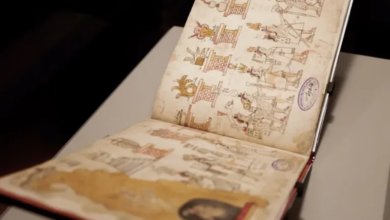
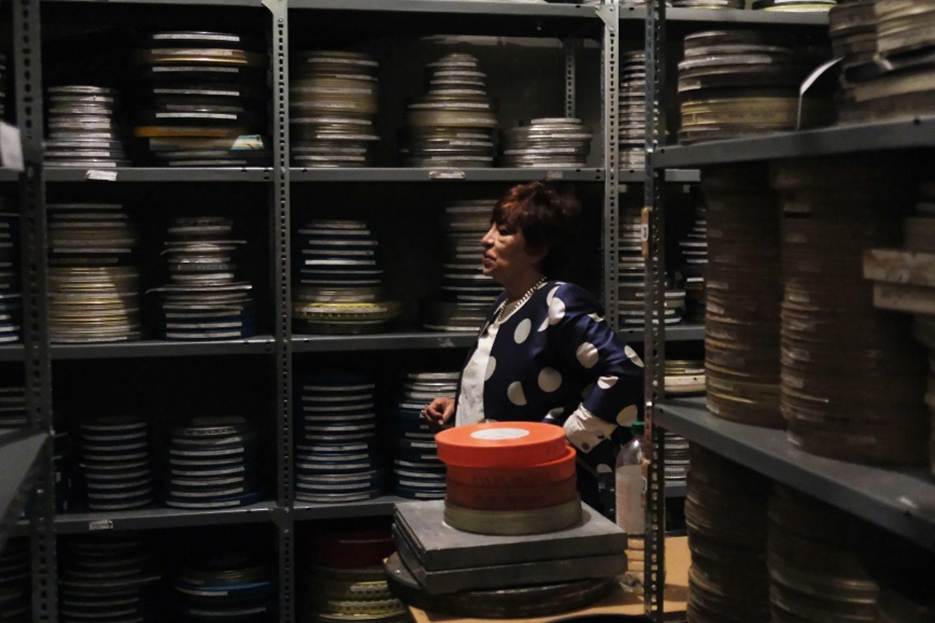
Today, under the direction of executive director and filmmaker Mela Márquez, the collection has been restructured and cataloged. Alfonso Gumucio, president of the foundation’s board, told EFE that it includes about 8,000 rolls of Bolivian films and 33,000 rolls of international cinema. Some were shot on nitrate stock, a highly flammable material requiring a special vault. Among them rests a copy of Chaplin’s “The Gold Rush.”
That detail changes the anniversary’s mood. A reel is not memory in the abstract. It is an object that shrinks, warps, burns, fades, grows mold, or turns brittle. Preservation is physical labor against chemistry and time. Bolivia has already lost much of its silent cinema and almost all the films produced by a major production center during the 1950s because they were improperly stored.
What survives is never inevitable.
“A cinematheque, or film library as it is called in Mexico and other countries, is above all a repository of a country’s film memory,” Gumucio told EFE. “And while we can rescue that film memory, we are rescuing our identity, our memory, our history, and that is fundamental.”
His words matter in a country whose political life has repeatedly rewritten the past. Film can preserve what official speeches omit: how people occupied a plaza, how miners looked after a shift, how Indigenous communities appeared through another generation’s camera, how La Paz moved before highways altered it, and how ordinary Bolivians dressed, danced, prayed, protested, and watched.
An audiovisual archive is not only a cultural warehouse. It is evidence. It lets later generations compare the nation they inherited with the nation they were told existed.
The Cinemateca also preserves books, journals, press clippings, posters, photographs, slides, and catalogs that explain how films were made, distributed, reviewed, and remembered. Without that context, a reel may survive while much of its meaning disappears.
There is risk in the archive’s success. When one institution holds most of a nation’s film heritage, its strength becomes a national vulnerability. A failed climate-control system, a funding crisis, a fire, or delayed digitization can endanger not just one collection but the visual memory of an entire country. Fifty years is not a finish line. It is an argument for sustained public responsibility.
The Archive Lives Only When Audiences Enter
The Cinemateca has never treated preservation as burial. It projects films, forms audiences, supports research, and provides a meeting place for filmmakers, students, critics, and viewers. It has carried screenings beyond La Paz and introduced Bolivians to works that market logic would otherwise keep off local screens.
That mission is politically important. Commercial distribution teaches audiences to recognize what sells quickly. A cinematheque teaches them to look longer, placing a restored Bolivian short beside an international classic or a forgotten regional work beside the official national canon. It expands who appears on screen and whose life counts as cinematic.
The anniversary program continues through year’s end with exhibitions, talks, retrospectives, tributes, a symphonic concert, and a major presence at the La Paz International Book Fair. The range reflects what the institution has become: archive, theater, classroom, research center, gathering place, and public conscience.
The children embodied that living function better than any formal ceremony. Some may become filmmakers, historians, technicians, or simply adults who understand that an old movie is not disposable because it is scratched, silent, or difficult.
Even the chocolate wrapper carried the lesson. Cinema can enter memory through taste, costume, laughter, and imitation before it is understood as heritage. A child who giggles at Chaplin’s walk may later recognize why a nitrate vault matters.
Fifty years after the Cinemateca began with borrowed rooms and weekly screenings, Bolivia’s film memory has a home. But a home is not the same as safety. Reels deteriorate. Technology changes. Public attention wanders. Cultural institutions remain exposed when budgets tighten, and governments treat preservation as a luxury.
The Little Tramp offers one final image. He walks away at the end of the scene, small against the road, but still moving. The children of La Paz borrowed that walk for an anniversary. Behind them, thousands of Bolivian images waited in the dark, preserved not to remain hidden, but to be seen again.
A country that cannot watch its past is easier to deceive about it. The Cinemateca Boliviana has spent half a century making that deception harder.
Also Read: Latin Families Paint Against Arizona Deportation Fear Brushstroke by Brushstroke