In Brazil, Mototaxis Climb Where Rio Transit Cannot Reach Rocinha
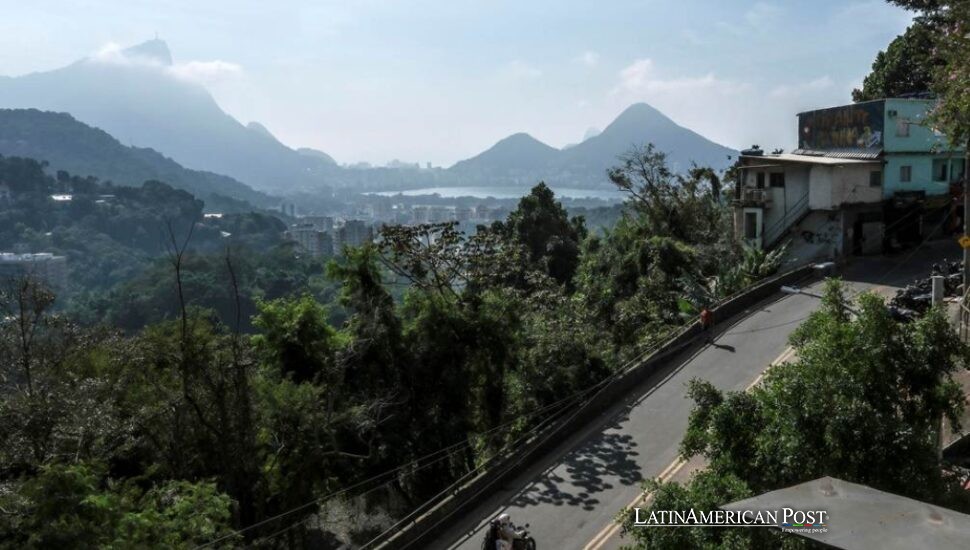
In Rocinha, motorcycles carry workers, groceries, furniture, schoolchildren, and tourists through streets formal transit cannot master. The roaring mototaxi economy reveals how Brazil’s largest favela built mobility from below, turning geographic exclusion into labor, speed and neighborhood survival each day.
The City Runs on Two Wheels
Morning in Rocinha begins with engines catching in the hills.
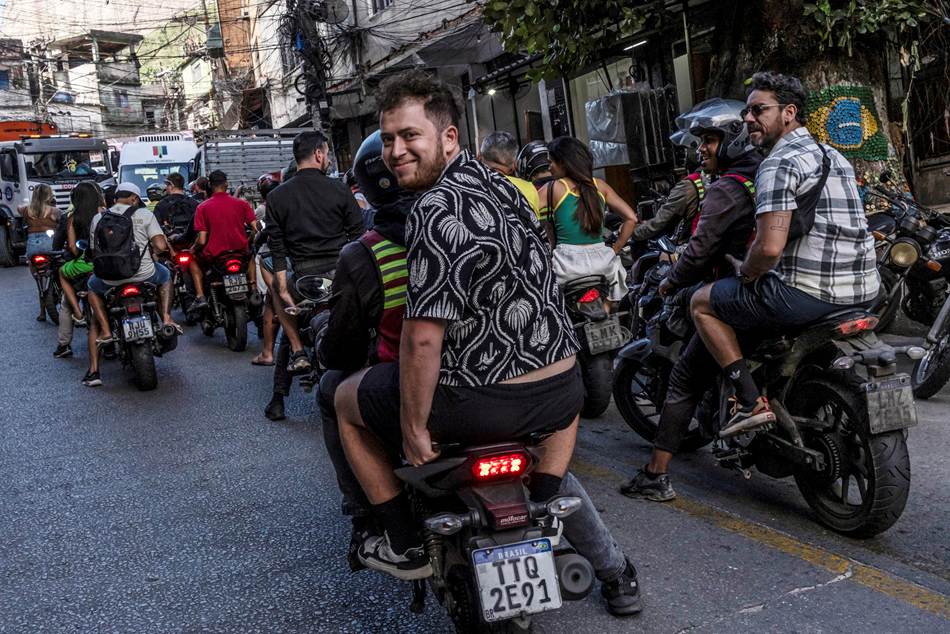
Motorcycles rise through alleys barely wider than their handlebars, squeeze beside delivery vans, edge around garbage trucks and school buses, then climb again. Some carry workers toward the metro station below. Others carry supermarket bags, refrigerators, pets, children in school uniforms or tourists headed for panoramic views of Rio de Janeiro.
In Brazil’s largest favela, the motorcycle is not merely a vehicle. It is the joint connecting a dense, vertical city to the formal metropolis around it.
Rocinha sits between Rio’s mountains and sea, but even its population is contested. The census counts 72,021 residents. Community leaders estimate closer to 160,000, more people than live in roughly two-thirds of the municipalities in Rio de Janeiro state. That gap shows how differently a neighborhood can exist in official records and in daily experience.
According to the residents’ association, about 5,000 motorcycles circulate through Rocinha. Roughly 2,000 work as mototaxis, and each driver carries an average of 60 passengers daily. That suggests approximately 120,000 passenger rides every day, a remarkable volume for a system built through small engines, individual livelihoods and improvised pickup points.
Even using the higher population estimate, those rides amount to roughly three trips per four residents. Using the census count, they exceed one and a half rides per person. Either way, Rocinha depends on motorcycles on a scale approaching that of public infrastructure.
A Five-Real Economy
A local passenger pays 5 reais, about one dollar, for a ride. Tourists pay twice as much. The difference reflects two economies sharing the same hillside: one built around necessity and another around the view.
At the local fare, 120,000 daily rides would generate about 600,000 reais in gross revenue before fuel, repairs and other costs. Demand varies, and some passengers pay the tourist price, but the estimate reveals the weight hidden inside what outsiders may dismiss as informal transportation. Mototaxis circulate money, save hours and make other businesses possible.
Repair shops, washing services and specialized dealerships line routes already crowded with buses, cars and utility vehicles. Every breakdown creates work. Every delivery completed by motorcycle expands the reach of a restaurant, shop or home business.
Alison Silva Oliveira knows that chain intimately. A Rocinha resident for 21 years, he left his job as a waiter and opened a small business selling fruit salads. The motorcycle made it viable.
“There was a need for home delivery among residents, and I decided to take advantage of that opportunity,” Oliveira told EFE. “Every day I travel throughout the entire community making deliveries. Rocinha is a very large and prosperous place, and everything worked out.”
His route corrects the usual portrait of the favela as a zone defined only by deprivation. Rocinha is also a large consumer market, dense with demand and exchange. Prosperity there may look like a cooler of fruit salads strapped to a motorcycle and delivered up a slope too steep for a van.
Many motorcycle workers are migrants, or children of migrants, whose families arrived from Brazil’s poorer north and northeast. Their labor carries a longer national history: people moving toward Rio for opportunity, then building services where urban planning did not fully follow them.
This ingenuity should not be romanticized. Low fares require volume, while drivers absorb fuel, maintenance, and long hours. Their workplace is a narrow maze shared with heavy vehicles and pedestrians. Rocinha’s motorcycles solve a mobility problem while exposing why it exists.
The Last Mile Goes Straight Up
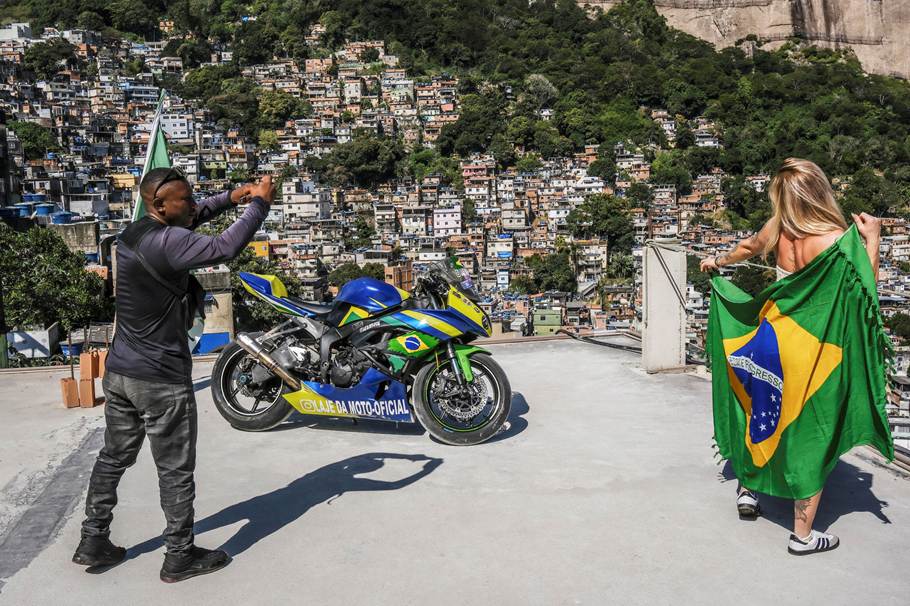
About 500 meters of elevation separate Rocinha’s lower section, where the metro station sits, from its upper reaches. Cars and buses cannot enter many alleys or stairways. A trip that looks short on a map becomes punishing when measured in incline, heat and groceries carried by hand.
The mototaxi collapses that distance. It gets children to school, helps families move household belongings, carries purchases home and connects workers with the wider city. Where transportation cost and travel time determine whether a job is worth taking, mobility becomes economic policy at street level.
Tourists see the same motorcycles differently. For them, the ride can be an experience on the way to a lookout above Rio. For residents, it is the machinery of ordinary life. Charging visitors 10 reais allows a local service to capture some value from tourism rather than merely serving as scenery.
Rocinha’s motorcycles reveal a central contradiction of Latin American cities. Informal neighborhoods are often described as disconnected, yet they are intensely connected by systems residents create themselves. Formal infrastructure may stop at the hill’s base, but commerce, school and family life continue upward.
The danger is treating that achievement as proof that no larger investment is needed. Community ingenuity cannot become an excuse for permanent public neglect. Rocinha’s riders have built an answer to the mountain, but they should not carry the entire burden of urban planning on two wheels.
Still, another motorcycle climbs every few seconds. Groceries. A passenger late for work. A child headed home. The engines keep the hillside synchronized with the city below.
Without them, Rocinha would stop. The numbers suggest its residents are right.
Also Read: Colombian Star Karol G Makes Feeling a Global Power Move