Brazil Waves Its Flags While a Supreme Court Feud Steals the Parade
Brazil’s Independence Day became a contest over sovereignty as Lula celebrated national autonomy and Flávio Bolsonaro targeted a Supreme Court engulfed in scandal. Beneath the flags, an unresolved banking investigation exposed the fragile boundary between judicial authority and political loyalty.
One Holiday, Two Claims
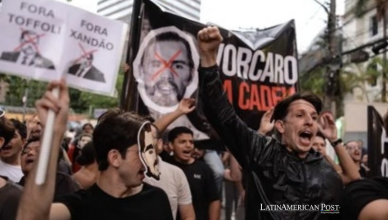
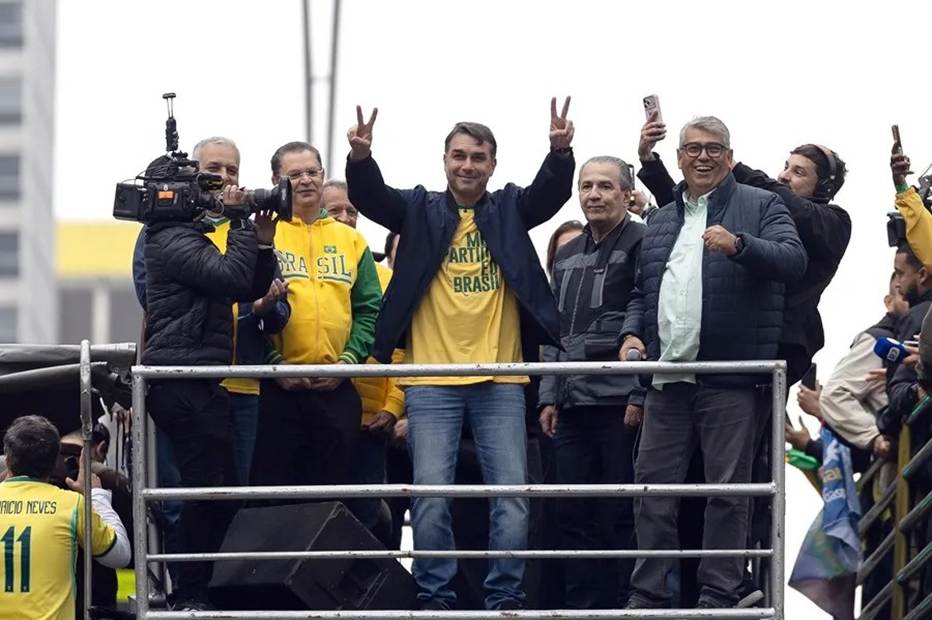
The temperature barely cleared 50 degrees Fahrenheit on São Paulo’s Avenida Paulista. Thousands came anyway, carrying Brazilian, American and Israeli flags. EFE reporters spotted an inflatable Donald Trump holding a Lula figure dressed as a prisoner. The national anthem and a prayer opened the gathering. Then came the demands for Lula and Alexandre de Moraes to leave office.
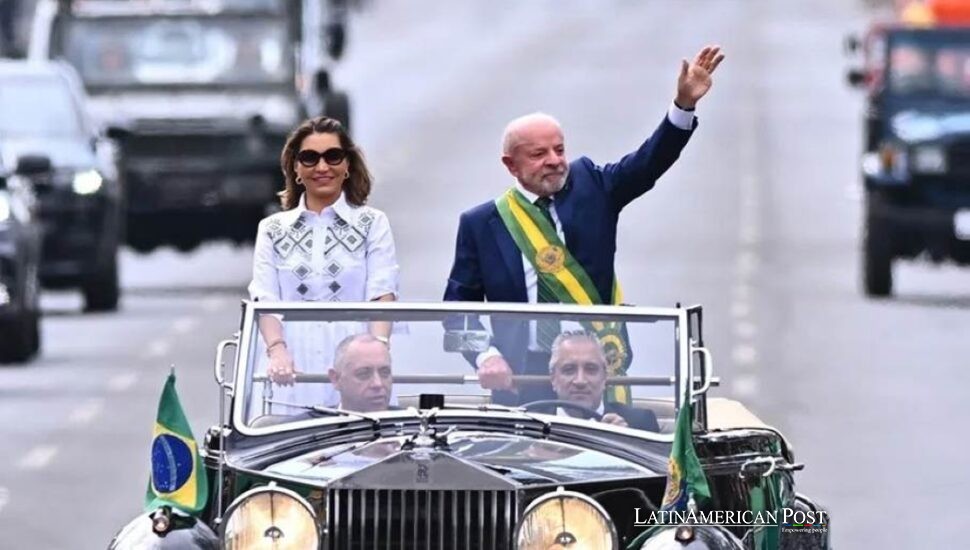
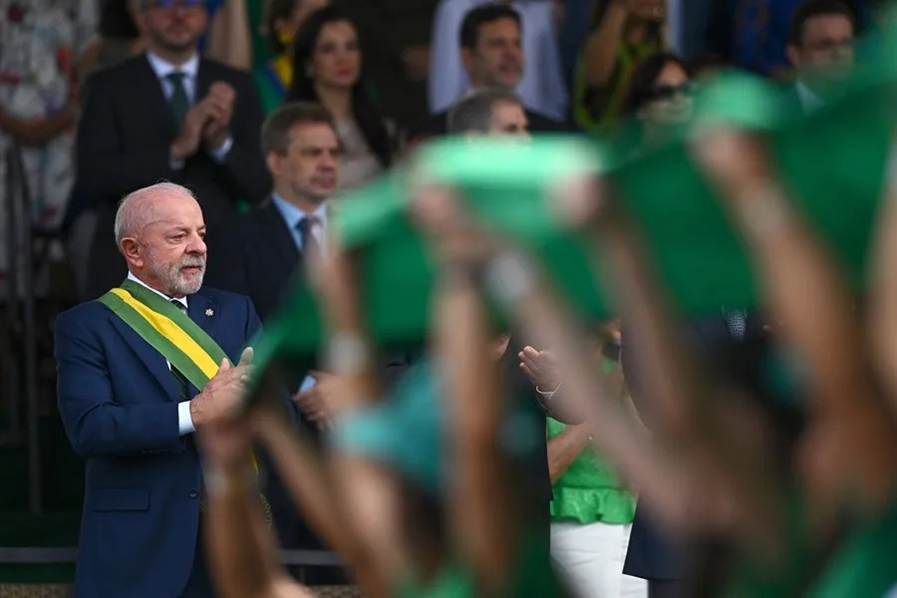
In Brasília, President Luiz Inácio Lula da Silva wore his presidential sash beside his wife, Rosângela Lula da Silva, and Vice President Geraldo Alckmin, his running mate. Congressional and judicial leaders joined them. On September 7, 2026, Brazil marked 204 years of independence from Portugal with two competing political presentations: institutional continuity in the capital, confrontation on Paulista.
Lula’s parade emphasized national sovereignty, opposition to violence against women, and the Women’s World Cup Brazil will host in 2027. That combination placed everyday safety and women’s place in national life beside the military ceremony. It also advertised government priorities with the October 4 election just 27 days away.
“Our decisions belong to us and nobody else,” Lula said in his televised address the previous evening, according to EFE. He rejected foreign interference in Brazil’s trading relationships amid tensions with Trump’s administration and Argentina’s Javier Milei.
The economic figure behind that argument requires care. EFE reports U.S. tariffs reaching 37.5 percent on selected Brazilian products. At that rate, $100 in taxable import value generates $37.50 in duties. But this is a maximum, not an average across Brazilian exports. Without affected trade volumes, the figure cannot establish the overall economic burden. Nor does the tariff alone show how costs are divided between exporters, importers and customers.
A Banker Between Branches
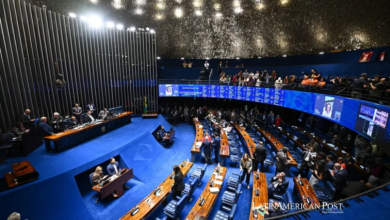
Inside the Supreme Court, sovereignty had become a question of institutional independence from private influence. Daniel Vorcaro, the jailed former owner of Banco Master, stands at the center of the investigation amid allegations of multimillion-dollar fraud. According to police findings reported by EFE, he exchanged messages with Justice Alexandre de Moraes seeking protection from investigators and asking, shortly before his arrest, whether he should leave Brazil. The case concerns access as much as money: a financier’s apparent ability to place urgent requests before a sitting justice.
Police also say Moraes edited a lucrative services contract between Banco Master and his wife’s law firm, Viviane Barci de Moraes. These are investigative findings and allegations, not a judicial determination that Moraes committed corruption. A request for protection is not, by itself, proof that protection was delivered. (EFE Noticias)
The institutional complication is that the investigation runs through Moraes’s own court. Justice André Mendonça oversees the case; Moraes has requested an investigation into Mendonça for alleged abuses and irregularities. Jair Bolsonaro nominated Mendonça. That appointment explains part of the political backdrop, but does not establish whether either justice’s allegations are valid.
Chief Justice Luiz Edson Fachin, standing near Lula at the parade, has promised a thorough inquiry. Lula separately said public office must not serve personal enrichment under democracy’s name, EFE reported. The distinction matters: investigating possible misconduct by a judge and evaluating the legal merits of that judge’s earlier decisions are different tasks.
Moraes led proceedings that resulted in Jair Bolsonaro’s imprisonment over a coup plot. His son’s campaign now places that judicial history alongside the banking allegations. Yet the reports describe no finding that the Vorcaro matter invalidates the former president’s conviction.
Crowds Are Not Ballots
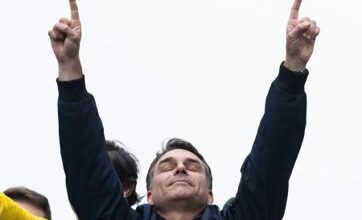
“Whoever votes for Lula is voting for Alexandre de Moraes,” Flávio Bolsonaro told the Paulista crowd, according to EFE. The Liberal Party candidate promised to pursue the justice’s removal through Congress if elected. Running mate Alfredo Gaspar called Lula and Moraes “the two enemies of Brazil,” while evangelical pastor Silas Malafaia called on Fachin to sideline Moraes.
Malafaia was speaking as someone directly affected by the court’s decisions. Moraes has prohibited him from leaving Brazil during an ongoing investigation, EFE reported. His intervention brought that legal confrontation onto the campaign platform.
The senator’s formula collapses distinct offices into one political target. It is a campaign argument, not evidence that Lula participated in the conduct under investigation. EFE also reports that Flávio’s own proximity to Vorcaro has drawn scrutiny. Association alone proves neither candidate’s guilt; the same evidentiary limit applies across the political divide.
The polling descriptions offer less certainty than the speeches. EFE’s initial dispatches described a narrow Lula advantage and some hypothetical runoff surveys showing a statistical tie. Those reports provide no sample sizes, fieldwork dates, or margins of error. The summaries cannot demonstrate that the court scandal has shifted voting intentions, much less measure the size of any shift.
Nor can thousands on Paulista settle that question. A rally records mobilization among people who choose to attend, not a representative sample of the electorate. Its flags and chants reveal a campaign’s language more reliably than its national reach.
Brazil’s holiday thus left two unresolved questions beneath the ceremony: who can credibly speak for national independence, and how independently the state can investigate powerful people within it. The parade displayed institutional unity. The banking case will test what that image means.
Also Read: Colombian Wounaan Families Fled Guerrillas, Then an Earthquake Took Their Children’s Only School