Peru Sends Soldiers to Prison Gates While the Real Crisis Lives Inside
Peru’s security crackdown puts soldiers outside overcrowded prisons. Still, President Keiko Fujimori faces a harder test inside: dismantling criminal command networks without deepening the deprivation that already makes food, work and a place to sleep instruments of power behind bars.
Soldiers at the Threshold
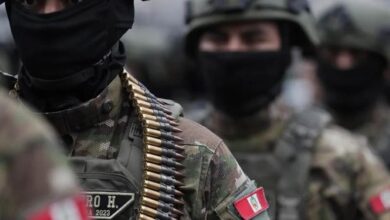
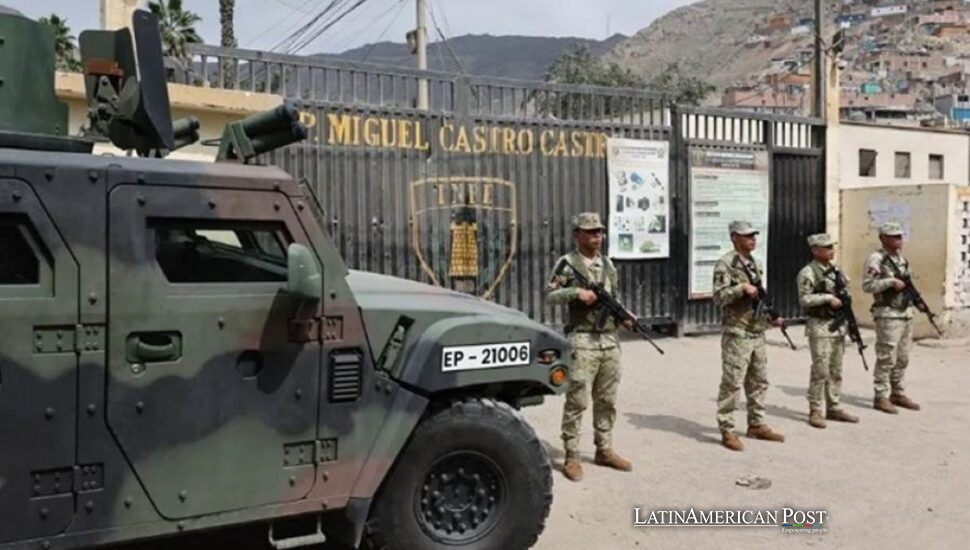
At Miguel Castro Castro prison in Lima, soldiers remained at their posts Monday, September 7, after arriving the previous day. EFE witnessed the deployment, part of President Keiko Fujimori’s opening move against prisons accused of functioning as criminal headquarters. Outside the walls, the message was unmistakable. What would change inside was less certain.
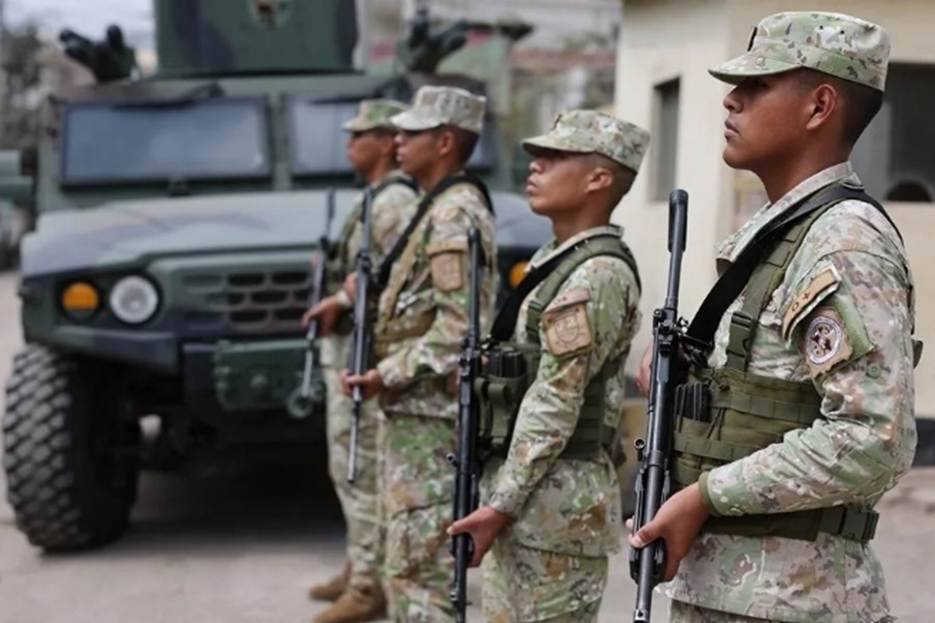
The 60-day emergency declared September 5, 2026, covers five prisons. Military personnel had deployed around three by Monday: Castro Castro, Ancón I and Trujillo. Cochamarca, in Pasco, and Challapalca, in Tacna, complete the emergency area. The military’s role is perimeter support for police, not evidence that the government has already dismantled criminal command inside.
The threat is not abstract. Authorities say imprisoned gang leaders continue demanding extortion payments from businesses under threat of death. Trujillo is an epicenter of crime linked to illegal mining. There, EFE reported that a mining businessman’s kidnapping and the killing of his four companions preceded the capture of Los Pulpos leader Johnsson Cruz Torres.
Challapalca offers a different warning. Set at 4,600 meters, roughly 15,100 feet, above sea level in the southern highlands, it already subjects dangerous prisoners to some of Peru’s harshest conditions. Its inclusion in the emergency should unsettle any easy equation between making confinement more punishing and making criminal organizations less powerful.
Yet the state’s vulnerabilities are embarrassingly basic. Inspections conducted August 22 through 26 at prisons, including Ancón, found missing or broken scanners, according to the prison authority’s account reported by EFE. Surveillance systems were deficient. Watchtower equipment and lighting also needed attention. A soldier can guard an entrance; his presence does not repair the machinery meant to inspect what enters.

The Arithmetic of Abandonment
EFE puts Peru’s prison population above 100,000 across 69 facilities designed for roughly 40,000. Using those rounded totals, occupancy runs at about 250 percent of capacity, or 150 percent above capacity. Roughly 60,000 people occupy space the system was never designed to provide. This is not a handful of dangerous cellblocks becoming difficult to manage. It is a national structure operating far beyond its design.
Those totals do not establish how many inmates direct criminal organizations. Nor do they prove that overcrowding alone causes extortion. They do show why capturing more suspects cannot, by itself, constitute a prison strategy. Without additional capacity or reduced pressure elsewhere, every new admission deepens the same institutional deficit. The emergency covers only about 7 percent of Peru’s prisons. Targeting gang strongholds may be justified; it should not be mistaken for a national rebuilding plan.
Lurigancho, a separate Lima prison not among the five emergency prisons, offers a historical close-up. Photographer Aníbal Martel’s June 2025 photo essay in Harvard’s ReVista cites 9,735 inmates against a capacity of 3,204 in August 2024. That is approximately three people for every intended place, with 6,531 prisoners beyond capacity. These are older figures, not a current census, but they reveal the scale of the accumulated failure.
Martel describes prisoners paying for sleeping space and poorer men laying foam mattresses in corridors at night. Inmates build rooms with materials they purchase themselves. Survival depends partly on provisions and money arriving from outside. What looks like overcrowding in a statistical report becomes a market in necessities inside the walls.
The implication is uncomfortable: when the state cannot reliably provide ordinary living conditions, whoever controls access to them acquires leverage. A perimeter operation may obstruct a criminal network. It cannot automatically dismantle that network’s economic foundations.
Work Is Already a Sentence
Fujimori’s campaign proposal to make prisoners work and condition food on that work lands in this existing economy. As EFE reports, her administration is seeking authority from Congress to legislate for 120 days on matters including security. Army General César Astudillo leads the Interior Ministry; Air Force Colonel Abraham Lescano heads the national prison authority.
The appointments advertise a preference for military command. But Lurigancho complicates the assumption that labor must be introduced into an idle institution. Martel describes inmates earning their survival through construction and commerce, with the poorest taking menial jobs. Work already sustains parts of the prison that official provision does not reach.
The question is therefore not simply whether prisoners should work. It is who supplies the jobs, who controls access, and what happens to someone too ill to perform them. Making food contingent on output, without answering those questions, risks giving another bargaining tool to whoever already controls the scarce opportunities.
Martel’s account includes a prisoner identified as J.G.L., repeatedly hospitalized after addiction left him unable to eat adequately. With a year left to serve, the man asked whether a photograph might help secure a pardon. The photographer doubted it could. That encounter exposes the human difference between enforcing a sentence and treating physical collapse as insufficient discipline.
For the shopkeeper threatened with death, none of this diminishes the urgency of stopping extortion. It makes the test more demanding. Success must mean fewer threats reaching businesses, functioning inspections and less dependence on prison power brokers, not merely more uniforms outside. Peru needs the state to remain effective after the soldiers leave.
Also Read: Colombia Judge Temporarily Bars Airstrikes When Intelligence Shows Children May Be Present