Colombia Judge Temporarily Bars Airstrikes When Intelligence Shows Children May Be Present
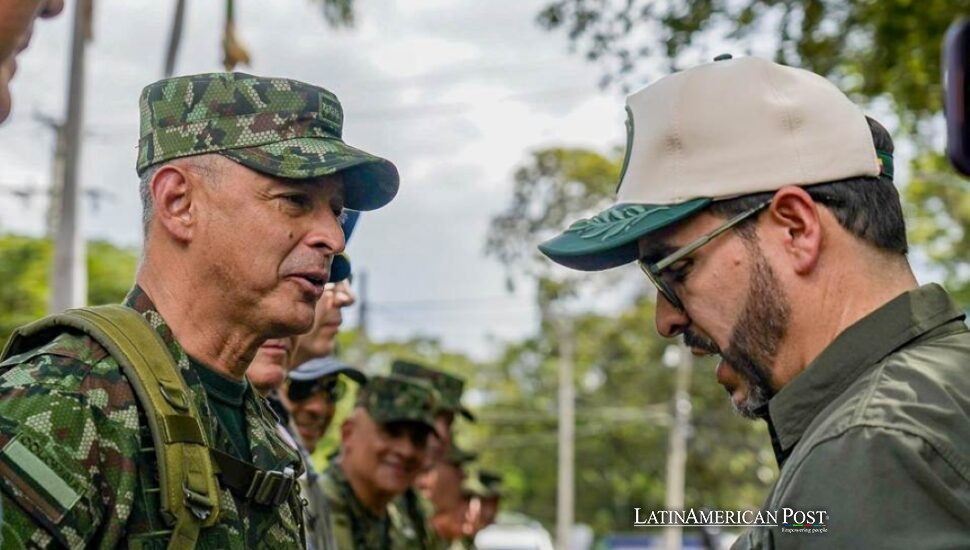
Colombia’s renewed air war against armed groups has exposed an old national wound: children recruited into violence can become battlefield participants without ceasing to be victims. A Bogotá judge has now forced the government to confront that uncomfortable distinction directly.
When a Fifteen-Year-Old Becomes a Target
The numbers from the forest arrived first as a military result: ten people killed in an airstrike against a FARC dissident camp in rural Guaviare.
Then came the ages.
Two of the dead were 15. Another was 16.
Suddenly, the language of targets, camps and operations became harder to keep antiseptic.
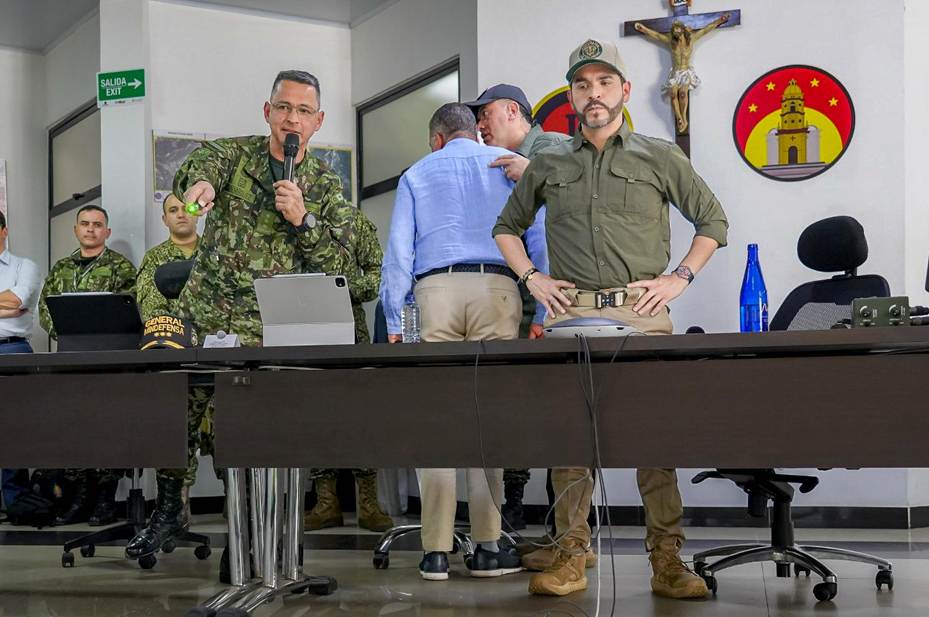
The August 27 strike near El Retorno was part of President Abelardo de la Espriella’s newly intensified campaign against illegal armed groups. His government defended the operation as lawful, arguing that the teenagers belonged to the armed organization and therefore constituted legitimate targets.
That answer may satisfy one interpretation of battlefield necessity. It should not satisfy Colombia.
A Bogotá family court has now ordered the presidency and armed forces to suspend offensive aerial attacks whenever reliable information indicates minors may be present, at least until precautionary measures have been taken and the court reaches a final decision.
Judge Viviana Arciniegas did not impose a permanent prohibition on bombing armed groups. Her provisional order requires something more demanding: judgment.
Operations may proceed only when available intelligence and operational protocols establish that no less harmful alternative can achieve the legitimate military objective.
That distinction matters because Colombia’s war has always produced categories that become dangerously convenient. Guerrilla. Collaborator. Combatant. Criminal.
And, increasingly, recruited child.
The case before the court was filed on behalf of children and adolescents recruited or used by armed organizations who may be inside camps targeted by government forces.
The question underneath the legal language is brutal.
What exactly becomes of a child when an armed group puts a rifle in his hands?
Recruitment Does Not Erase Childhood
Colombia knows more about child recruitment than it should.
According to the Ombudsman’s Office, authorities learned of 1,173 cases involving recruited children and adolescents between 2024 and July 31, 2026. Human Rights Watch estimates roughly 1,500 children have been recruited by armed groups since 2021.
Those are not marginal figures.
Defense Ministry data cited in the notes show that between 2016 and October 2025, the average age of recruitment was 15 for both boys and girls. More than 30 percent of reported cases involved children between 10 and 14. Child protection officials told Human Rights Watch they were encountering increasingly young recruits, including children as young as nine or ten.
This is where the government’s description of minors as “legitimate targets” becomes morally inadequate even when military law permits force under particular circumstances.
A 15-year-old carrying a weapon can unquestionably pose a danger. Soldiers facing that teenager cannot pretend otherwise.
But the state must also remember how the teenager arrived there.
Armed organizations operating in Guaviare, Cauca, Catatumbo and other contested regions do not recruit from an equal marketplace of political choices. They operate in territories where state authority is weak, schools are distant, jobs scarce and armed men possess extraordinary power over families.
Recruitment can involve coercion, threats, manipulation, economic desperation or the simple reality that an armed organization is the strongest institution a child encounters.
Calling such children only combatants risks completing the work of their recruiters.
The armed group first steals the child’s civilian life. The state then risks erasing the child’s victimhood.
That is precisely why the judicial intervention matters.
It does not require Colombia to abandon military force. It requires the government to recognize that protecting children and fighting the organizations that recruit them cannot become contradictory policies.
Otherwise, armed groups gain a grotesque strategic advantage. They recruit minors, incorporate them into camps, and leave the government facing an unbearable choice between allowing commanders to operate behind children or attacking positions where those children may die.
There is no simple answer.
But there should be a serious one.

A Hard Line Cannot Become a Blind One
De la Espriella entered office promising a tougher state.
Only weeks into his presidency, his administration ended negotiations with three illegal armed groups, including the Estado Mayor de Bloques y Frentes led by Alexander Díaz Mendoza, known as Calarcá, citing an absence of genuine commitment to peace.
There is political logic behind the shift.
Colombians have watched armed organizations expand, fragment, negotiate, rearm and fight one another across regions that were promised peace after the 2016 agreement with the FARC. In January alone, fighting between dissident factions in Guaviare left 26 people dead.
Patience with endless negotiation has limits.
Yet toughness is not measured by how easily a government authorizes force. A capable state is distinguished by how precisely it uses it.
That is especially true in Colombia because the country has already lived through decades in which military necessity was invoked to justify actions whose human consequences emerged only afterward.
The new government should understand the danger of repeating that history through technological distance. Aircraft can destroy a camp without soldiers standing close enough to see who is sleeping inside it. Intelligence turns people into coordinates. Coordinates make decisions cleaner.
The bodies remain human.
Another minor had already died in an August 10 bombing in Catatumbo before the three teenagers were identified in Guaviare. Four young lives in less than three weeks should be enough to force a reassessment even before a judge orders one.
The deeper scandal is that Colombia continues producing circumstances in which children can plausibly appear on military target lists.
That responsibility begins with the armed groups that recruit them. They deserve no euphemism. Recruiting children for war is an abuse that transforms vulnerability into military manpower.
But the state carries a different obligation.
It must remain more serious than those it fights.
That means intelligence strong enough to identify children before bombs fall. It means prevention in villages where recruitment begins. It means schools, protection networks and economic alternatives in places where the state too often arrives after the guerrilla commander, the trafficker or the recruiter.
And when uncertainty remains, it means accepting that restraint can sometimes be a demonstration of strength rather than weakness.
The Bogotá court has not settled Colombia’s air-war debate. Its order is provisional, and a final judgment remains ahead.
But it has already forced the right question.
Not whether armed groups exploit children. They plainly do.
Not whether Colombia has a right to defend itself. It plainly does.
The question is whether a democratic state can fight those groups without allowing the categories created by war to obscure the childhood of the people trapped inside them.
Two of the dead in Guaviare were 15.
The other was 16.
Before Colombia calls that a successful operation, it should be serious enough to sit with those numbers.
Also Read: Great Britain Digs In as Milei Turns Malvinas Oil Into Leverage Again