Colombian Mercenaries Carry Colombia’s Old Wars into Sudan’s Stolen Childhoods
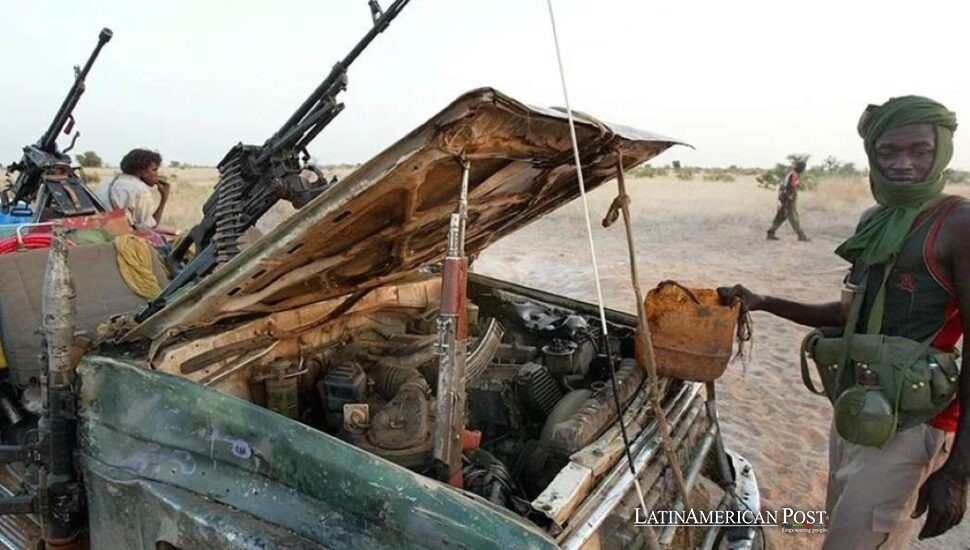
In Sudan’s brutal war, Colombian mercenaries allegedly trained abducted boys to operate artillery and anti-aircraft guns, exposing how Latin America’s veteran economy now feeds distant conflicts while children inherit the violence, shame, and trauma that professional soldiers can leave behind.
The Boys Left Beside the Guns
The warplane came low enough for fear to become physical. A teenage boy, his hands and legs chained to an anti-aircraft gun mounted on a pickup, watched the adults run for cover. Another child was fastened to the steering wheel. Both were ordered to remain outside and fire.
The boy, now 17, said the men who taught fighters to use the weapon were Colombian mercenaries working with Sudan’s Rapid Support Forces, or RSF. When the planes appeared, he recalled, the foreigners withdrew into bunkers while the children remained exposed.
“I was extremely scared. I just wanted to escape and go home,” he told The Associated Press.
His account appears in reporting by AP journalists Sam Mednick, Isabel Debre and Astrid Suárez. Six former child soldiers spoke anonymously, fearing retaliation, and two described direct training by Colombians. The AP could not independently verify every detail, though the accounts matched other reporting on the conflict.
The teenager said RSF fighters seized him at 15 while he sold cigarettes in an Omdurman market. They were searching for deserters and took him by mistake. He had never held a gun. Soon he was on the front line, where shrapnel scarred his head and the skin beneath one eye.
Later, at the RSF’s Central Reserve Camp, he was held with dozens of children whose hands stayed bound even while they ate. Bathing meant water poured over their tied bodies. He said Colombians trained them on anti-aircraft guns through translators and instructed RSF personnel to bind the boys to the weapons so they could not escape.
A second boy, also taken at 15, described training at al-Konan camp on heavy artillery and drones. He said Colombian instructors and RSF fighters selected targets using live images. Sometimes he could see civilians on the screen. When he refused to shoot, he was beaten, at times with an electric baton. Once, he said, a Colombian struck him unconscious.
An 18-year-old friend tried to flee. RSF fighters shot him dead, and the boy carried away the body.
“I still have nightmares whenever I try to sleep,” he told the AP.
Colombia’s Wars Become an Export Industry
The Colombian presence in Sudan is not an accident of nationality. It is the afterlife of a conflict economy.
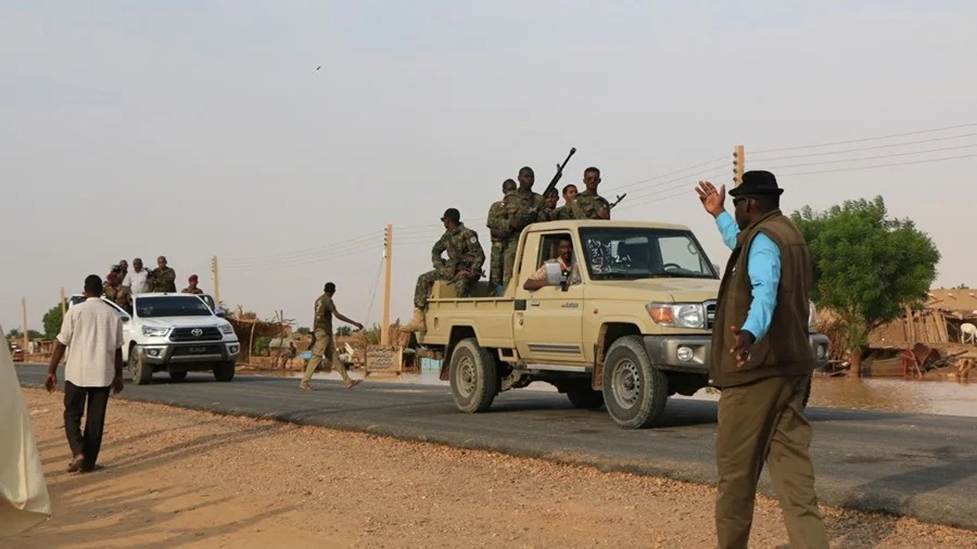
Decades of war against guerrillas, paramilitaries and drug-trafficking organizations produced a large pool of Colombian soldiers skilled in counterinsurgency, jungle warfare, intelligence and weapons. United States security assistance reinforced that expertise. Colombia became highly effective at producing combat veterans, but far less successful at providing all of them dignified civilian futures.
About 10,000 Colombians have hired themselves out to foreign wars, including in Somalia, Ukraine and Sudan, according to United Nations figures cited by the AP. Recruiters prize their experience. Many veterans, meanwhile, face meager pensions and scarce civilian jobs.
This is the underside of Latin America’s militarization. Governments train young men for national security, then let the global market price their skills. Battlefield experience becomes a commodity. The soldier departs, but the knowledge travels.
A recent Colombian law bars citizens from fighting in foreign conflicts, yet veteran groups say recruitment continues. Legal bans struggle against private networks built through contractors, intermediaries, and salaries unavailable at home.
Human Rights Watch and the Conflict Insights Group have documented Colombians alongside the RSF in Darfur, including around the capture of El Fasher, where RSF forces have been accused of mass killings. Both groups reported that the mercenaries were hired by an Emirati contractor and trained at military bases in the United Arab Emirates.
The UAE has denied arming Sudanese combatants, facilitating foreign fighters or maintaining links to mercenaries. It said its investigation found no connection between the firm in question and mercenary activity, condemned atrocities by all parties and supported efforts to end the war.
Colombia’s government told the AP it had no official information confirming that Colombians recruited or trained child soldiers in Sudan. It condemned such abuses.
Yet several accounts converge. A Colombian mercenary who said he fought in Darfur for six months in 2025 told the AP that hundreds of Colombians were deployed with the RSF and helped train recruits. He said he saw children as young as 13 fighting. A former RSF fighter, a Sudanese officer and the director of a rehabilitation center also described Colombian involvement around Khartoum.
The allegations carry unusual moral weight in Colombia. Its own war was marked by forced recruitment, displaced families and childhoods organized around fear. Finding Colombian veterans accused of reproducing that machinery abroad suggests that militarization can survive the conflict that created it, then search for a new buyer.
When Captivity Ends but the War Remains
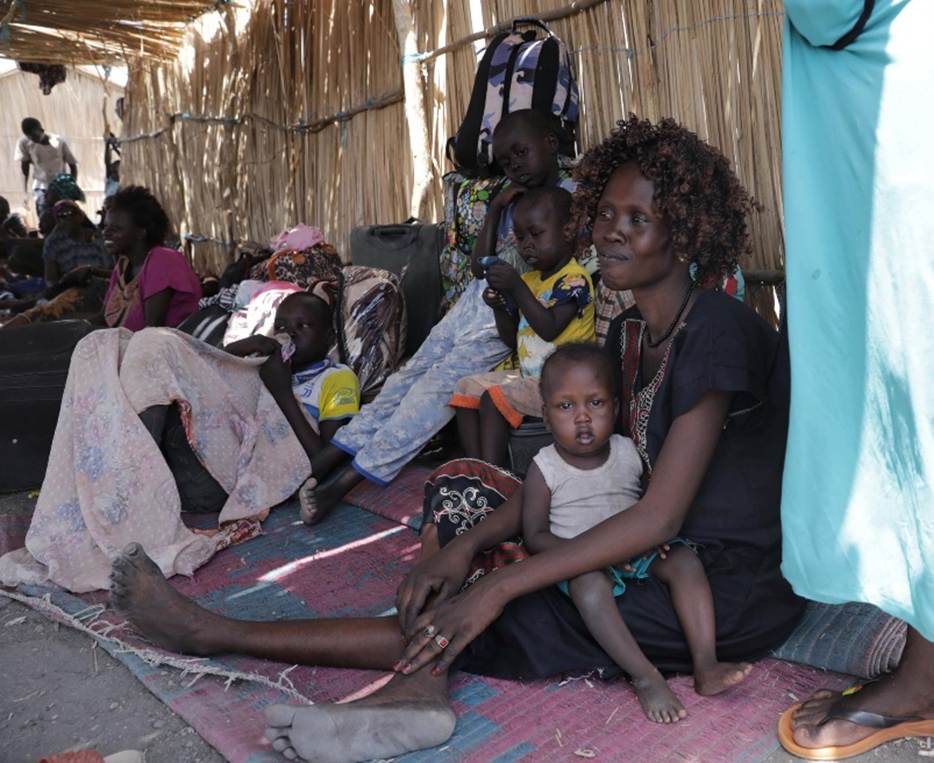
Tens of thousands of children, some as young as 8, have been recruited during Sudan’s war, according to a government child-welfare official. The United Nations says all sides have used child soldiers, including government-aligned militias. Many are believed to remain on the front lines.
The RSF emerged from the Janjaweed militias that terrorized Darfur in the early 2000s. Today’s allegations place children inside a related system, not merely as victims, but as coerced extensions of its firepower.
At a military-backed rehabilitation center near Khartoum, more than 200 former child soldiers tried to begin again. A soccer field and volleyball net offered a fragile grammar of childhood. Their bodies told another story. One boy was missing a hand. Another showed torture scars. A third had a bone protruding from his side.
The teenager chained to the anti-aircraft gun said he once refused to fire. RSF fighters shot at him, wounding his foot. The injury became infected and filled with worms. His captors abandoned him when he was no longer useful.
Survival did not restore the home he remembered. His mother died of illness during the war. His father said he was ashamed of what his son had done and did not want to see him.
That rejection is another battlefield. Former child soldiers return carrying acts they were forced to commit, while relatives may see only the armed group they served. Psychologist Zeinab Mahjoub told the AP she urged families not to abandon the boys. UNICEF’s Sudan representative, Sheldon Yett, said authorities must treat “children as children.”
The boys were released after the AP visited the center in April. Freedom, however, is not the same as repair.
The second teenager escaped al-Konan when a guard left a door unlocked. After he returned home, someone reported that he had fought with the RSF. Authorities sent him to rehabilitation. He now speaks with the burdened vocabulary of someone made responsible for choices imposed at gunpoint.
“We have made mistakes,” he said. “We want to get out of here to rebuild Sudan.”
For Colombia, that appeal should sound familiar. The alleged trainers emerged from a system that made combat expertise abundant and postwar security scarce. Sudanese children paid for that imbalance.
The chain begins in Latin America’s unfinished wars, passes through private recruitment networks and Gulf money, and ends with a child bolted to a gun beneath an attacking plane. That is not distance. It is connection.
This article is adapted from an Associated Press report by Sam Mednick, Isabel Debré, and Astrid Suárez, originally published under the title “Child soldiers recount horrors of Sudan’s war and presence of Colombian mercenaries.”
Also Read: Colombia Counts Down as Petro’s Corruption Scandal Explodes in Public