Colombia Counts Down as Petro’s Corruption Scandal Explodes in Public
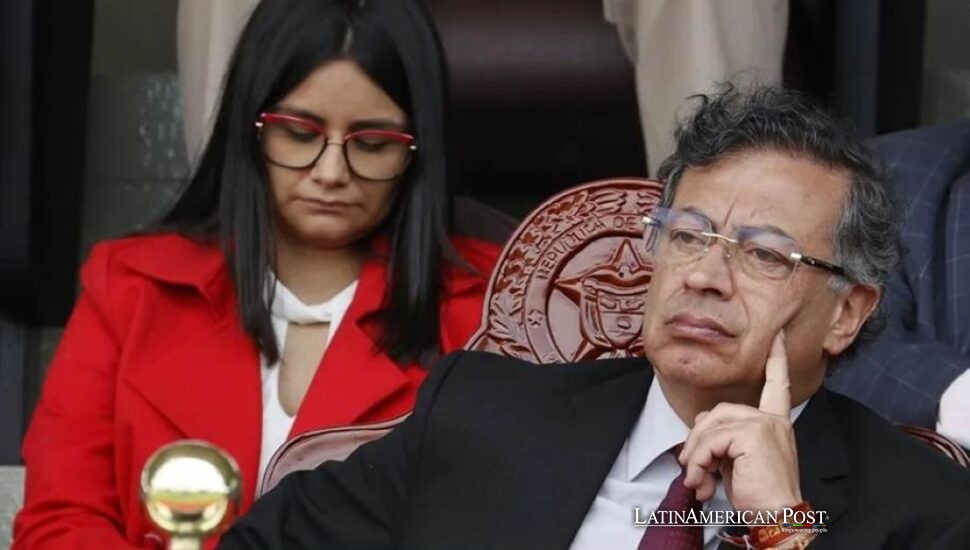
Days before Gustavo Petro leaves Colombia’s presidency, allegations involving Juliana Guerrero, government contracts, disputed credentials and furious accusations from former aide Angie Rodríguez have turned his transition into a bitter reckoning over power, loyalty and the promises of the left.
A Young Adviser With Unusual Reach
With the August 7 transfer of power approaching, Colombia’s first leftist presidency is not gliding toward the palace doors. It is ending noisily, with former allies accusing one another, prosecutors examining claims, and Petro defending a young operative whose access appeared to exceed her formal authority.
Juliana Guerrero, a 23-year-old former Interior Ministry adviser, was introduced by Petro during a televised cabinet meeting as a future vice minister for youth. The appointment collapsed after questions emerged over academic credentials reportedly granted without required examinations. She nevertheless remained near government business and represented Petro on the governing board of the Popular University of Cesar.
That persistence transformed a personnel controversy into a question about governing culture. Colombia has endured generations of clientelism built on recommendations, family names and private access to public offices. Petro promised to break that machinery. Guerrero’s ascent suggested that the old grammar of proximity could survive under a new ideology.
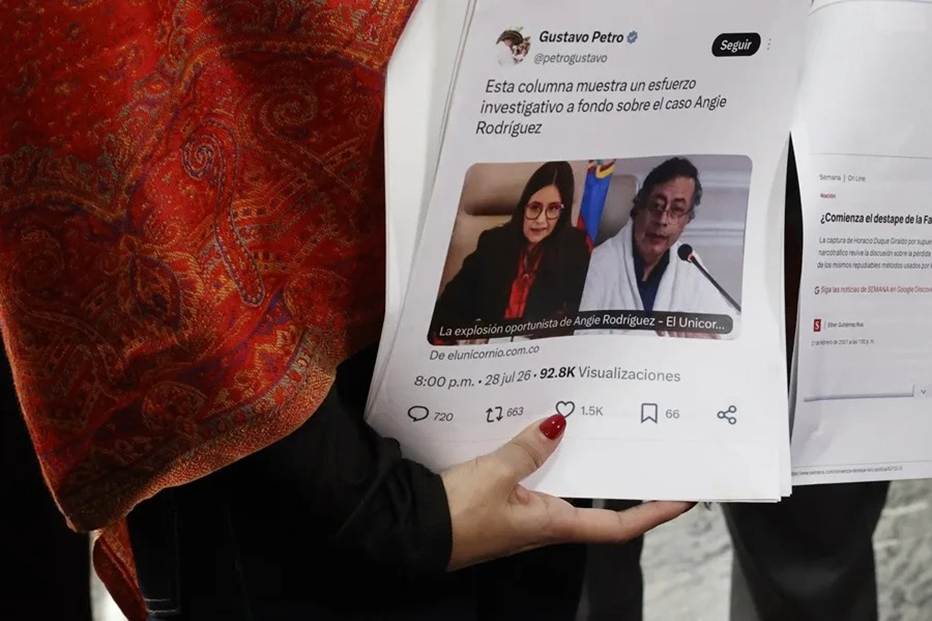
Angie Rodríguez says she tried to stop it. Once Petro’s trusted director of the Administrative Department of the Presidency (DAPRE), she later moved to the Adaptation Fund amid internal tensions. Rodríguez told Blu Radio, in an interview reported by EFE, that she refused to appoint Guerrero because Guerrero lacked the required qualifications. She said she warned Petro directly.
The issue is not Guerrero’s youth. Petro’s movement was built by young organizers challenging traditional elites. The deeper question is whether rebellion became a substitute for credentials, and whether presidential confidence created a parallel authority, absent from organizational charts but decisive in government hallways.
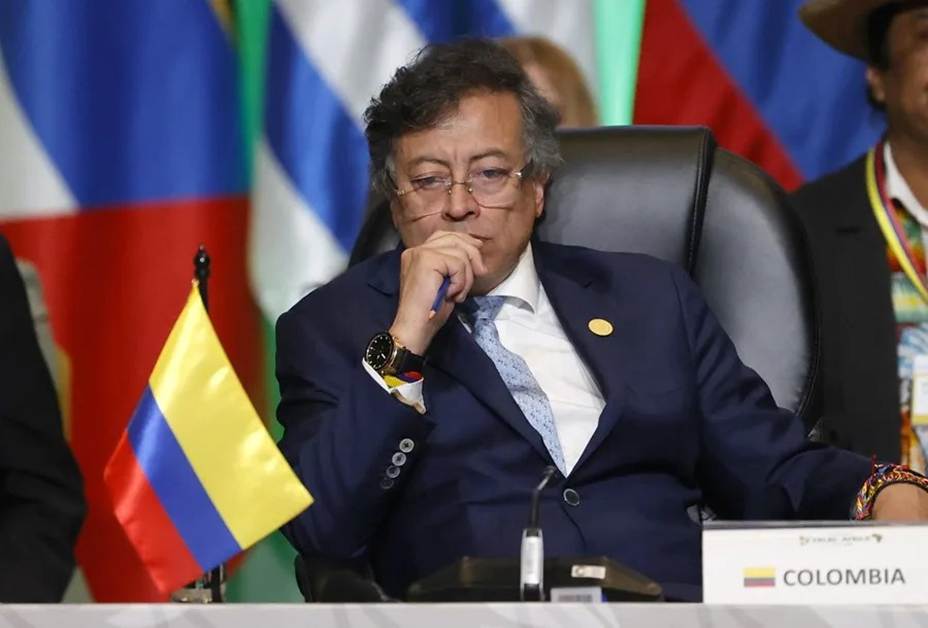
The Alleged Price of Presidential Proximity
The scandal sharpened after Semana alleged that Juliana Guerrero and her sister Verónica offered businesspeople help securing state contracts. The reported structure was strikingly specific: one million pesos, about $315, for an initial meeting; 200 million pesos, roughly $65,500, to begin negotiations; then 10 percent of any contract awarded. Guerrero denies wrongdoing.
Those numbers allegedly assign a market price to access itself. The first payment buys a conversation. The advance buys movement through bureaucracy. The commission turns the state into a brokerage. In a country where rural communities wait years for public works, that alleged structure cuts deeply.
Petro insists prosecutors must establish the facts. He argued that, if money were taken, the episode would amount to a scam by private individuals, not proof of corruption by his government or Guerrero. That draws a legal boundary. Politically, it leaves a harder question: why did outsiders believe her influence was worth buying?
Rodríguez says an order existed to remove Guerrero from the university board, but Petro never signed it. She also cited Gabriela Muñoz, a 20-year-old law student and influencer hired at Colombia’s civil aviation authority, as another irregular appointment. Her broader allegation describes a network of young women exercising unusual executive power. No court has established such a network, and that framing risks reducing an institutional problem to gendered intrigue. The test is what authority they exercised, who authorized it, and which safeguards failed.
Petro responded personally. He called Rodríguez a manipulator and a psychiatric patient, announced a criminal complaint for alleged defamation, and published information connected to her medical leave. Rodríguez then filed accusations before the House Accusations Commission, including defamation and influence peddling. She says she cannot legally be dismissed while medically incapacitated.
The disclosure shifted the dispute again. A corruption allegation became a demonstration of presidential power over an accuser’s dignity. Whatever investigators conclude, using psychiatric care as a political weapon reinforces a familiar whistleblower fear: challenge the hierarchy, and the institution will make the challenger the story.
The Change Government Meets the Old Colombian State
This eruption lands on ground already scorched. Petro’s son Nicolás was prosecuted over money allegedly received from questionable figures during the 2022 campaign. Former ministers have faced charges tied to an alleged scheme that used disaster agency resources to reward lawmakers who supported government reforms. The Laura Sarabia and Armando Benedetti crisis brought allegations involving cash, unauthorized surveillance and disputed campaign financing. Petro denies personal wrongdoing.
These cases are legally distinct, and accusation is not conviction. Their cumulative damage comes from repetition. Again and again, formal institutions appear to be surrounded by informal operators, personal loyalties, and money whose route is disputed. For a president who built his career denouncing corruption, the symbolism is brutal.
Petro will hand power to Abelardo de la Espriella, a conservative outsider who narrowly won the presidency and takes office August 7. His victory represented a rejection of Petro’s project for many voters. The outgoing government’s final spectacle now gives the incoming right a morality tale before its own promises are tested by office.
The ultimate question is larger than whether Juliana Guerrero sold influence, whether Angie Rodríguez told the whole truth, or whether Petro knew. It is whether Colombia’s first national left-wing government changed the state deeply enough to prevent intimacy from becoming authority.
On August 7, the presidential sash will change shoulders. The contracts, case files, and wounded loyalties will remain. So will a familiar Colombian suspicion: power often speaks most clearly through people who were never elected, barely appointed, and somehow always close enough to the door.
Also Read: Peru’s Keiko Fujimori Takes Office Against Crime, Poverty, and Ghosts