Guatemala Races to Save War Victims’ Files Before History Crumbles into Silence
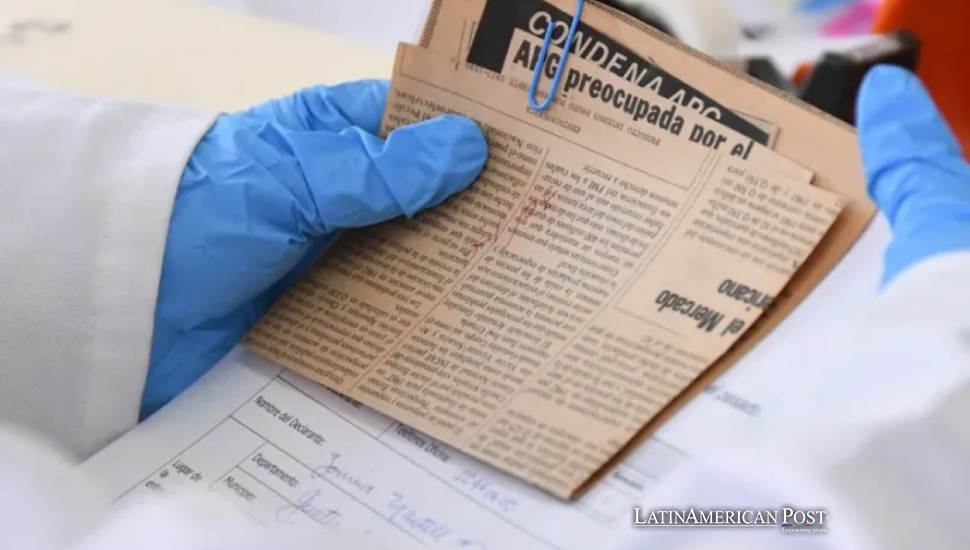
Guatemala is rescuing thousands of deteriorating civil war records that could help families obtain reparations and uncover their relatives’ fate. The preservation effort confronts an uncomfortable question: what happens when a state lets evidence of its victims disappear through neglect?
The Paperwork of a Broken Promise
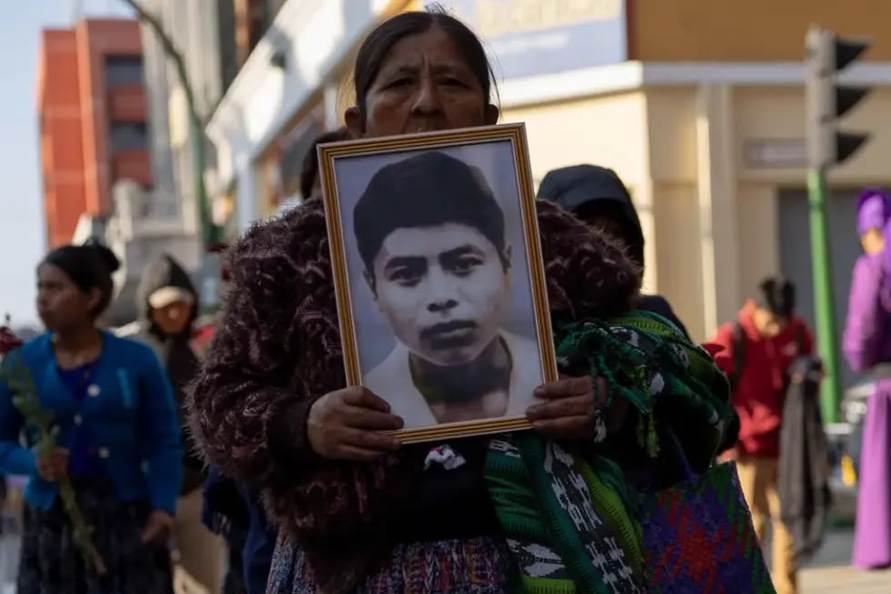
Manuel Botom Uz was four when Guatemala’s army attacked his Indigenous community in Quiché in 1982. His siblings were returned to relatives. He was not. Twenty-two years later, his remains were recovered from a clandestine grave and returned for burial, according to The Associated Press. His case lives in the records of the National Reparations Program.
Now those records need rescuing themselves.
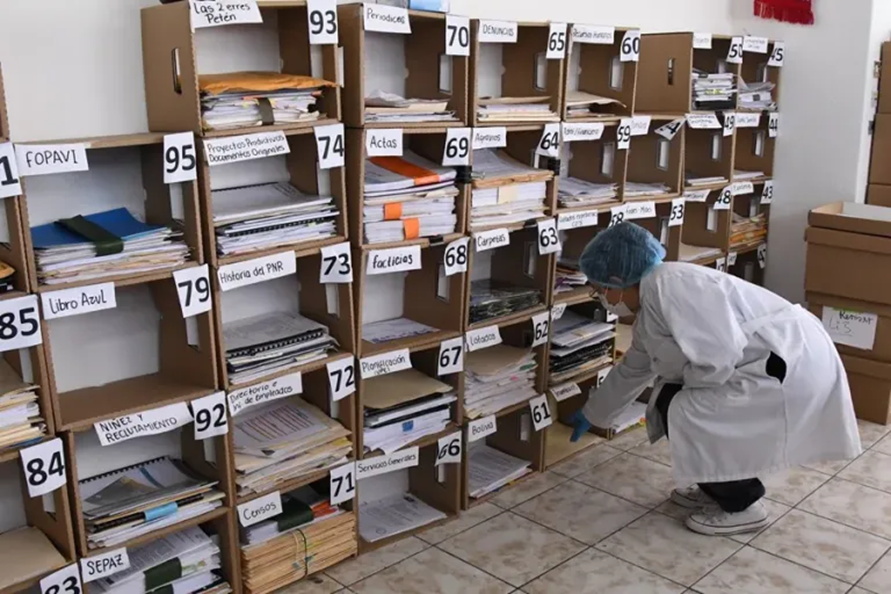
More than 57,000 case files, comprising roughly five million pages, are undergoing conservation by specialists hired through the U.N. Development Program and UNESCO, with international cooperation funding, according to EFE. They document executions, disappearances and other grave violations committed during Guatemala’s 1960 to 1996 armed conflict.
The program closed formally in December 2023 after its legal mandate expired. Custody subsequently passed to the Social Development Ministry through its Social Development Fund, known as Fodes. Prolonged exposure to poor storage conditions allowed fungi, bacteria and corrosion to damage some documents, EFE reported.
The danger is not merely that historians will lose material. A damaged file can make it harder to establish who requested compensation, what officials verified and where an application stopped. Families should not have to reconstruct an administrative history that the government already collected.
Lisbeth Barrientos, the project’s technical coordinator, described the collection to EFE as the executive branch’s only state archive devoted specifically to the war’s victims and grave violations. Its significance lies in that perspective: people appear as claimants seeking recognition, not simply as names in a security report.
What the Records Must Not Erase
The war’s roots reach beyond the battlefield. Concentrated landownership, racial exclusion and authoritarian government restricted Indigenous communities’ economic and political opportunities. The CIA-backed overthrow of elected President Jacobo Árbenz in 1954 reversed a reforming democratic experiment whose land redistribution had challenged powerful domestic interests and the United Fruit Company.
The subsequent narrowing of political participation helped create conditions for armed insurgency. Cold War anticommunism then supplied a rationale for treating civilian organizing as subversion. Guatemala’s truth commission found that the army extended its definition of the enemy beyond guerrillas to whole Maya population groups.
The Commission for Historical Clarification estimated that more than 200,000 people were killed or disappeared. Its findings assigned 93 percent of documented violations to state forces and associated paramilitary groups, compared with 3 percent to guerrillas. Among fully identified victims, 83 percent were Maya.
Those percentages describe the commission’s documented cases, not every surviving reparations file. They nevertheless contradict any account that treats responsibility as evenly distributed. Acknowledging insurgent crimes does not require inventing symmetry.
The atrocities were specific. After the army’s December 1982 massacre at Dos Erres, investigators recovered 162 skeletons from a well, including 67 apparently belonging to children under 12. In 2016, a Guatemalan court convicted two former military men over the sexual enslavement of Indigenous Q’eqchi’ women at Sepur Zarco.
The truth commission also concluded that state agents committed acts of genocide against Maya groups in four regions it examined during 1981 to 1983. The destruction targeted more than individual lives: scorched earth operations and attacks on community leaders assaulted the structures through which communities sustained themselves.
Preserving victims’ accounts cannot undo that destruction. It can prevent the state’s subsequent paperwork from becoming another barrier between survivors and acknowledgment.
Rescue Is Only the Beginning
Agustín Cux Chan, a former coordinator of the reparations program, told EFE that only 49 percent of people who requested compensation received it before closure. That left 51 percent without payment, a majority rather than a residual caseload.
But the file count is not a verified count of individual applicants. Multiplying 57,000 by 51 percent would not establish how many people remain uncompensated. A reliable accounting requires identifying claimants and reconstructing each application’s status, precisely the work deterioration threatens.
“They make it possible to locate information about people who were executed or disappeared, both adults and children,” Barrientos told EFE. She also emphasized the records’ ability to document damage to communities and support historical reconstruction, victim identification and work toward truth and justice.
Receiving money does not necessarily mean someone has received comprehensive reparation. The truth commission recommended material restitution, psychosocial rehabilitation and measures restoring dignity alongside compensation. That distinction matters in communities where the harm included displacement and shattered social relationships. Counting checks alone would miss much of the damage that these testimonies could help future reparations policies address.
That potential needs careful handling. A compensation application is not automatically proof of criminal responsibility. Its value may lie in details that investigators can compare with other testimony or records. Preservation protects the possibility of verification; it does not replace it.
Success should therefore be measured in more than restored pages. Authorities need a usable inventory, protected access to sensitive testimony and procedures allowing families to trace unfinished claims. Reparations initiatives should build on these files rather than require survivors to begin again.
International funding can help rescue the collection. Sustained public responsibility can keep it usable. Otherwise, Guatemala risks preserving the appearance of memory while leaving the people who entrusted their stories to the state waiting outside its doors.
Also Read: Peru Sends Soldiers to Prison Gates While the Real Crisis Lives Inside