Mexican World Cup Opens as Missing Families Rewrite the Scoreboard
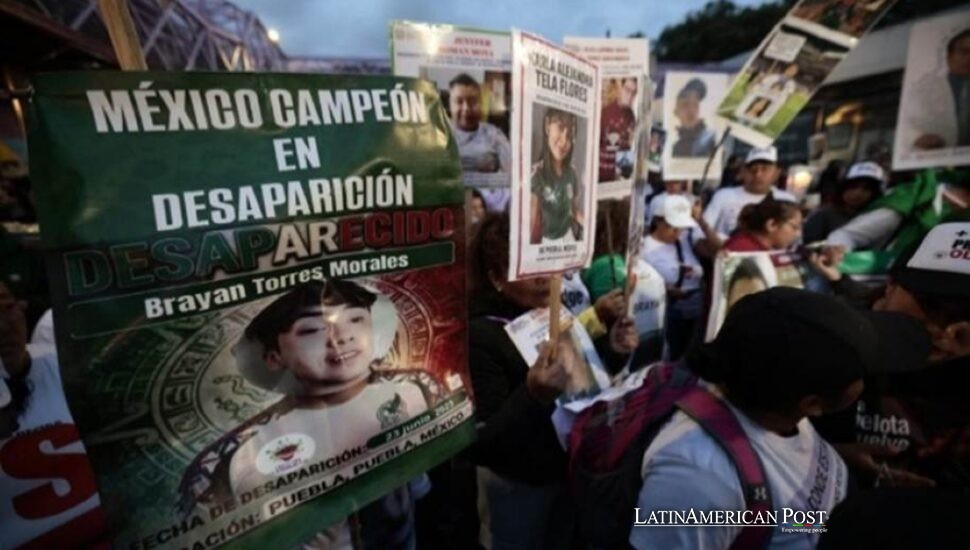
As Mexico welcomed the 2026 World Cup, families of the disappeared turned celebration into indictment, marching toward the stadium with candles, jerseys, and posters to ask why a nation can mobilize for soccer faster than it searches for the missing.
A Party Meets Its Ghosts
The night before the opening match, Mexico City looked like two countries sharing the same street.
One country wore green jerseys and chased the fever of the FIFA World Cup. The other carried faces printed on shirts, banners, cardboard, and memory. They moved down Calzada de Tlalpan toward the Mexico City Stadium, still known in the popular imagination as the Azteca, trying to push Mexico’s crisis of disappearance into the brightest television frame on earth.
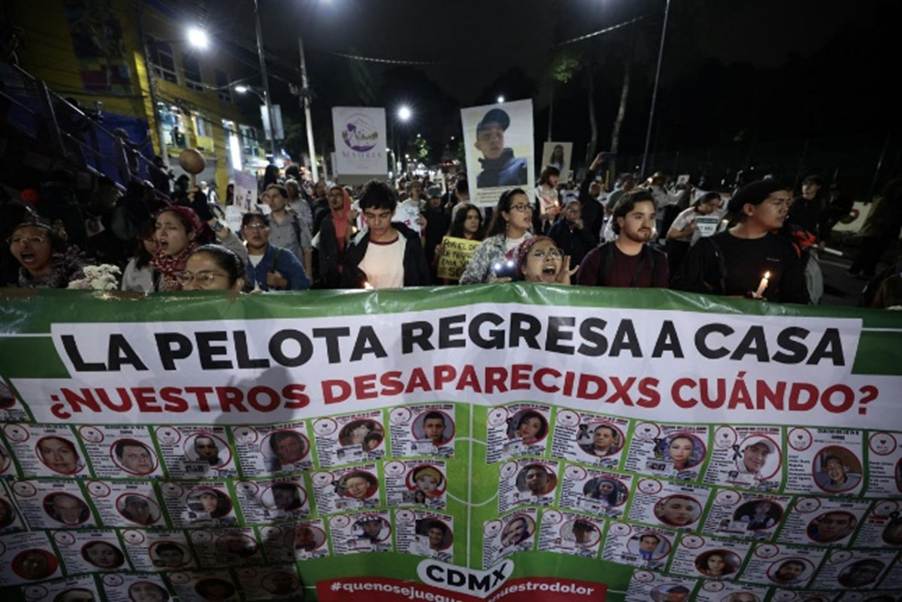
According to EFE, thousands of protesters were contained on Wednesday night by a heavy police operation as they tried to reach the stadium where the tournament’s inauguration was set to take place. Families from several Mexican states, many tied to grassroots “madres buscadoras” collectives, had traveled to the capital for a candlelit vigil and march. They wanted the world to see the country behind the party: more than 133,000 people officially listed as disappeared or missing, according to Mexico’s national registry, which counts cases dating back to the 1950s.
The march began peacefully, EFE reported, with relatives wearing white shirts or Mexican national team jerseys printed with photographs of their loved ones. Some carried World Cup imagery, including replicas of the FIFA trophy. Others held signs that cut through the fanfare with a brutal lyric: “The ball is coming home, but when will our disappeared?”
By the time the crowd reached police fences, buses and lines of officers blocked the road. The families did not reach the stadium. They held their vigil in front of the security cordon instead.
That image may outlast the opening ceremony.
The Numbers Refuse to Behave
The Mexican state often explains the disappearances as a consequence of cartel violence, much of it tied to the militarized war on drugs launched under former President Felipe Calderón in the late 2000s. The government says finding the missing is a national priority. But the families in the streets are living with a different calendar, one measured not in administrations or policy announcements, but in birthdays without bodies, forensic appointments, anonymous graves, and search brigades entering dangerous terrain with picks, shovels, and prayer.
The number itself, more than 133,000, is almost too large for ordinary grief. That is part of the problem. A single disappearance breaks a family’s sense of time. Tens of thousands create a national fog. Cases pile into registries, prosecutors’ offices, and forensic backlogs until the scale becomes a shield. The bigger the count grows, the easier it becomes for power to speak in abstractions.
The families refuse abstraction. “We want the world to know that we have many disappeared, and resources are invested in other things while the cases of our disappeared are not resolved,” Ana Lucía Gasca, mother of Ricardo Arturo Lagunes Gasca, missing since 2023, told EFE.
Nearby, Tranquilina Hernández, mother of Mireya Montiel Hernández, who has been missing since 2014, made the contrast even sharper. “They cannot cover the sun with one finger by bringing a World Cup when there is no budget for the searches of our loved ones,” she told EFE before the march.
That phrase belongs to Latin America’s older political vocabulary, the language of people who know the spectacle and the wound often coexist. Governments pave routes, clean facades, and reinforce security corridors for global events. The poor, the grieving, and the inconvenient are expected to move aside for the camera.
But Mexico’s disappeared no longer move aside easily.
Around the Angel of Independence, one of the capital’s most symbolic monuments, tourists took photos. At the same time, a performer danced to the World Cup anthem by Shakira and Burna Boy. Behind them, someone had crossed out “heroes” on the monument’s stone tablet and replaced it with “desaparecidos.” The message was not subtle. In today’s Mexico, heroism is not only on the field or in bronze. It is in the mother who keeps searching after the case file stops moving.
Latin America Watches the Stadium
The protest carries regional significance because Mexico is not alone in expressing joy despite the emergency. Latin America has long been asked to perform beauty for the world while managing grief at home. World Cups, carnivals, summits, and mega-events can bring investment, tourism, and national pride. They also reveal the hierarchy of urgency.
The families’ accusation was not simply that soccer received attention. Soccer is not the enemy. In Latin America, soccer is memory, neighborhood, escape, argument, inheritance, and work. The deeper charge is that the state can coordinate when it wants to. It can deploy officers, protect foreigners, secure stadium roads, manage image, and enforce distance.
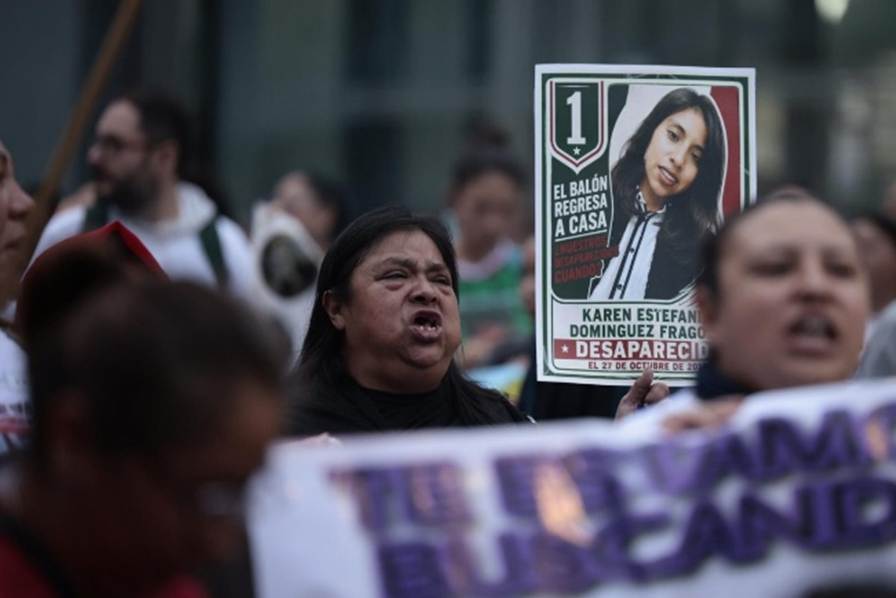
“Today the State shows us that it does have the police to find the disappeared, but decides to protect foreigners,” mother-searcher Jaqueline Palmeros said through a megaphone, according to EFE.
Later, some relatives tried to climb over the barriers and buses as chants of “repressive state” rose in the street. Hernández defended the outburst. “I think we are fully within our rights to release all our frustration, so much pain, and so much anguish,” she told EFE.
There was anger, yes. But there was also ritual. A priest leading the vigil asked that their “dignified rage” be greater than their institutional adversary. Then, in front of the officers, families sang again and again: “Be my light, the one that lights my night.”
This is what forced disappearance does. It turns citizens into investigators, mothers into cartographers, stadium roads into altars. It makes a World Cup opening feel less like a beginning and more like a test.
The United Nations Committee on Enforced Disappearances has sought to bring Mexico’s crisis before the General Assembly, considering the pattern “crimes against humanity,” a characterization Mexico’s government has repeatedly rejected. That dispute matters, but the families have already reached their own verdict.
They are not asking for pity. They are asking for search teams, prosecutors, budgets, identification, and truth. They are asking why a country can find space for the world, but not for its missing.
On opening day, the ball came home to Mexico. So did the question.
Also Read: Colombia Confronts Female Genital Mutilation With Law and Moral Patience