Colombia Confronts Female Genital Mutilation With Law and Moral Patience
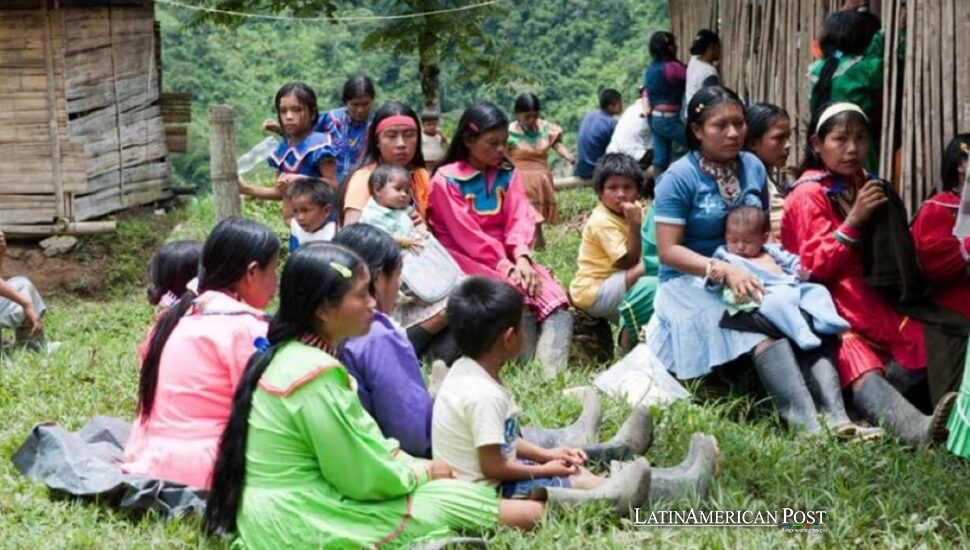
Colombia’s new female genital mutilation law targets a hidden crisis affecting Indigenous girls, choosing prevention over punishment and forcing Latin America to face a difficult truth: protecting children sometimes means confronting harmful traditions without humiliating the communities carrying them forward.
A Law Arrives Late, but Carefully
The vote came near the edge of the legislative calendar, the kind of political moment when important bills can disappear without a scandal, swallowed by procedure, fatigue, and the old Latin American art of postponement. This time, Colombia did not let it vanish.
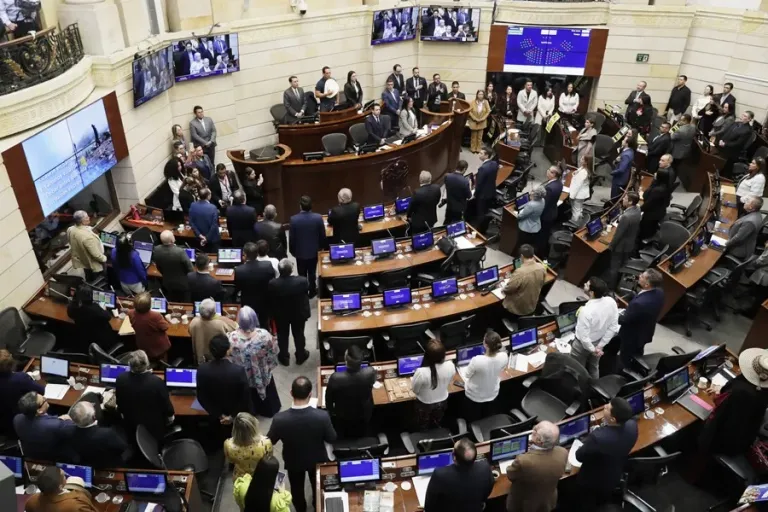
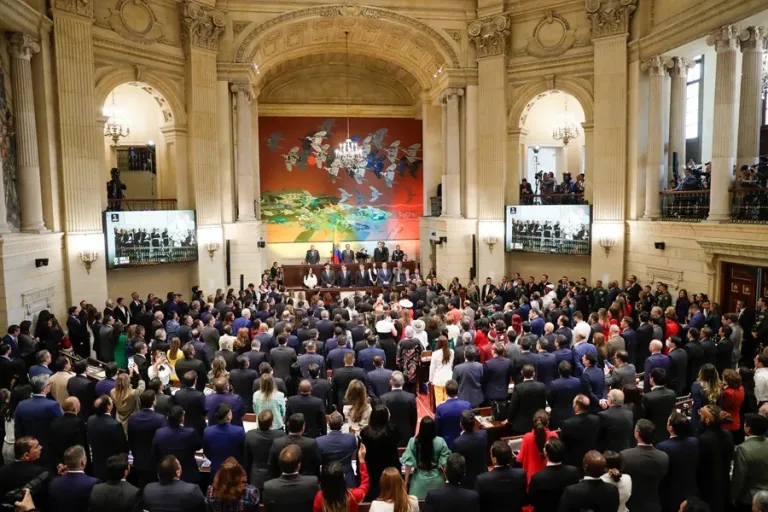
According to an EFE report, Colombia’s Congress approved a law on Wednesday to prevent, address, and eradicate female genital mutilation, a practice that continues to affect mainly Indigenous girls and whose prohibition had been demanded for years by human rights organizations and community women leaders. The initiative cleared its final Senate debate just days before the legislative session closed, avoiding the need to start all over again in a future Congress.
That timing matters. In politics, delay is rarely neutral. For a girl at risk, one more year of debate is not an abstraction. It is a body. A childhood. A future pregnancy. A wound that may never fully close.
Female genital mutilation refers to procedures involving the partial or total removal of external female genitalia or other injury to female genital organs for nonmedical reasons. International organizations consider it a grave violation of the rights of girls and women. UNICEF, the Inter-American Commission on Human Rights, and other agencies have warned that the practice can cause hemorrhage, infection, severe pain, obstetric complications, and long-term psychological harm, including depression, anxiety, and post-traumatic stress.
Colombia’s law is historic because it is specific. EFE reported that the country has become the first in Latin America to approve legislation dedicated to female genital mutilation. Equality Now says experts and institutions have documented the practice in at least 94 countries. At the same time, only 59 have specific legal frameworks to address it.
But the Colombian law also matters because of what it does not do. It does not create new crimes. It does not build its strategy around punishment. Instead, it focuses on prevention, awareness, comprehensive care for survivors, institutional coordination, and work with communities to encourage abandonment of the practice.
That choice is not a weakness. It is political intelligence.
The Numbers Carry Children’s Names
The data is small enough to be ignored by a careless state and large enough to shame a serious one. Organizations that supported the law cited 204 documented cases of female genital mutilation in Colombia between 2020 and 2025. Of those, 177 involved Indigenous girls, especially in the western departments of Risaralda and Chocó.
Two hundred and four cases over five years may look modest beside Latin America’s great public emergencies: homicide, migration, hunger, corruption, climate disaster, femicide. But female genital mutilation lives in the quieter chamber of violence. It happens close to home. It can be defended as custom. It can be hidden inside family authority, spiritual explanation, fear, misinformation, and silence.
That is precisely why the law was necessary.
Some Indigenous populations in Colombia have practiced female genital mutilation as part of inherited systems of belief, often tied to ideas about controlling sexuality, purity, health, social belonging, or preparation for womanhood. To say this plainly is not to condemn Indigenous peoples as a whole. That would be lazy and unjust. Indigenous communities in Latin America have survived conquest, land theft, missionary violence, racism, paramilitary terror, state neglect, and the permanent insult of being treated as obstacles to progress on their own territories.
But survival does not make every practice defensible. Culture is not a museum case. It is alive, and because it is alive, it can change.
That is the moral line Colombia’s law tries to walk. It must protect girls without turning their communities into enemies. It must listen to Indigenous women leaders who have fought this practice from within, sometimes at personal risk, while resisting the colonial reflex that imagines Bogotá or international organizations as the only moral adults in the room.
Leandra Becerra, Equality Now’s lawyer for Latin America and the Caribbean, had warned in an interview with EFE that rejecting the bill would send a negative message to the Indigenous communities and women leaders who have pushed strategies to eradicate female genital mutilation in their territories. That warning cuts to the heart of the matter. The law is not only a statement to the country. It is a signal to local reformers that they are not alone.
Those reformers matter because change imposed from outside often collapses into resentment or secrecy. Change built with communities is more likely to reach the room where decisions about a child’s body are actually made.
Latin America Faces Its Blind Spot
For Latin America, Colombia’s law opens an uncomfortable door. The region often talks about women’s rights through the visible battles: abortion access, femicide, domestic violence, political representation, and equal pay. Those fights remain urgent. But female genital mutilation forces a different conversation, one that sits at the intersection of gender, ethnicity, childhood, bodily autonomy, and the state’s complicated relationship with Indigenous sovereignty.
Latin American republics have a bad habit of noticing Indigenous communities only when land, votes, tourism, mining, or embarrassment is involved. They praise ancestral wisdom in speeches, then fail to provide clinics, schools, translators, roads, judges, or protection from illegal armed groups. In that vacuum, harmful practices can persist not because communities are backward, but because isolation shields everything, including pain.
The Colombian approach suggests a better model. Law must be present, but not arrogant. Public health must be culturally informed, but not morally timid. Indigenous autonomy must be respected, but it cannot be used to excuse irreversible harm to children who cannot consent.
The numbers from 2020 to 2025 also raise a harder question: how many cases were never documented? Remote territories, language barriers, distrust of institutions, and fear of stigmatization can all suppress reporting. In that sense, 204 cases may be less a final count than a flashlight beam in a much larger dark room.
The law now heads to the presidential sanction to become enforceable. Once signed, its success will depend on budgets, trained health workers, trusted community mediators, Indigenous-language education, survivor care, and the courage to measure progress honestly. A beautiful law without implementation is a press release wearing a suit.
Still, something real happened. Colombia chose not to treat female genital mutilation as someone else’s problem, not Africa’s problem, not a private problem, not a problem too culturally delicate to name. It’s named it.
That naming carries power.
In the best version of what comes next, the law will not arrive in Indigenous territories like a police order from the capital. It will arrive with nurses, interpreters, teachers, elders, mothers, and young women who can say, “Our culture is strong enough to let this go.”
Latin America should pay attention. The future of rights in the region will not be won only in constitutional courts or presidential palaces. It will be won in the intimate places where tradition meets a child’s body, and someone finally says no.
Also Read: Latin American Approval Fever Crowns Bukele, Tests Sheinbaum, Exposes Fractures