Colombia Becomes the World’s Refugee Haven as Latin America Shifts
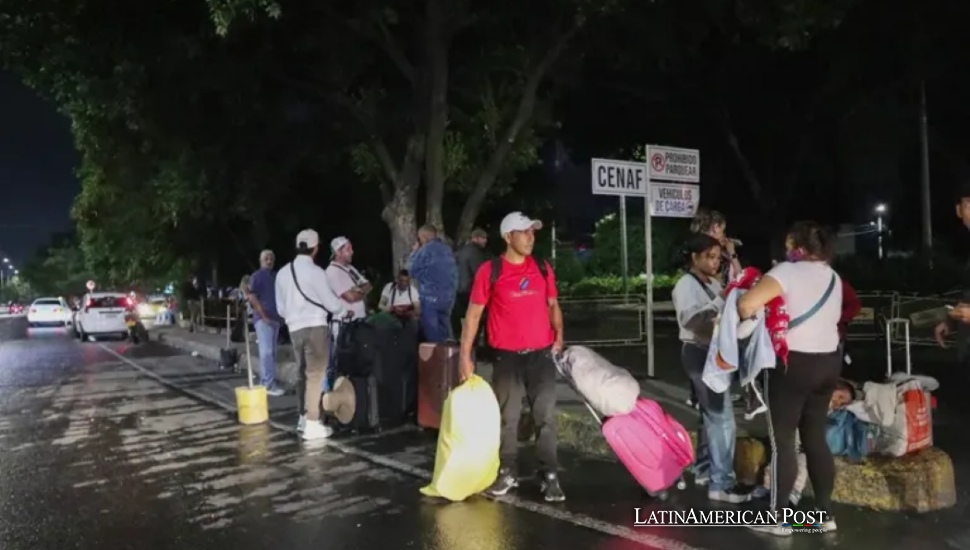
Across Latin America, forced displacement is no longer a distant emergency but a daily geography of work, school, rent, buses, borders, and waiting rooms, with Colombia now at the center of the world’s largest regional protection challenge, according to UNHCR.
A Continent on the Move
The Americas have become the world’s leading region for forced displacement, with 22.8 million people uprooted by violence, political crisis, insecurity, or collapse, according to UNHCR figures reported by EFE. That number, recorded at the end of 2025, is larger than the totals for East and Southern Africa and for the Middle East and North Africa. It is also rising. At the end of 2024, the region counted 21.9 million forcibly displaced people. One year later, almost 900,000 more people were living the same wound under a different address.
The figure is immense, but it lands in small ways. A Venezuelan mother learning the bus routes in Bogotá. A Haitian family leaving a neighborhood in Port-au-Prince after a night of gang violence. A Nicaraguan student waiting for an asylum appointment. A Honduran boy growing up between a past his parents fled and a future his host country may or may not allow.
Colombia sits at the center of this map. With 2.8 million Venezuelans, it is now the world’s largest host country for refugees and others in need of international protection, according to the UN refugee agency’s annual “Trends in the Americas” report, cited by EFE. That status is historic. It is also deeply Latin American, because Colombia is both a country marked by its own long internal displacement and the neighbor that opened its doors when Venezuela’s exodus became one of the largest in the world.
For decades, Colombians were the ones leaving rural towns, borderlands, and city edges under pressure from armed conflict. Now the country receives millions, many arriving with similar losses and different accents. This reversal matters. It complicates the old image of migration as a northbound story. The displacement crisis in the Americas is not only about people trying to reach the United States. Most of the movement is within Latin America itself, where fragile states are absorbing the consequences of neighboring breakdowns.
Colombia’s Open Door Has a Price
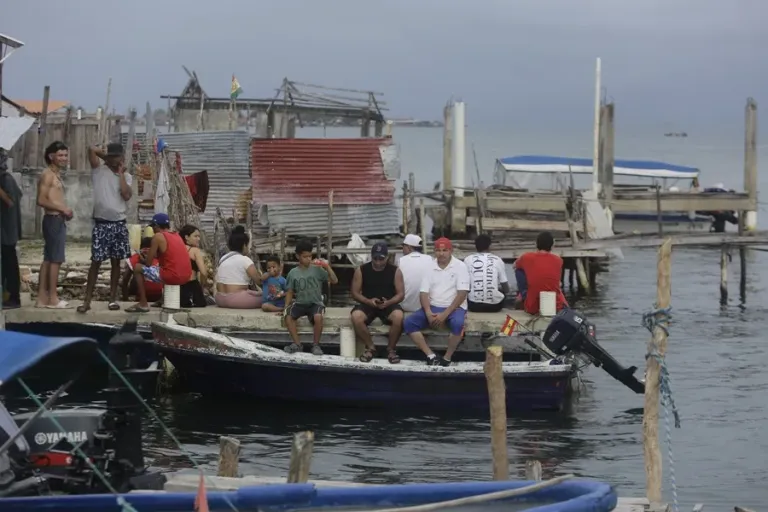
Venezuelans remain one of the largest displaced populations on earth. UNHCR figures cited by EFE place the population at 417,000 refugees and 6 million other people in need of international protection from Venezuela by the end of 2025. About 97 percent have been hosted in Latin America and the Caribbean, an extraordinary regional burden that rarely receives the global financing or political attention given to crises closer to Europe.
Colombia has taken in the largest share, followed by Peru with 1.1 million Venezuelans, Brazil with 699,000, Chile with 662,600, and Ecuador with 435,800. These numbers reveal a new Latin American corridor of survival. People do not only cross borders. They enter labor markets, public hospitals, classrooms, and informal economies. They compete for apartments, start businesses, send remittances, care for children, fill jobs, and sometimes face resentment from communities already living on the edge.
The Colombian case is especially important because of its regularization strategy. UNHCR, in remarks reported by EFE, said that Colombia’s large-scale regularization efforts have allowed millions of people to access employment and services while making “important contributions to the economy and to the communities where they live.” That is not a sentimental claim. It is a policy argument.
Regularization turns invisible survival into taxable work, safer housing, school enrollment, and public-health planning. It also reduces exploitation. A migrant with papers can report abuse, negotiate a wage, rent more securely, and move through the city without calculating every police checkpoint. For Colombia, the gamble is clear. Inclusion is expensive in the short term, but exclusion is more expensive over time.
Still, generosity has limits when budgets are thin. Colombia’s public institutions are already strained by inequality, internal conflict, urban poverty, and uneven state presence. Asking the country to carry the world’s largest hosting role without sustained international support is not solidarity. It is outsourcing.
That is one of the uncomfortable lessons for Latin America. The region is doing the work of protection while wealthier powers often talk about migration as threat management. Colombia, Peru, Ecuador, Brazil, and Chile are not merely transit spaces. They are building the real humanitarian infrastructure of the hemisphere, one overstretched clinic and one crowded classroom at a time.
The Crisis Is Regional, Not Venezuelan Alone
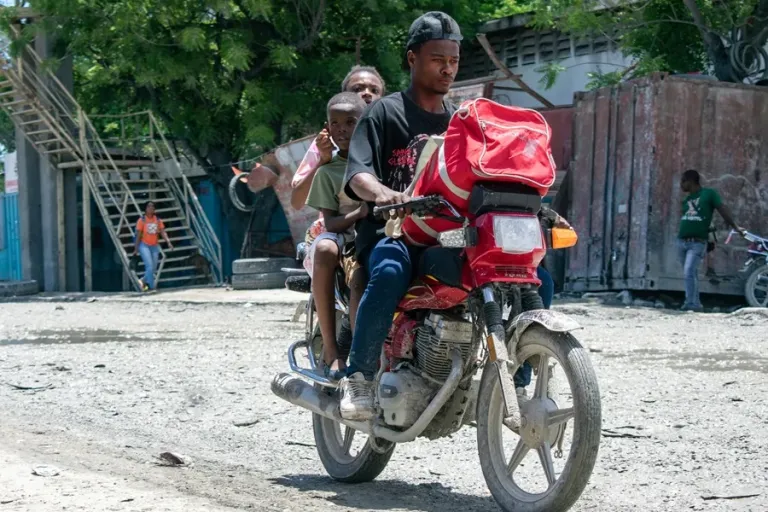
Venezuela dominates the numbers, but the Americas’ displacement crisis is broader and darker. Haiti’s internal displacement reached 1.4 million people in 2025, a 38 percent increase from the previous year, according to UNHCR data reported by EFE. The force behind it is not abstract instability. It is the terror of gang violence, the collapse of daily security, and the shrinking of neighborhoods where ordinary life can still happen.
Another 153,700 Haitians are refugees, and 230,900 are asylum seekers. In 2025 alone, about 84,600 Haitians requested asylum worldwide, placing Haiti among the leading countries of origin for protection claims. The image is devastating because Haiti is not only producing migration. It is producing internal exile, people displaced without even crossing a border, trapped inside a country where safety keeps moving farther away.
Central America adds another layer. El Salvador, Guatemala, and Honduras together account for 181,900 refugees, 406,400 asylum seekers, and 1.1 million internally displaced people. Nicaragua’s political crisis has produced 30,000 refugees and 264,000 asylum seekers. These numbers point to different causes but a shared regional failure. Violence, authoritarian drift, weak rule of law, poverty, climate shocks, and organized crime do not stay neatly inside national borders.
Latin America has always been a region of departures and returns. What is new is the scale of simultaneous displacement and the way it has become structural. This is not a temporary emergency that can be resolved by a single election, a single aid package, or a single border policy. It is the human bill for decades of inequality, state fragility, corruption, extractive economies, and political systems that too often treat citizens as disposable until they leave.
The most revealing figure may be the smallest. A UNHCR survey in six host countries, reported by EFE, found that around 9 percent of displaced Venezuelans plan to return within a year. That means some still see home as possible. It also means most do not, at least not yet. Return is not just a bus ticket back. It requires safety, work, medicine, schools, documents, and trust.
For Colombia and the rest of Latin America, the choice is not between borders and compassion. It is between improvisation and policy. The continent has already become the world’s principal stage of forced displacement. The question now is whether it will remain a region where the displaced survive in the margins or become one where protection is treated as nation-building.
Also Read: Colombian Constitution Gambit Fades as Runoff Turns into Identity War