Peru’s Keiko Fujimori Takes Office Against Crime, Poverty, and Ghosts
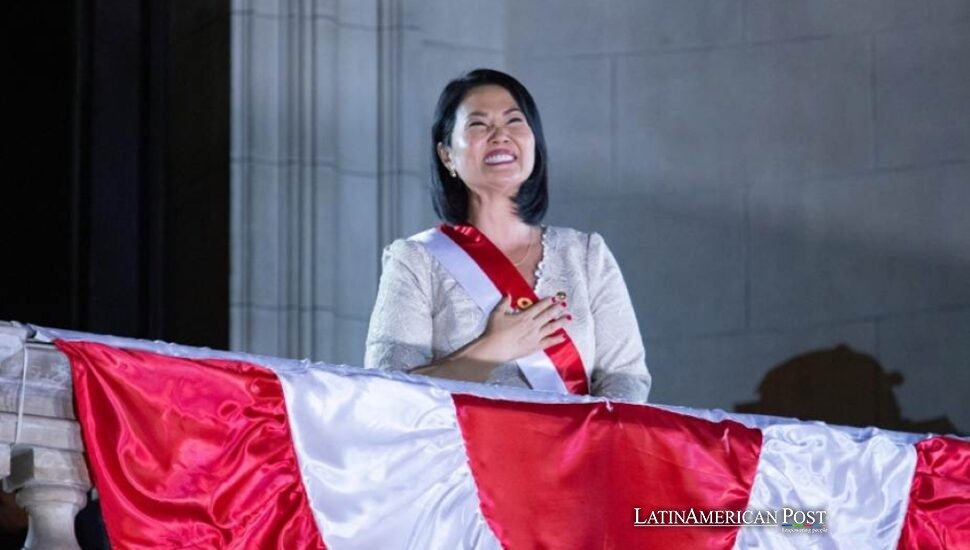
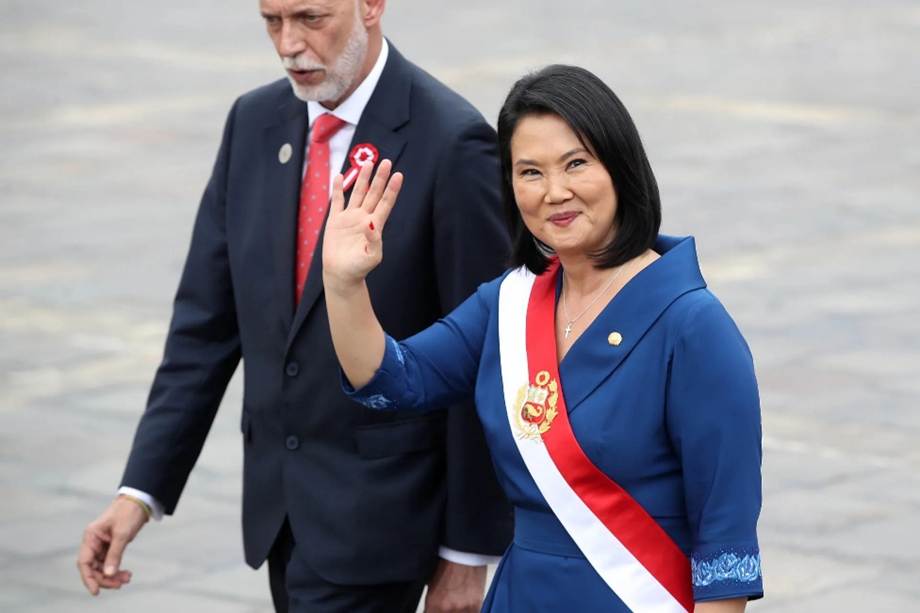
Keiko Fujimori entered Peru’s presidency promising soldiers against gangs, higher wages, and relief for forgotten families. Yet before her sentence settled, photographs of state violence forced another agenda upon her: unanswered deaths, the disappeared, and the meaning of order itself.
The Iron Fist Arrives Before the Applause
LIMA, Peru. Keiko Fujimori had barely begun her inaugural address when another Peru entered the room. Left-wing lawmakers turned their backs, wore black ribbons, walked out shouting for justice, and raised photographs of people killed or disappeared amid state violence. Some faces came from her father’s government. Others were part of the crackdown following Pedro Castillo’s removal in 2022.
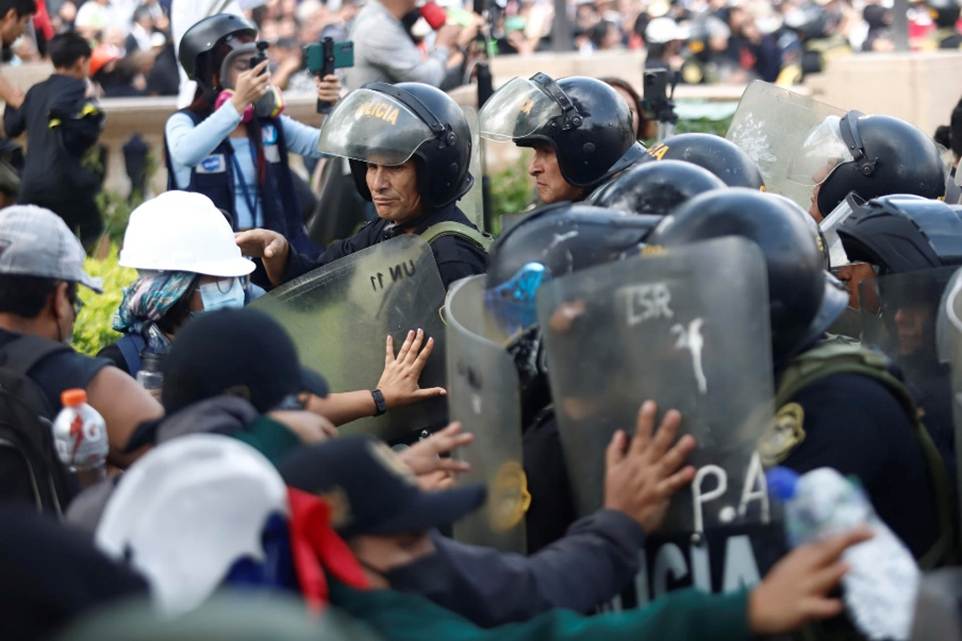
Outside, victims’ relatives and delegations from Arequipa and Puno gathered near the Palace of Justice. Clashes with police were reported around Plaza San Martín. Fujimori took possession of the state while families asked what the state had done with their dead.
That collision defined her first day. Fujimori arrived with a purposeful agenda centered on crime, inequality, government efficiency, and El Niño preparedness. She also inherited an involuntary one: unanswered investigations and memories that the Fujimori name pulls into every room. Her presidency began on two tracks, one chosen and one imposed.
The chosen track is urgent. Peru’s homicide rate has nearly doubled in five years, rising from 5.8 per 100,000 residents in 2020 to more than 10.7. Extortion now functions like a private tax on market vendors, bus operators, motorcycle taxi drivers, shopkeepers, and families whose businesses are visible enough to threaten.
Behind that fear lies a criminal economy. Illegal gold mining in the Andes and Amazon, drug trafficking, and illegal logging supply gangs with money and territory. Crime is no longer merely an urban policing problem. It is an extraction system thriving where the legal state is distant, corrupt, or absent.
Fujimori’s answer is unmistakably hardline. She will seek authority to place the military in command of operations against organized crime in emergency zones and reform the prison system. Army Gen. César Astudillo, a former head of the Armed Forces Joint Command, will lead the Interior Ministry.
Soldiers can occupy a mining corridor more easily than they can dismantle a laundering network, repair a compromised prosecutor’s office, or protect a driver after an extortionist sends a voice message. Emergency deployments may recover territory, but they cannot substitute for civilian institutions without creating another kind of insecurity.
The uniform is politically charged. Alberto Fujimori is remembered by supporters for defeating insurgency and by victims for crimes that led to his 25-year sentence for crimes against humanity. Every operation under his daughter will be judged twice: by whether it stops criminals, and by whether the state obeys the law.
A Wage Raise Meets the Informal Republic
Fujimori’s second deliberate front is economic, and her opening move was unexpectedly direct. She raised the monthly minimum wage by 15%, from 1,130 to 1,300 soles, about $382. A one-time grant for micro and small businesses is intended to reduce costs and encourage formal hiring.
She also promised to double pensions for impoverished older Peruvians and cut child poverty from 22% to 11%. These are consequential pledges in a country where the top 1% holds nearly 45% of wealth, the richest 10% receives more than 61% of national income, and the bottom half receives only 5.7%.
But Peru’s inequality is built to evade a wage decree. More than 70% of workers survive informally, beyond stable contracts, health benefits, conventional credit, and often the minimum wage itself. A raise can matter greatly to a formal worker and almost not at all to the street vendor beside her.
The business grant acknowledges that contradiction, but formalization will not follow if legality remains more expensive, slower, and less useful than informality. Employers and workers need enforceable rights, useful services, reliable infrastructure, and institutions that do not treat compliance as an invitation to be squeezed.
The divide is geographic as well. Moquegua’s per capita economy is nearly seven times that of places such as San Martín. Only about six in ten households have safe drinking water, while nearly 80% of rural homes lack public sewage connections. A larger paycheck in Lima cannot repair a pipe that never reached a highland village.
Fujimori described Peru as “marked by neglect” and said government inefficiency costs an estimated 40 billion soles, roughly $11.75 billion, each year. If that figure becomes only an accusation against predecessors, it will fade. If it becomes a campaign against waste and corruption, it could finance the state presence poor Peruvians have heard promised for generations.
Security and inequality are not separate problems here. Extortionists prey on informal livelihoods because workers have weak protection and no institutional buffer. Illegal mining dominates in areas where roads, schools, water systems, and legitimate employment are scarce. Reducing inequality is part of fighting crime, not the softer policy that follows after soldiers leave.
El Niño will expose the same divide. Fujimori’s emergency resources will test whether her government can reach precarious communities beyond Lima before disaster becomes televised ruin.
The Missing Return Through the Front Door
The unannounced third front arrived in photographs.
Tania Pariona, executive secretary of Peru’s National Human Rights Coordinator, told EFE that demonstrators were accompanying families still seeking justice for state violence. Elizabeth Santisteban, whose brother Víctor was killed in Lima during the post-Castillo protests, said they feared the new government would shield security forces implicated in the deaths.
Their presence complicated Fujimori’s call for reconciliation. Nearly 26 years earlier, Alberto Fujimori faxed his resignation from Japan after corruption engulfed his government. His daughter does not inherit his criminal guilt. She does inherit the political machinery, language of order, and accumulated suspicion attached to his surname.
In Latin America, the disappeared are never simply absent. Disappearance leaves a family without a body, a grave, a finished investigation, or the certainty required to mourn. The photographs in Congress reversed that erasure, making those pushed outside official memory physically present at the transfer of power.
Not every face raised that day belonged to a legally classified disappearance. Together, however, they carried the same warning: the state cannot declare a national future while treating unresolved violence as an inconvenient past. Public safety also means safety from public power.
Fujimori promised freedom of the press, fiscal discipline, reconciliation, and a five-year term, “not a year more.” She did not mention a pardon for Castillo, who is serving 11 years and five months for his failed 2022 coup attempt. Former leftist candidate Roberto Sánchez demands one as a condition for recognizing her presidency. That dispute should not eclipse families seeking accountability for the repression after Castillo’s fall.
Fujimori begins with three clocks running. Crime demands immediate protection. Inequality requires patient construction. Memory demands truth. Yet they are connected. A state that fights gangs while tolerating abuse manufactures distrust. A state that raises wages without formalizing work leaves most laborers outside the promise.
The decisive question is not whether Fujimori can impose order. Peru has heard that promise before. It is whether she can build an order that restrains criminal organizations and government power with equal seriousness, reaches the informal worker as well as the investor, and gives the missing a place in national memory.
To escape her father’s shadow, Keiko Fujimori may have to do the opposite of running from it. She will have to enter it, name what happened there, and turn on the light.
Also Read: Brazil Counts Votes While Trans Lawmakers Fight to Be Counted