Paraguayan Keeper’s Sacrificed Jersey May Return After World Cup Heroics
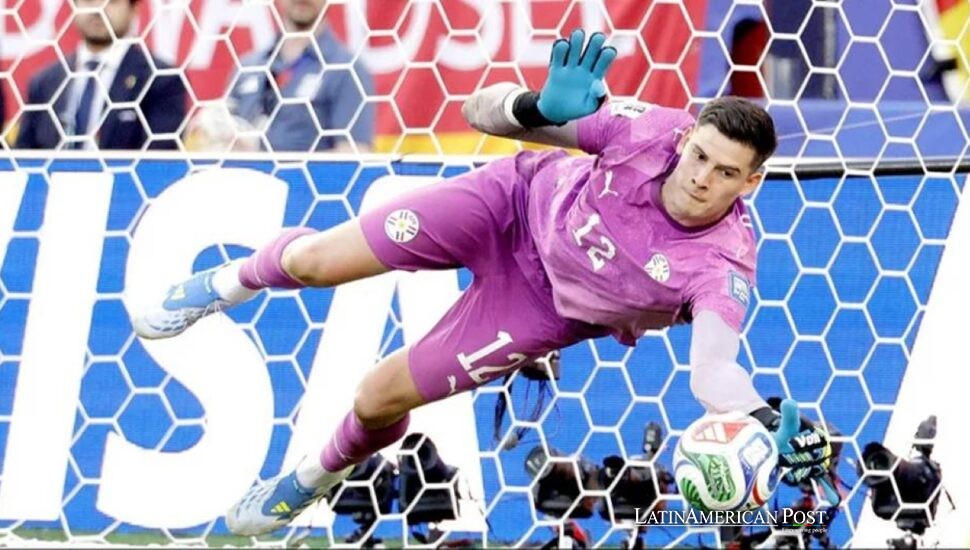
Orlando Gill once sold a cherished jersey to pay for his premature son’s care. Four years later, after Paraguay stunned Germany, the buyer offered it back, turning a World Cup upset into a parable of sacrifice, memory, and regional pride.
A Jersey Sold Before Anyone Was Watching
After Paraguay eliminated Germany, Orlando Gill stood in Boston looking as if his life had split into before and after.
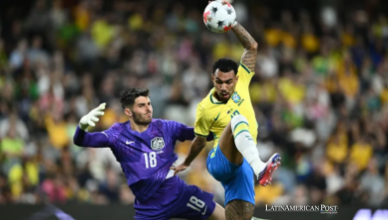
The match had ended 1-1. Then came penalties, that cruel little theater built for goalkeepers. Gill stopped two German shots, Paraguay won the shootout 4-3, and a 26-year-old making his first World Cup run became a national hero.
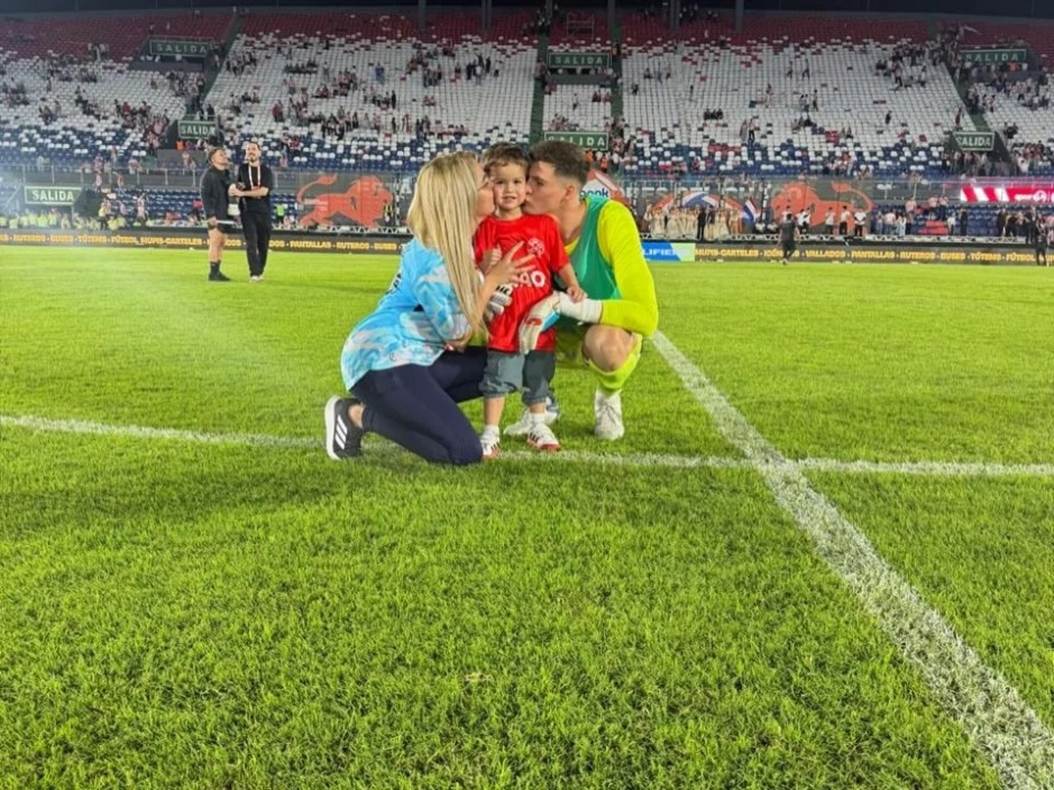
Yet the object that defined his tournament was an old Under-20 jersey Gill had sold in 2022 for 200,000 guaraní, about $32.90, when his newborn son Lauti was fighting through medical problems. His wife, Melissa Avalos, called those weeks the hardest of their lives. “We had nothing,” she wrote in Spanish, recalling how Gill sold club clothing to cover expenses while their baby fought to survive.
The detail resists the mythology built around athletes. Gill was converting his career into hospital money. The shirt represented a possible future in soccer. The cash represented an immediate need. There was no choice.
After the victory, that private history resurfaced online. Pedro Suarez, the man who bought the jersey, tracked Gill down and offered to return it without payment. He added one condition, both challenge and blessing: beat France.
The exchange carried the intimacy of a small country. Suarez had held a fragment of another family’s emergency. By offering it back, he transformed a survival transaction into collective memory.
When Paraguay Stopped Germany
Paraguay’s tournament began with a loss to the United States. Gill then helped produce clean sheets against Türkiye and Australia, carrying the team into the knockout rounds. The defense was disciplined, with Matías Galarza and Andrés Cubas providing balance.
Then came Germany.
Penalty shootouts exaggerate individual heroism, but Gill’s moment was built by a team willing to suffer without the ball, close spaces, and stay alive through 120 minutes. His two saves did not create Paraguay’s resilience. They revealed it.
“It showed that you shouldn’t speak too soon,” Gill told reporters after the match, according to the Associated Press. “This proves that Paraguay is capable of achieving great things.”
The line traveled because it sounded larger than soccer. Paraguay is accustomed to being treated as an afterthought. It lacks the global celebrity machinery of Brazil and Argentina, the export mythology of Uruguay, and the commercial scale of Mexico. Its football identity has often grown from resistance, defensive concentration, and the stubborn refusal to disappear.
Gill embodied that tradition with a modern twist. Reports linked him to Manchester United and Torino after the tournament. European clubs saw reflexes, authority, and transfer potential. Paraguayans saw the father who once sold his jersey for the price of a modest dinner in the United States.
That contrast exposes a familiar Latin American football economy. Talent can be globally valuable long before the person possessing it has local security. Clubs and sponsors may eventually assign millions to an athlete whose family once depended on improvised sales, favors, and faith. The uplifting ending should not erase the system that made the sacrifice necessary.
France ended Paraguay’s run 1-0 in the Round of 16, despite another strong performance from Gill. It was the country’s deepest World Cup appearance since 2010. Paraguay forced one of the tournament’s strongest teams to survive rather than stroll.
The Shirt and Europe’s Old Ghosts
Across Latin America, matches against European powers rarely feel neutral. They arrive carrying older hierarchies, migration stories, colonial memories, and the knowledge that wealthy leagues still extract much of the region’s best talent.
The ghosts of the 1982 Falklands/Malvinas War remain the sharpest example of that overlap. Argentina’s victory over England at the 1986 World Cup became inseparable in public memory from a war lost four years earlier. However, football could never repay military defeat or restore the dead. Latin American triumphs over Europe are still often narrated through that grammar of reversal: the underestimated nation forces the powerful to answer.
Paraguay’s victory over Germany was not a reenactment of Malvinas, and treating it as one would flatten history. Paraguay has its own war ghosts, especially the catastrophic War of the Triple Alliance and the Chaco War. Yet the regional resonance is unmistakable. A South American underdog defeated a European giant, then faced France, whose wealth and football infrastructure dwarf Paraguay’s. The scoreboard briefly inverted the normal order.
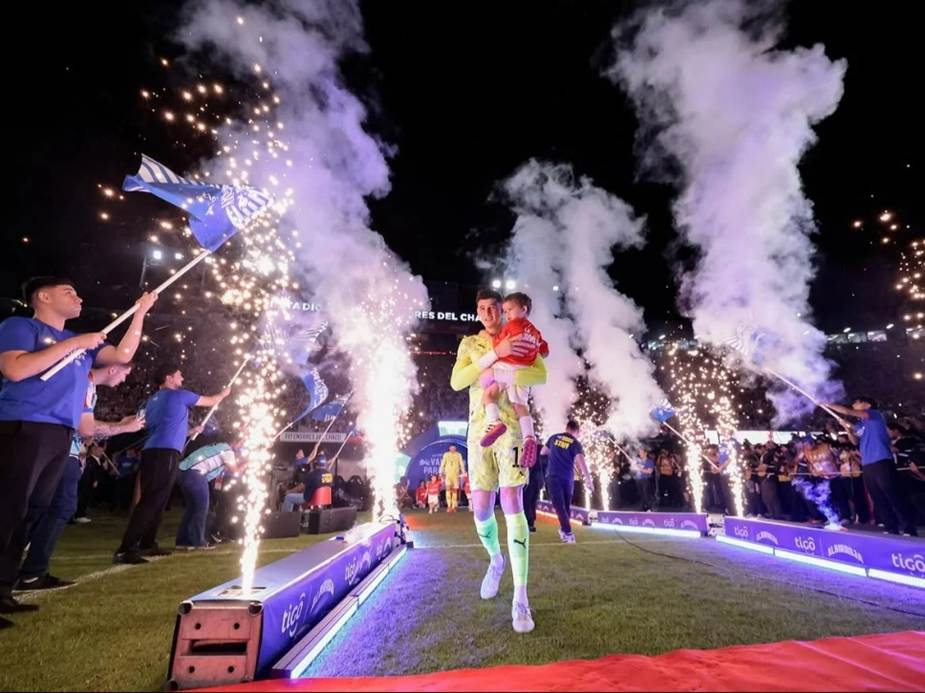
Gill’s story makes that inversion human. He did not arrive as a symbol manufactured by a federation. He arrived carrying the memory of a hospital room, a frightened young family, and a jersey surrendered because a child’s life mattered more than a keepsake.
Suarez’s promise to keep the shirt safe now feels ceremonial. Gill did not beat France, so the joking condition went unmet. Still, the deeper bargain had been fulfilled. The jersey survived. Lauti survived. Gill reached the World Cup and stopped Germany. Then the world finally looked his way.
In Latin America, where football becomes a language for class, nation, grief, and hope, that is why the shirt matters. It is not valuable because a star wore it. It is valuable because, before the world knew his name, a father let it go.
Also Read: Cuban American Quarterback Fernando Mendoza Bets Big on Vegas Glory