Colombia Walks a Diplomatic Tightrope Between Palestine and Israel Again

As Gustavo Petro exits and Abelardo de la Espriella prepares to govern, Colombia is attempting a risky diplomatic pivot: preserving its recognition of Palestine while rebuilding military, commercial, and political ties with Israel, all beneath Gaza’s long shadow at home.
A Ceremony with an Expiration Date
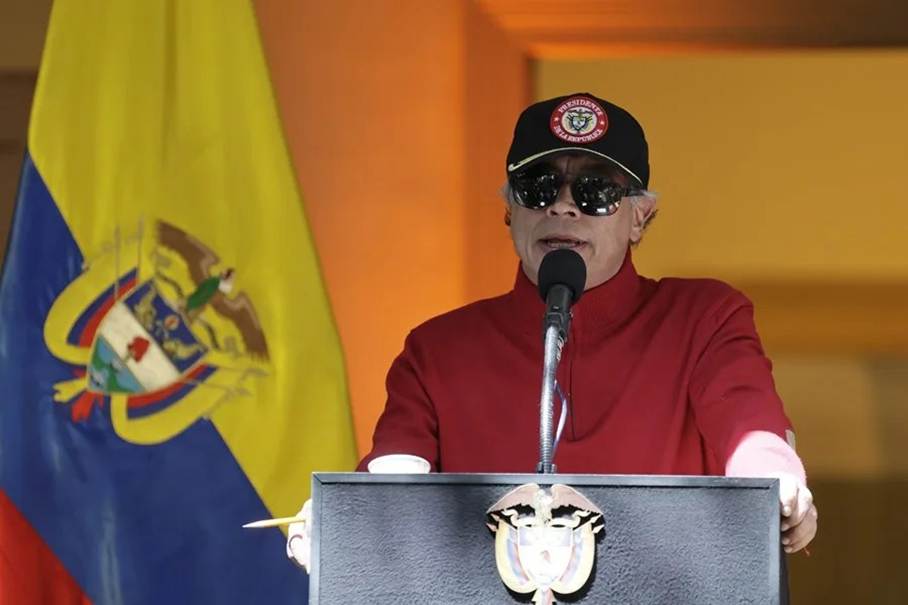
Credential ceremonies are usually built for quiet photographs: a flag, a folder, a practiced handshake. Yet when President Gustavo Petro received Palestinian Ambassador Suad Ahmad Hasan Sobeh at the Casa de Nariño on July 28, the ritual carried the tension of a farewell.
Petro had ten days left in office. The ambassador was only beginning her work. EFE reported that he also received the new ambassadors from Venezuela and Turkey, but the Palestinian presentation held greater symbolic significance. One relationship was being welcomed while the next administration prepared to narrow it.
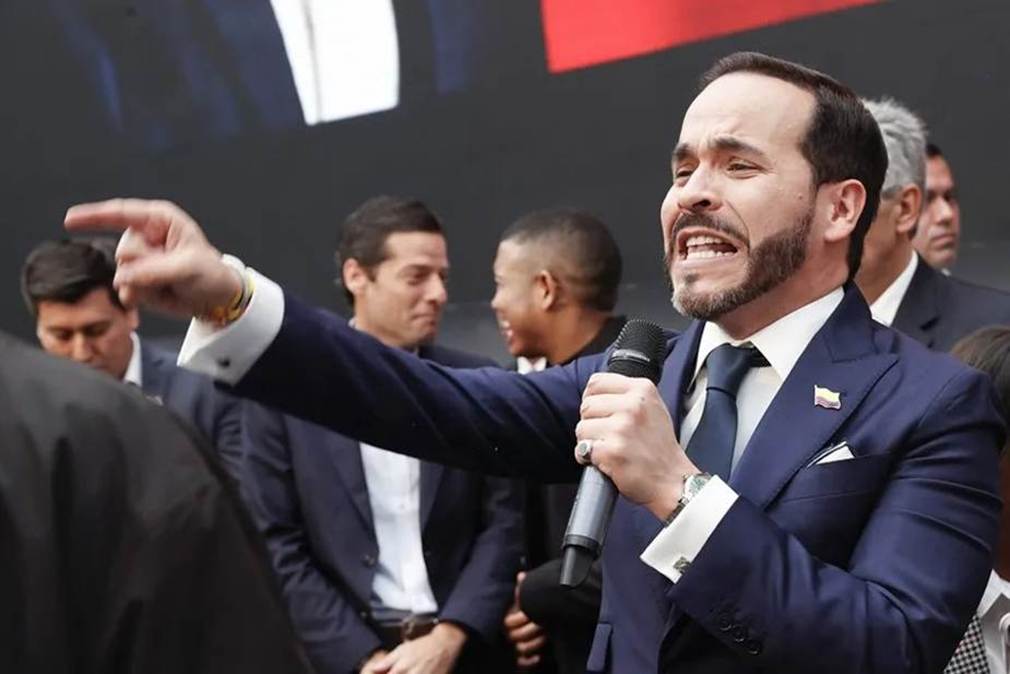
Sobeh’s credentials seemed like papers passed across a closing door. Petro had ordered a mission in Ramallah after breaking relations with Israel in May 2024, but it was never established. President-elect Abelardo de la Espriella says he will cancel it, restore ambassadors with Israel, remove reciprocal visa requirements, renew economic and security cooperation, and move Colombia’s embassy from Tel Aviv to Jerusalem.
Under Petro, Palestine became part of a Global South language shaped by colonial memory, extraction and distrust of military power without accountability. His government called for a ceasefire, humanitarian access, the release of hostages and respect for international humanitarian law. It intervened in South Africa’s Genocide Convention case against Israel at the International Court of Justice, suspended coal exports and severed diplomatic relations over Israel’s conduct in Gaza. Colombia did not become a party to South Africa’s lawsuit, but it placed its legal voice behind a strict reading of states’ duties under the convention.
Petro’s rhetoric was often more combustible than Colombia’s formal doctrine. That doctrine still recognized Israel’s right to exist and retained a two-state solution as the stated destination. The confrontation was principally with the Israeli government and its military campaign, not with Israel’s legal existence.
The distinction matters because Colombia recognized Palestine before Petro. Juan Manuel Santos’s outgoing government did so on August 3, 2018, declaring it a free, independent, and sovereign state while affirming Israel’s right to secure borders and peaceful coexistence. The Constitutional Court later described the recognition as a unilateral act capable of producing binding obligations and warned that such commitments cannot be revoked arbitrarily.
De la Espriella therefore inherits a legal position older than Petro and a Palestinian ambassador already accredited in Bogotá.
The Old Alliance Beneath the Rupture
For decades, Israel was not an abstract partner to Colombia. It was woven into the machinery of a country at war with itself.
Israeli weapons, training, technology and intelligence cooperation became familiar during Colombia’s long fight against guerrillas, paramilitaries and drug networks. The bond followed a hard security logic: one embattled state seeking expertise from another. Israel became closely associated with Colombia’s defense establishment.
Commerce thickened the bond. A Colombia-Israel free trade agreement entered into force in August 2020, covering goods, investment, services and cooperation in agriculture, health and technology. Coal gave the relationship a darker substance. Israel bought Colombian fuel; Colombia bought Israeli technology and arms. The partnership moved through ports, ministries and military contracts long before it became a campaign slogan.
Petro could break diplomatic relations and halt coal exports, but he could not erase that architecture. Aircraft require maintenance. Weapons systems need parts. Exporters remember buyers. Security officials remember channels that answered quickly.
De la Espriella is stepping into that practical memory. His incoming foreign minister, Omar Bula Escobar, and Israeli Foreign Minister Gideon Sa’ar agreed on an immediate exchange of ambassadors, reciprocal visa removal and progress toward an embassy in Jerusalem. The incoming government also says it will withdraw Colombia’s intervention in the South Africa case. EFE quoted De la Espriella promising that Colombia would recover “its allies, its diplomatic word and its place as a reliable partner.”
Yet reliability has two meanings. To Israel, it means restoring a strategic relationship abruptly severed by Petro. To Palestine and much of the Global South, it means whether Colombia’s commitments survive a change of president.
Jerusalem makes it impossible to disguise the pivot as simple normalization. Palestinians claim East Jerusalem as the capital of a future state, while Israel regards Jerusalem as its capital. Moving the embassy there places Colombia at the center of one of the conflict’s most disputed questions.
Canceling Ramallah deepens the asymmetry. Colombia may recognize Palestine on paper, yet it would open a full embassy in Jerusalem while denying the Palestinian relationship the mission Petro ordered. One side would receive a restored doorway. The other would retain recognition without an institutional home.
The closure of 14 other embassies sharpens the message. Petro tried to diversify diplomacy toward Africa, the Middle East and the Global South. De la Espriella presents consolidation as austerity while elevating Israel as a priority. The geography is shifting toward tighter alignment with the United States, Israel and the Latin American right.
Recognition Survives the Pendulum
Colombia’s most workable path may be the one its history has already prepared: close relations with Israel alongside continued recognition of Palestine.
That balance is harder than repeating “two states” at a podium. It requires treating Israel as a state rather than as its government of the day, and Palestine as a people and state rather than as Hamas. Hostages cannot vanish from Colombia’s moral vocabulary when the left governs. Palestinian civilians cannot disappear from it when the right returns.
The same principle applies to commerce and security. Rebuilding military cooperation may answer real Colombian needs as armed groups, cocaine economies and illegal mining challenge the state. But procurement cannot become diplomatic obedience. A country that spent decades asking the world to distinguish Colombian civilians from guerrillas should understand why Palestinian civilians cannot be reduced to Hamas, just as Israeli civilians cannot be reduced to their government.
Colombia is not observing from an empty room. Its Caribbean cities bear the imprint of generations of Arab migration, and Jewish communities are part of the national fabric. Churches, mosques, synagogues and universities hear the language used in Bogotá. Presidential rhetoric travels into neighborhoods.
The greater danger is that Palestine and Israel become tribal badges in Colombia’s culture war, leaving every election to reopen embassies, close missions, suspend contracts and rewrite moral boundaries.
A durable policy would preserve Palestinian recognition, defend self-determination and humanitarian law, and reopen channels with Israel without pretending Gaza never happened. Diplomacy should be a means of argument, not a reward for agreement. An embassy in Jerusalem, paired with no mission in Ramallah, makes it difficult to claim balance.
Ambassador Sobeh’s arrival captures the uncertainty. She presented her papers to one Colombia and will conduct her work under another. Petro received her beneath the symbols of the republic. De la Espriella will soon control the doors.
The test after August 7 will not be whether Colombia chooses Palestine or Israel in one dramatic gesture. It will be whether the country resists turning either people into an instrument of domestic revenge. Colombia can rebuild an alliance with Israel. It can continue recognizing Palestine. What it cannot credibly do is call that balance while allowing one relationship to live in institutions and the other only in memory.
Also Read: Mexico Fentanyl Pipeline Exposes the Global Broker Behind Cartel Chemistry