Brazil Finds a Punk Challenger Beyond Lula and Bolsonaro Dynasties
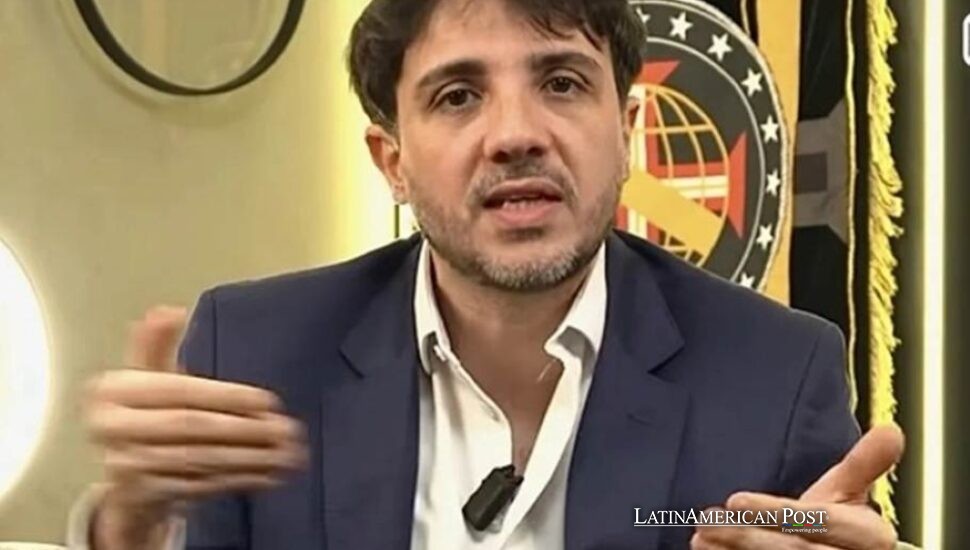
Renan Santos wants to remake Brazil with Milei’s chainsaw economics and Bukele’s iron-fisted security, challenging both Lula and Flávio Bolsonaro. His rapid surge in youth support suggests the country’s polarized election may be producing something more volatile than a familiar third option.
The Candidate Who Refuses the Middle
When Renan Santos formally launches his presidential campaign in São Paulo, he will attempt a difficult conversion: turning millions of followers and clipped provocations into votes from people who may never have seen him beyond a phone screen.
Santos, 42, has never held elected office, but he has spent a decade inside Brazil’s political combat. In 2016, he was among the activists whose street demonstrations and digital campaigns helped create the climate that led to Dilma Rousseff’s impeachment and removal from office. Now he wants her former office.
The president of the newly created Missão party is also an entrepreneur and guitarist for punk band Limão Rosa. His style depends on disruption, velocity and a cultivated refusal to sound presidential. He speaks to younger Brazilians in the language of rupture, not reconciliation.
Calling him a third-way candidate misses the point. Santos does not offer to stand politely between President Luiz Inácio Lula da Silva and Senator Flávio Bolsonaro. He says he is further right than Bolsonaro’s son, while accusing Lula’s movement of populism and the Bolsonaro camp of sectarianism. His proposition is replacement.
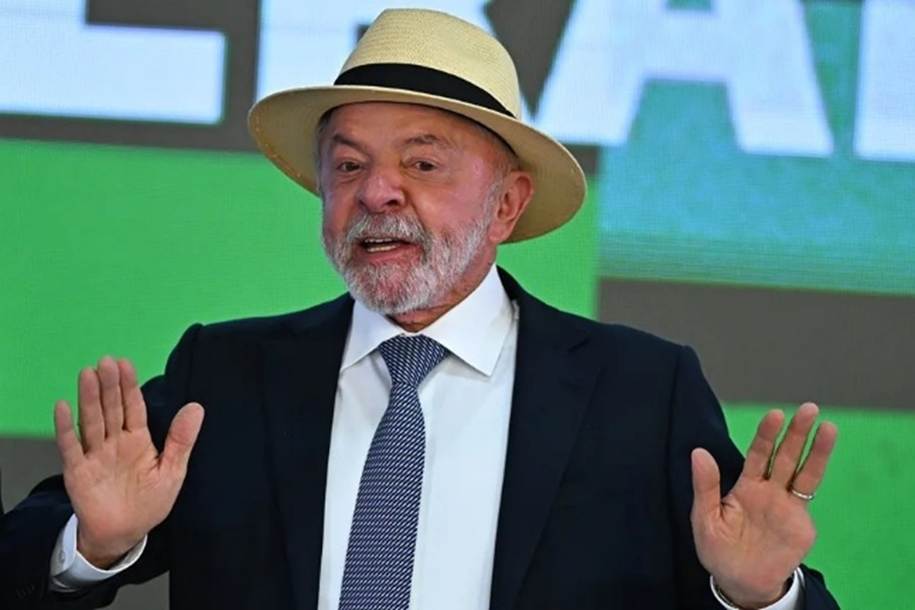
Brazil’s elections have long revolved around two powerful stories. Lula embodies social inclusion, labor memory and faith in the state’s ability to lift millions. Bolsonarismo channels cultural reaction, punitive order and anger at institutions accused of shielding elites. Santos is betting that disgust with both camps can become an electorate rather than merely a mood.
A Viral Surge Meets Electoral Reality
Most polls still place Santos around 3 percent, roughly level with veteran conservatives Ronaldo Caiado and Romeu Zema, while Lula and Flávio command far larger shares. Yet Santos has grown faster online than any other major candidate.
During the first half of the year, his following rose from about 537,000 to 2.8 million. AtlasIntel places him at 37.9 percent among voters aged 16 to 24, ahead of both Lula and Bolsonaro in that group.
That youth figure is an alarm bell, but not a national map. Santos must prove that digital admiration can survive local party structures, television exposure, fundraising, and voters who are less focused on ideological theater than on food prices, jobs, and safety.
His platform targets those anxieties. On economics, he borrows from Argentine President Javier Milei, proposing deep spending cuts and a smaller state. On security, he invokes Salvadoran President Nayib Bukele and promises war on organized crime.
“I am Milei in form and Bukele in content,” Santos said in a CNN Brasil interview cited by EFE. The slogan compresses two foreign presidencies into a Brazilian campaign brand. It also avoids the hardest question: whether those models can be transplanted into a vast federal country with powerful courts, governors, police forces and criminal organizations.
Santos wants to remove the presumption of innocence from people identified as criminal-group members, deny them custody hearings and recover faction-controlled territories within a year. Such language speaks to residents who experience state absence daily. But it also risks treating poor neighborhoods as enemy terrain and police classification as proof of guilt.
That danger is especially sharp in Brazil, where race, poverty and geography often influence who is stopped, searched or killed. Removing safeguards would not be abstract. Its consequences would fall first on communities trapped between criminal factions and violent state intervention.
The Right Splits Between Bloodline and Breakaway
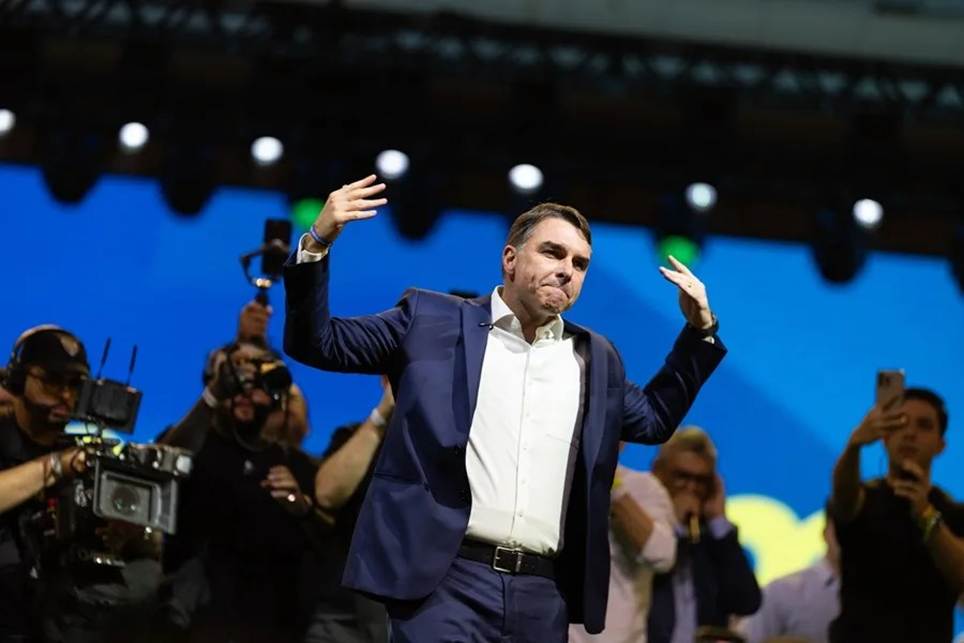
Flávio Bolsonaro offers the opposite candidacy. Where Santos sells insurgency, Flávio sells inheritance. Launching his campaign at São Paulo’s Pacaembu complex, the senator said he may be calmer than his father but still carries “Bolsonaro blood,” according to EFE.
The convention unfolded as a family succession ritual. Jair Bolsonaro, imprisoned after receiving a 27-year sentence for coup plotting, appeared through an artificial-intelligence-generated message because restrictions prevent him from participating publicly. Flávio wept during recorded messages from his brothers and promised his father would climb the Planalto Palace ramp beside him at the January 2027 inauguration.
The Bolsonaro name offers loyalty and a ready-made national movement. It also binds Flávio to his father’s legal battles and family conflicts. His dispute with Michelle Bolsonaro and reports connecting him to a banker jailed in a major financial fraud case have weakened his momentum.
Milei’s presence widened the contest. The Argentine president attacked Lula, denounced socialism and urged Flávio to stop it at the polls, EFE reported. His appearance gave the Bolsonaro heir regional validation, while complicating Santos’s attempt to monopolize Milei-style rebellion.
Datafolha’s latest runoff scenario placed Lula at 48 percent and Flávio at 43 percent, still pointing toward another bruising national duel. Santos’s rise, however, suggests the right is no longer arguing only over who inherits Jair Bolsonaro’s voters. It is asking whether inheritance itself has become stale.
Santos also promises rare-earth manufacturing, batteries, magnets and semiconductors, an industrial nationalism that sits uneasily beside his smaller-state rhetoric. He would urbanize and regularize favela property, transform subsidies into paid work fronts and train recipients for private employment.
Those proposals reveal an ambition larger than online provocation. Santos wants to redesign the relationship between citizenship, labor, territory and authority. Brazil has heard promises of national reinvention before. The question is whether he has found a new majority, or merely a louder microphone for a generation certain of what it rejects and unsure of what it is prepared to build.
Also Read: Colombia Can Decentralize Power Without Turning Government into Roadshow Theater