Colombia Needs More than Miracles as Earthquake Recovery Tests Its New President
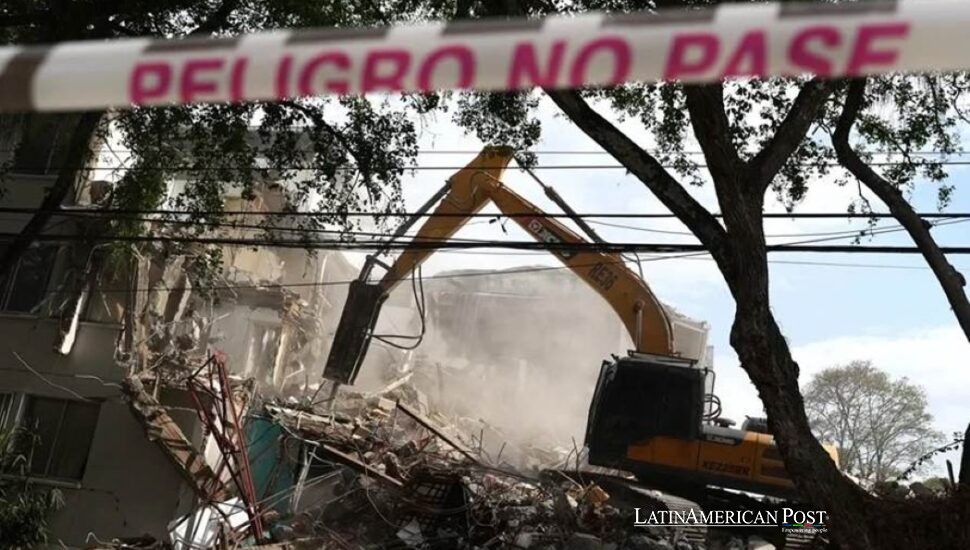
One month after Colombia’s devastating earthquake, survivors face ruined homes, interrupted schooling and uncertain reconstruction funding. President Abelardo de la Espriella promises transformation, but the disaster is exposing older fractures in a country where geography and inequality shape who recovers.
The Ground Moves, Inequality Remains
Claudia Galeano lost her home in Pereira. Her father, Arnulfo, was pulled alive from the rubble, then died in the hospital. Speaking to Reuters after the earthquake, she was grieving while thinking of others left with even less.
Colombia’s deadliest earthquake this century struck at 7:34 a.m. on August 10, three days after President Abelardo de la Espriella took office. The magnitude 7.4 rupture originated 103 kilometers underground, beneath San José del Palmar in Chocó, bordering the hard-hit departments of Risaralda and Valle del Cauca.
Depth matters. The U.S. Geological Survey explains that shaking weakens with distance from the source. But a deep earthquake is not harmless, and its magnitude alone cannot tell a family whether the building still standing around them is safe.
Disaster agency UNGRD’s figures, published by EFE on September 9, listed 331 dead, 4,505 injured and 111 missing, with 466,709 people affected across 498 municipalities in 16 departments. The Colombian Geological Service counted 297 aftershocks, the largest magnitude 4.8.
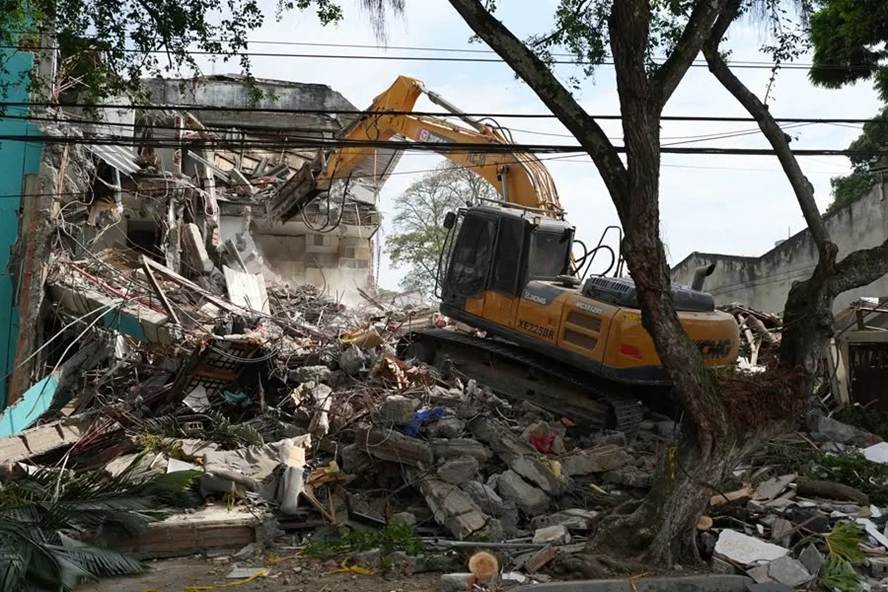
The housing inventory recorded 36,326 destroyed homes and 202,002 damaged ones, roughly 5.6 damaged properties for every destroyed dwelling. That distinction should shape recovery: rebuilding from scratch is not the only task. Inspections and appropriate repairs could determine whether families regain shelter or remain displaced.
The U.N. Development Program (UNDP) identified 27 municipalities where earthquake exposure overlapped with high or very high existing vulnerability. That finding argues against distributing aid solely by the value of lost buildings: a poorer community may lose fewer pesos and still face a harder recovery.
Armenia’s January 25, 1999, earthquake remains the painful comparison: 1,185 deaths, more than 8,536 injuries and 35,972 homes destroyed or uninhabitable. Its damage to 6,408 coffee farms also offers a warning. Reconstructing housing without restoring livelihoods leaves recovery unfinished.
A Miracle Needs a Budget
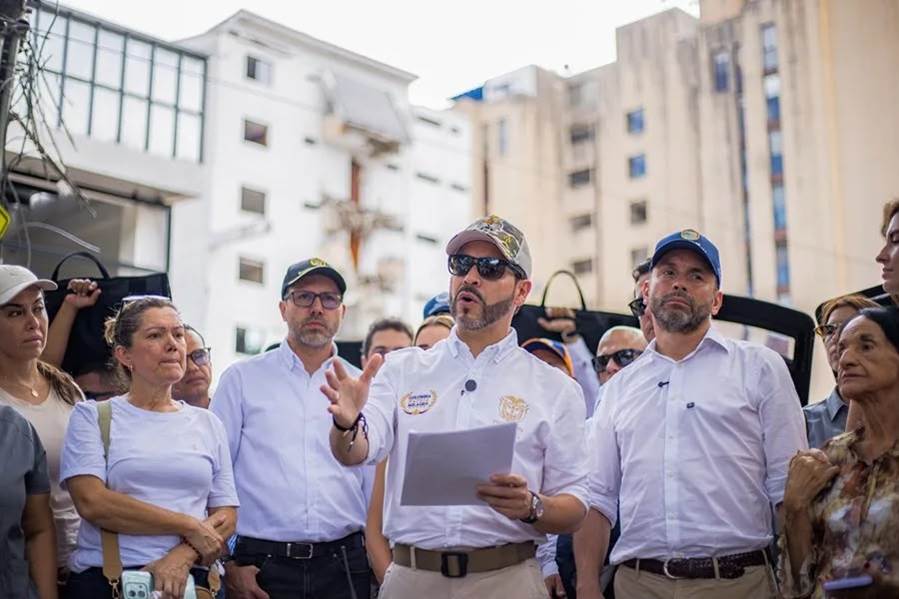
After declaring an economic, social and ecological emergency, the government put preliminary reconstruction costs at 30 trillion pesos, approximately $9.5 billion. Businessman Jaime Uribe leads Fondo Milagro, modeled on Forec, the reconstruction fund established after Armenia’s earthquake.
The precedent is less a story of philanthropy than of public financing. El País reports that Forec received 61 percent of its resources from the national budget, 38 percent from external borrowing and just 1 percent from donations and international cooperation. Wealthy backers can help; they cannot replace a funded state.
An August 28 UNDP and UNGRD assessment estimated direct structural damage at 42.1 trillion pesos. Housing accounted for 37.4 trillion, nearly 89 percent. Damage valuations and reconstruction budgets measure different things, so comparing 42.1 trillion with the government’s 30 trillion does not establish a funding shortfall. It does demand a clearer accounting of what rebuilding includes.
EFE reported on September 10 that a new package of decrees included creation of Fondo Patria Milagro and exceptional access to territorial pension resources. Emergency financing should come with published allocations and spending records, not merely assurances that money will arrive.
In Chocó, De la Espriella’s proposed “Plan Marshall” aims beyond replacing what fell. At a Quibdó gathering with major business leaders, he promoted private investment, better road and port infrastructure connecting the region’s isolated communities, tax incentives and sustainable tourism as an escape from chronic underdevelopment.
The appeal is understandable. Better connections could help local producers reach buyers and reduce the isolation that complicates emergency response. But roads and ports should serve residents, not simply move investment through their territory. Tax concessions deserve measurable obligations for local employment and lasting public benefit.
Reconstruction also has an unglamorous logistical burden. UNDP estimated 16.9 million cubic meters of debris, equivalent to about 2.4 million seven-cubic-meter truckloads. Safe removal and disposal are prerequisites for reopening streets and rebuilding neighborhoods. A donor summit cannot substitute for that work.
Classrooms Cannot Wait for Connectivity
The reported 4,313 damaged schools demand urgency, but the claim that a third of Colombia’s schools suffered damage needs clarification. It uses a denominator of 13,700; DANE’s 2024 education survey covered 52,004 campuses. Institutions and individual sites cannot be treated interchangeably when allocating reconstruction money.
The digital alternative has its own missing foundations. Among rural campuses reporting some technology equipment or services, only 57.2 percent had internet in 2024, compared with 95 percent in urban areas. Those figures do not measure household connections, but they expose the limitations of assuming education can simply move online.
Temporary classrooms and accessible learning materials should therefore be treated as recovery infrastructure, not optional extras.
Political judgment has also faltered. De la Espriella drew criticism for distributing soccer balls bearing political branding in Buenaventura. Housing Minister Jaime Andrés Beltrán faced criticism over a beachside wedding visit in Santa Marta; he defended spending a short time with his family.
The rejection of Mexican rescuers raised a more consequential question. The government cited international standards when limiting accepted teams to four allied countries. Those standards should be transparent and applied consistently, with operational need, not political affinity, determining admission.
For families like Galeano’s, reconstruction will become real when a safe home and an ordinary school day replace uncertainty. That is a more demanding test than announcing a miracle.
Also Read: Colombia Makes Gun Permits Matter Again Without Giving Criminals a Free Pass