Colombia Makes Gun Permits Matter Again Without Giving Criminals a Free Pass
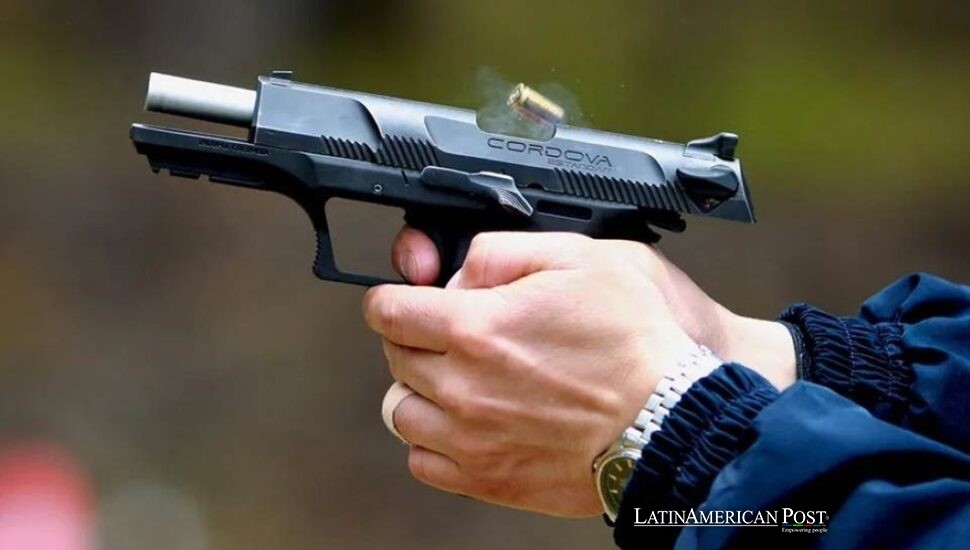
Colombia’s decision to restore valid gun carry permits deserves support because it distinguishes lawful self-defense from criminal violence. The strongest case borrows from America’s Second Amendment tradition while demanding rigorous licensing, equal treatment, and evidence rather than promises of miracles.
Permission Should Mean Permission
A valid permit should mean something. For a Colombian who has complied with the state’s requirements, seeking exceptional permission to exercise an existing permission makes lawful conduct feel provisional. Ending that extra barrier is a welcome reform, not a declaration that guns solve everything.
President Abelardo de la Espriella announced the change September 8, 2026, with implementation expected September 9. Qualifying carry permits regain effect; expired or revoked authorizations do not. Judicial prohibitions remain. This is regulated carry, not unrestricted access.
“What ends is the general suspension that made prohibition the rule,” he said in a video reported by EFE. That is the decision’s strongest justification: restore the distinction between someone the authorities have approved and someone evading them.
The national suspension began under Juan Manuel Santos in December 2015. Iván Duque and Gustavo Petro extended it, preserving special exceptions for permit holders with security needs. Almost eleven years later, a temporary restriction had become an enduring administrative arrangement across three politically different governments.
America’s Second Amendment tradition supplies a persuasive principle, not imported Colombian law. In its 2008 Heller decision, the U.S. Supreme Court recognized an individual right to armed self-defense while acknowledging limits. Colombia’s Article 223 instead requires official permission. This reform works within that framework rather than creating an American constitutional right.
The moral argument travels better than the legal machinery. Consider a threatened shopkeeper waiting for help: police protection and personal defensive capacity need not be rivals. The state should remain responsible for public security without requiring an approved citizen to remain entirely dependent on its arrival.
The home matters, but life does not stop at the front door. A lawful defensive option should not become morally suspect simply because its holder leaves for work. That does not erase the legal distinction between possession and carry; it explains why restoring carry permits deserves support.

Follow the Criminal Guns
The president’s figures reveal the scale of the enforcement task. Between January 1 and September 3, authorities seized 15,700 firearms, of which 14,179 were associated with crimes, according to his account reported by EFE. That is approximately 90.3 percent.
These are seizure statistics, not proof that 90.3 percent of all firearm crimes involve illegal weapons. Nor do they establish that permit holders never offend. They support concentrating enforcement on criminal conduct, not treating every authorized carrier as interchangeable with a gunman.
De la Espriella attributed 980 weapons to FARC dissidents, 551 to the Clan del Golfo, and 339 to the ELN. Those reported categories total 1,870, about 13.2 percent of crime-linked seizures. The campaign against illicit weapons must reach beyond those three organizations.
Here, the familiar argument that criminals ignore restrictions has force, but limits. Removing an extra administrative hurdle for approved citizens does not authorize criminal possession. Whether lawful carry deters attackers is a separate question that these numbers cannot answer.
The deterrence argument is straightforward: an aggressor unsure of a potential victim’s capacity to resist may reconsider. That is a plausible mechanism, not a proven result of this decree. Its effects deserve investigation alongside the risks, rather than being announced as a certainty before the policy begins.
Indeed, research in the Bulletin of the World Health Organization estimated that Bogotá’s and Medellín’s 2012 carry restrictions reduced monthly firearm mortality by 22.3 percent. Supporters should acknowledge that evidence, not dismiss it. The case for reform must rest on proportionate restrictions and individual liberty, not guaranteed reductions in violence.

Liberty Requires Equal Rules
The equality argument is compelling. A defensive option should not depend on political connections, physical strength or the ability to purchase constant protection. Restoring permits removes one additional gate. To make that gain meaningful, licensing must remain accessible, consistent, and subject to review.
This is freedom to choose, not an instruction to carry. Some people will reasonably decide against gun ownership. Others will accept its responsibilities. A government can respect both decisions while refusing to presume that an otherwise qualified applicant’s desire for protection is itself suspicious.
Second Amendment arguments also connect civilian independence with resistance to tyranny. Heller discusses the historical fear of governments disarming citizens to consolidate power. In Colombia, the useful lesson is that restrictions deserve justification and scrutiny, not endless renewal merely because officials find them convenient.
That principle cannot excuse private armies. A licensed citizen is not a counterinsurgency unit, and personal defense is not permission to punish enemies. Pursuing guerrillas and criminal organizations remains the state’s job. The reform should strengthen lawful citizenship, not sponsor private warfare.
Responsibility makes the distinction credible. The decree retains official controls and weapons tracking. Training and secure storage should accompany the restored permissions, while threatening conduct should trigger prompt, lawful intervention. Authorities should publish outcomes involving permit holders so that support for the policy remains accountable to what actually happens.
The gain is worth defending. Colombia is making compliance matter again without abolishing supervision. For the person who has followed the rules, that is more than a bureaucratic adjustment. It recognizes that the desire to get home alive deserves a lawful option, not another indefinite postponement.
Also Read: Mexican Femicide Ruling Puts Both Conservative Principles and Liberal Promises on Trial