Colombia’s First Month Under De la Espriella Tests Strength Against Crisis and War
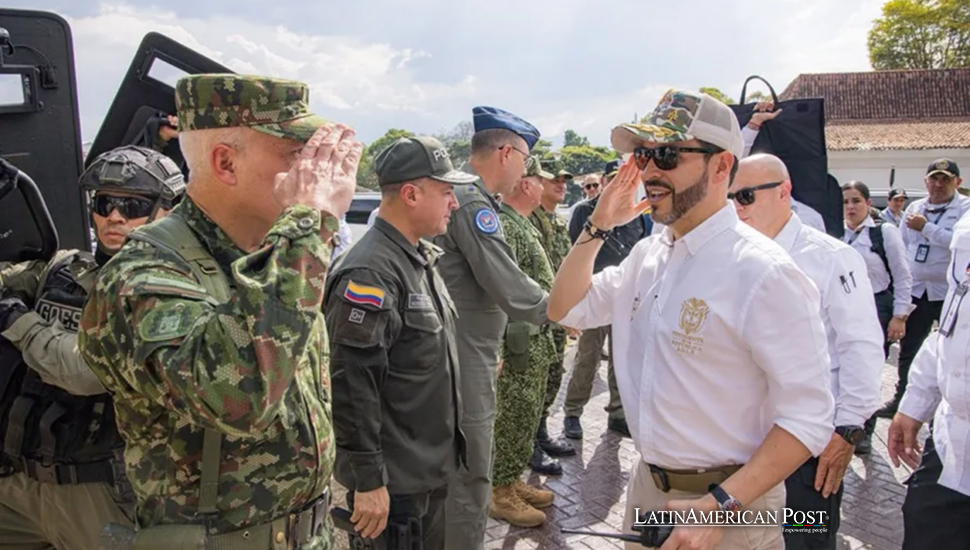
One month into office, Colombia’s Abelardo de la Espriella has paired earthquake relief with military offensives and confrontations with judges. Behind the forceful imagery lies a harder test: rebuilding devastated communities without treating civilian protection as an obstacle to strength.
A Presidency Beneath the Rubble
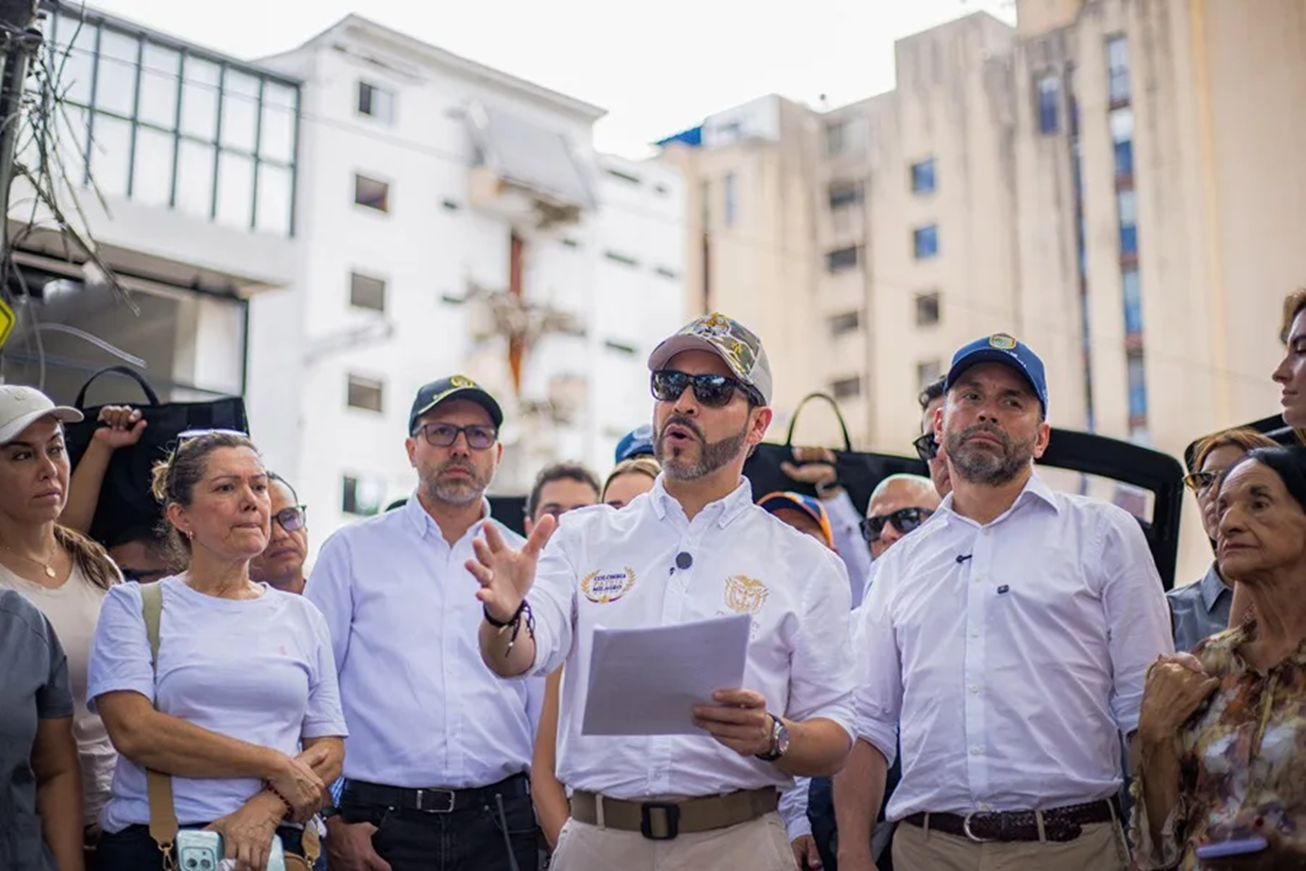
In Buenaventura, earthquake survivors received an unexpected kind of presidential attention: balls bearing party propaganda, tossed toward the crowd. As EFE reported, the gesture drew criticism during an emergency that also revealed Abelardo de la Espriella’s ability to mobilize assistance. His sleeves were rolled up. The boundary between public service and political promotion looked less clear.
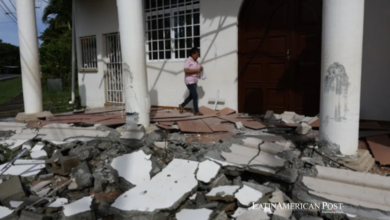
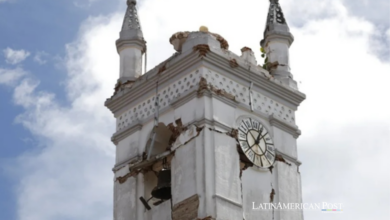
His first month, completed September 7, offered little room for a gradual start. The August 10 magnitude 7.4 earthquake struck three days after his inauguration, killing at least 331 people and injuring 4,519, according to official figures cited by EFE. Before the self-described “tiger” could establish his governing rhythm, families needed rescue.
He traveled to devastated areas, worked with local leaders and sought business and international support. Washington committed $26.5 million. Yet EFE also reported criticism that ideological preferences shaped whose assistance was accepted, including the exclusion of an experienced Mexican rescue team. Disaster relief became another arena for political alignment.
Now comes the less photogenic work. Official counts list 36,336 destroyed homes and 201,010 damaged: 237,346 housing units altogether, with 15.3 percent of them destroyed outright. Damaged does not automatically mean habitable. The larger category requires assessments and repairs whose complexity cannot be read from a presidential announcement.
The damage to 4,292 educational facilities and 400 health centers makes reconstruction more than a housing program. A repaired home offers limited recovery if children cannot return to class or an injured relative cannot obtain care. In regions already burdened by chronic underdevelopment, rebuilding must restore connected services, not produce isolated ribbon cuttings.
The Numbers Behind the Iron Fist
As the initial emergency eased, military operations moved toward the center of presidential communication. De la Espriella promised an “iron fist,” EFE reported, while highlighting nine arrests linked to armed organizations and nearly 40 deaths among suspected members. His government is preparing a terrorist designation list intended to accelerate action against such groups.
On September 6, he reported seizures of 49,379 kilograms of drugs and 1,485 firearms, alongside the eradication of 1,321 hectares of coca. Those figures measure reported operational activity. Without comparable earlier figures, estimates of total production or evidence of reduced coercion in affected communities, however, they cannot establish how much safer Colombia has become.
The presidency distributed two videos showing De la Espriella among bagged bodies, EFE reported. That choice made death part of the government’s presentation of effectiveness. A different measure is harder to incorporate into that message: forensic authorities say at least six minors have died in military bombings since he took office.
A provisional judicial order restricted aerial attacks where information indicates recruited minors may be present. It is not a permanent prohibition on all bombing or a final ruling against the entire campaign. The government announced an appeal, describing the decision as “absurd and unconstitutional,” according to EFE.
The distinction deserves more seriousness than that response suggests. Armed groups bear responsibility for recruiting children; their conduct does not remove the state’s obligation to consider civilian protection and precautions. Military effectiveness must include how force is used, not just how many opponents disappear from an operational map.
Religious symbolism has produced another confrontation. The government appealed a separate order requiring an apology over the inauguration’s use of “Long live Christ the King,” then repeatedly invoked the slogan. EFE’s account suggests a recurring political method: judicial resistance becomes an opportunity to restate presidential identity rather than lower the temperature.
Allies Abroad, Obligations at Home
Abroad, De la Espriella has moved quickly toward Washington. EFE reports a security agreement providing for $1 billion in assistance. Secretary of State Marco Rubio’s planned September 8 visit to Barranquilla puts counternarcotics, earthquake aid and commercial relations on the same diplomatic agenda.
The security commitment is nearly 38 times Washington’s announced earthquake assistance. Those sums cover different purposes and potentially different periods, so they cannot be treated as interchangeable budgets. Still, their contrast underlines the need for a reconstruction financing plan rather than an assumption that stronger military ties will also rebuild damaged communities.
The distinction between a pledge and a payment matters just as much as the size of either package. Reconstruction demands published deadlines, transparent contracting and a way for affected residents to check whether promised help has arrived. Without those mechanisms, international generosity can improve a president’s diplomatic standing long before it changes a displaced family’s circumstances.
The president has also approached Israel after Gustavo Petro’s diplomatic rupture, recognizing Israeli sovereignty over the Golan Heights while Israel supplied rescuers. Colombia additionally recognized Moroccan sovereignty over Western Sahara. These choices demonstrate alignment; they do not, by themselves, establish benefits for Colombians awaiting restored services.
One month is too short to pronounce a presidency successful or failed. De la Espriella has shown energy, secured commitments and made his preferences unmistakable. The harder evidence will accumulate more slowly: money disbursed, homes made habitable, schools reopened and communities protected without children paying for the state’s recovery of authority.
The tiger’s first month has supplied plenty of images of strength. Colombia now needs the less dramatic evidence that strength can repair.
Also Read: Latin America Watches Washington Turn Migration Into a Retro Arcade Game Again