Pope Leo XIV’s Visit Offers Peru’s Elderly a Brief Respite from Enduring Loneliness
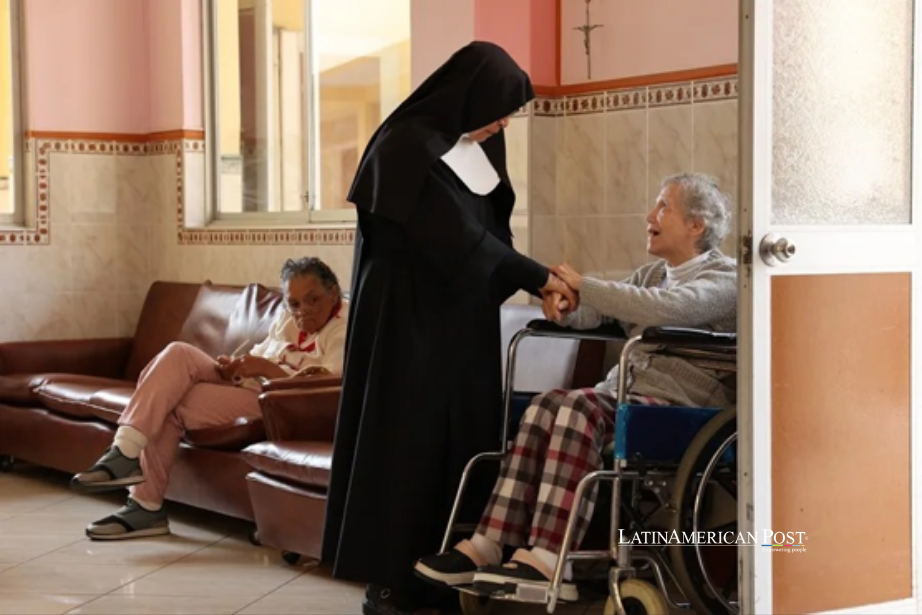
Pope Leo XIV’s planned November 16 visit to a Callao nursing home has given 60 elderly residents something rare to anticipate, revealing how loneliness can persist behind well-kept walls and why a brief encounter carries such profound weight in Peru.
A Date Beyond the Routine
Laura is 84, and the place where she expects to spend the rest of her life suddenly has something extraordinary on its calendar. November 16. Sitting beside her walker on the platform where Pope Leo XIV is expected to appear, she told EFE: “I never thought we would have a Peruvian pope, much less that he would come to my home.”
For more than two years, Laura had struggled with depression, spending much of her time alone in her room. Now she is looking toward a morning she calls the most wonderful prospect of her 84 years. The announcement has not rewritten her circumstances. It has changed what she can anticipate within them.
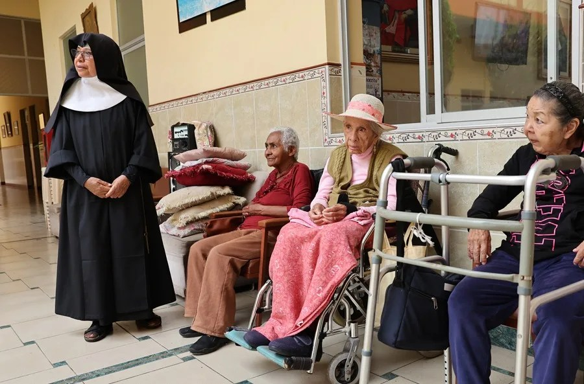
Around her, the home run by the Little Sisters of the Abandoned Elderly is bright and carefully kept. Yellow walls surround residents whose days are enlivened by caged parrots. Outside lies Callao, the port province beside Lima, where high crime supplies a harsher backdrop. Inside, safety and shelter coexist with something a locked gate cannot keep out.
Loneliness.
Sister María Agripina Garrido described to EFE the illnesses, physical limitations, and family abandonment that weigh on residents. Many have no close relatives available to visit. That distinction matters: an empty chair beside an older adult does not always prove indifference. Sometimes no one is nearby to fill it. But the absence hurts regardless.
The home’s appearance complicates an easy story about neglect. Its residents are not simply waiting for someone to repair a building. They are waiting to feel remembered inside one that already offers them refuge.
Thirty Minutes Against Ten Years
José Luis has lived here for nearly a decade. Recovering from a second operation, he told EFE that the news had made him happier and renewed his desire to live. He feels his prayers have been answered, although what moves him most is the selection itself.
“There are so many places he could visit,” he told EFE. “And he has chosen us.”
The planned encounter will last roughly 30 to 40 minutes, first in the chapel and then on a small platform in the main courtyard. Divided evenly among 60 residents, that would be only 30 to 40 seconds each. That calculation is not a promise of individual meetings. It shows how little time is available compared with the expectation already gathering around it.
For José Luis, the relevant comparison is not with another papal appointment. It is with almost ten years in the same home. For Laura, it is with more than two years of withdrawal. Their excitement makes sense against those longer stretches, not merely against the minute hand of a visitor’s schedule.
Still, renewed spirits are not evidence that loneliness has been permanently resolved. The reporting captures anticipation, not what happens after the visitor leaves. Treating a moving encounter as a solution would confuse being noticed with being accompanied over time.
That is the harder economic reality beneath the ceremony. Care must be repeated. Recovery requires attention after the dignitaries depart, and the sisters’ work continues whether cameras are present. A visit can recognize that labor. It cannot perform it.
The Homecoming After the Headlines
The invitation arrived in stages. At first, the sisters thought that merely seeing the pope from a distance would be a gift. A Vatican commission later inspected the home. Weeks afterward, the priest who celebrates daily Mass delivered the news, overcome with emotion. The sisters wondered whether they had heard correctly.
The sisters’ initial surprise is revealing, too. They had expected to watch from a distance, not become a destination. Their question about whether they had heard correctly marks the distance between feeling included in the Church and expecting its leader to cross their threshold. November 16 will briefly close that distance. The residents’ need for recognition, however, has no departure date.
The stop is scheduled for the morning of November 16, his final day in Peru. History shapes the geography. In 2020 and 2021, Robert Prevost served as apostolic administrator of Callao while also bishop of Chiclayo, nearly 800 kilometers, or 500 miles, away. EFE recounts stories of him driving alone between the cities every two weeks.
Calling him the “Peruvian pope” therefore expresses more than enthusiasm for a visiting celebrity. For these residents, the title gives a global religious institution the familiarity of someone who belongs. His earlier responsibility for Callao lends substance to that sense of return, without requiring that every resident knew him personally.
The political significance is quieter than a speech. Choosing this home places older people, illness and the daily burden of care within a national occasion usually measured through crowds and official receptions. It challenges a familiar confusion: that supplying a bed means meeting every human need.
For Peru, the test will not be whether 40 minutes can compensate for years. They cannot. It will be whether the attention makes these lives harder to overlook afterward. Laura already has her date. José Luis has his unexpected blessing. The sisters will still have their work. Who else will keep coming