Chinese President Xi Jinping and Colombian President Gustavo Petro signed a series of cooperation agreements, solidifying their strategic partnership and reaffirming mutual trust, emphasizing the importance of expanding collaboration in various fields, including infrastructure, trade, green energy, culture, and law enforcement.
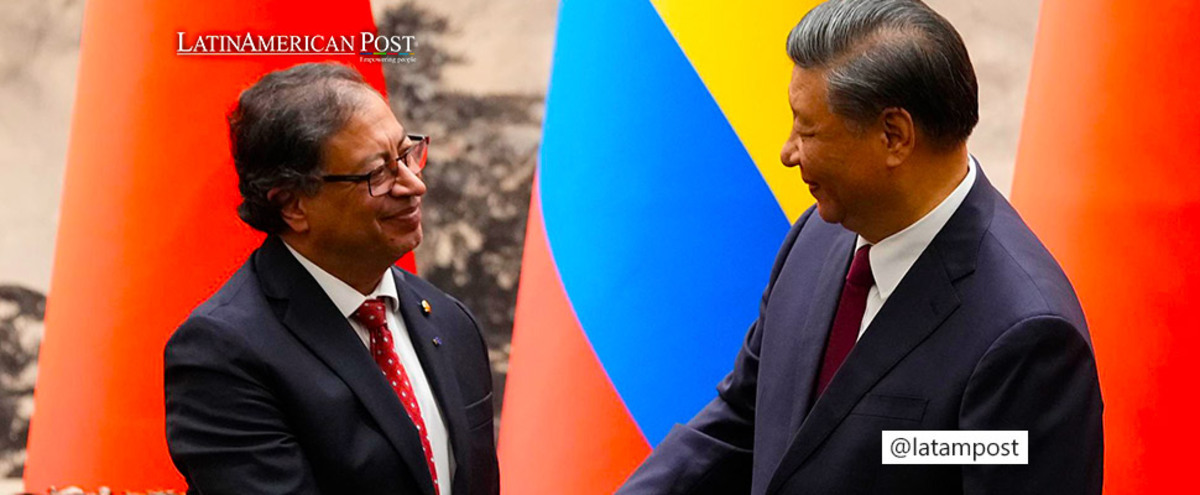
Photo: 10/25/2023. Chinese President Xi Jinping (R) shakes hands with Colombian President Gustavo Petro during a signing ceremony held at the Great Hall of the People in Beijing. EFE/EPA/KEN ISHII / POOL
EFE
Escucha este artículo
Leer en español: Xi y Petro firman acuerdos de cooperación y acuerdan elevar el estatus de sus relaciones
The leaders, who met in Beijing, also discussed regional and international issues, highlighting their nations' commitment to strengthening ties and pursuing sustainable solutions to global challenges.
Chinese President Xi Jinping told his Colombian counterpart, Gustavo Petro, that elevating bilateral relations to a strategic partnership is "the result of long-term efforts" and "reflects mutual trust between both countries."
Bilateral cooperation agreements
Following the talks held in Beijing, the two leaders signed a series of documents on bilateral cooperation in industrial investment, trade, digital economy, green development, agriculture, science and technology, education, culture, and other fields, according to a statement from the Chinese Ministry of Foreign Affairs, which did not provide further details.
"Our relations have always maintained good development momentum. Both parties understand and support each other on matters involving each other's fundamental interests and main concerns. Cooperation in various fields has progressed solidly," Xi said during the meeting.
He added that establishing a strategic partnership between China and Colombia is "the result of long-term efforts and reflects mutual trust and cooperation between the two parties."
"Both parties must value, enrich, and continuously develop it," he said.
Furthermore, the Chinese leader emphasized that Beijing supports Bogota in exploring "a path of independent development that suits its national conditions."
"China supports the Colombian peace process and hopes that Colombia will soon achieve comprehensive, lasting, and sustainable peace," he said.
"Both parties need to optimize their bilateral trade structure and strengthen cooperation in information communications, digital economy, and other fields," Xi added, promising "the entry of more Colombian products into the Chinese market."
Also read: The Political Reform of Gustavo Petro Could Break the Ruling Party
"We can also share 'green' development opportunities and strengthen cultural exchanges, as well as enhance bilateral cooperation in law enforcement and areas such as drug control and combating transnational crimes."
Xi congratulated Colombia on assuming the rotating presidency of the Community of Latin American and Caribbean States in 2025.
"China attaches great importance to the development of China-Latin America relations and will work to make next year's 10th anniversary of the establishment of the China-CELAC Forum a great opportunity to promote the stability and long-term development of China's relations with the region," he added.
Petro, for his part, stated, according to the Chinese authorities' statement, that Colombia is willing to "align its regional advantages and development strategies with the Belt and Road Initiative and strengthen cooperation in infrastructure, clean energy, and other fields."
"We welcome Chinese companies to invest in Colombia, but we seek a more balanced development of bilateral trade relations," he said.
Petro stated that Colombia is willing to maintain communication with China "on the situation between Palestine and Israel" and other international issues and to "strive to find a solution to end the war as soon as possible."
Search for International Solutions
The Colombian president, who has been on an official visit to China since Tuesday, also met with officials from the China Harbour Engineering Company, responsible for constructing the first line of the Bogota Metro.
The construction of the Bogota Metro has been controversial between the president and the mayor of the capital, Claudia López. It has been a source of controversy for years due to the differing positions of the various mayors regarding its construction.
Following the meeting with the companies, Petro laid a floral wreath at the Mausoleum of Mao Zedong, located in Tiananmen Square.