Colombia Revives Its Disaster State as Earthquake Bill Comes Due
After a magnitude 7.4 earthquake killed hundreds, Colombia’s new president reached for emergency powers and a familiar reconstruction fund, revealing why the country repeatedly rebuilds through exceptional institutions when ordinary budgets, bureaucracy, and long-term planning buckle beneath catastrophe’s sudden pressure.
A Presidency Born in Rubble
At 5:30 Wednesday afternoon, Colombia’s president appeared carrying more than the weight of office.
Abelardo de la Espriella had been sworn in Friday. Two days after the earthquake struck western Colombia, his first press conference arrived framed by casualties and fiscal dread. He took no questions.
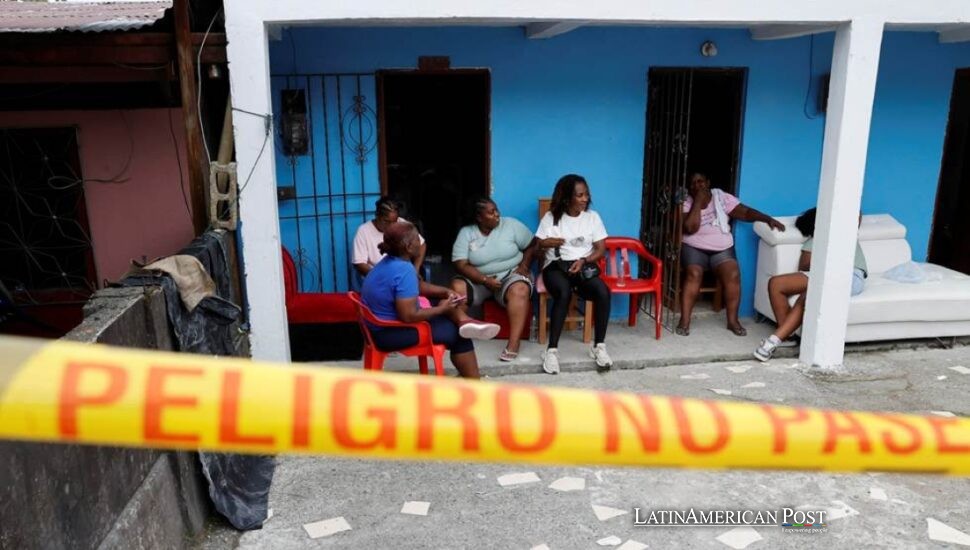
The numbers were overwhelming: 265 dead, 496 missing, 3,494 injured, and 25,872 families affected. Each figure concealed a ruined home, a hospital corridor, or a family waiting for news.
De la Espriella announced an economic state of emergency, allowing the executive to issue decrees with the force of law. A disaster declaration already accelerated contracts and resources. The new measure would permit tax action, administrative changes, and extraordinary spending.
“The emergency I am proposing will create a Fondo Milagro,” the president said, describing an entity that would channel domestic and international support.
The name sounded devotional, as if reconstruction required faith as much as accounting. In Colombia, it may require both.
The president promised utility payments and rent subsidies for displaced families, relief for merchants, tax assistance, and support for vulnerable households. He also spoke of economic reactivation, because recovery means restoring wages, customers, schools, transport, and commerce.
Yet the announcement carried an immediate contradiction. De la Espriella entered office promising cuts. Before his government had settled, the earthquake handed him a bill BTG Pactual placed near 20 trillion pesos, about $6.35 billion and roughly 1 percent of gross domestic product.
The state must spend quickly. The treasury has little room.
That collision explains Colombia’s return to special funds and emergency powers. They do not prove normal government irrelevant. They show that government, constrained by budgets, procurement processes, fragmented agencies, and political bargaining, often moves too slowly to avert catastrophe.
The Ghost of FOREC Returns
The proposed Fondo Milagro has a predecessor whose name still echoes across the Coffee Axis.
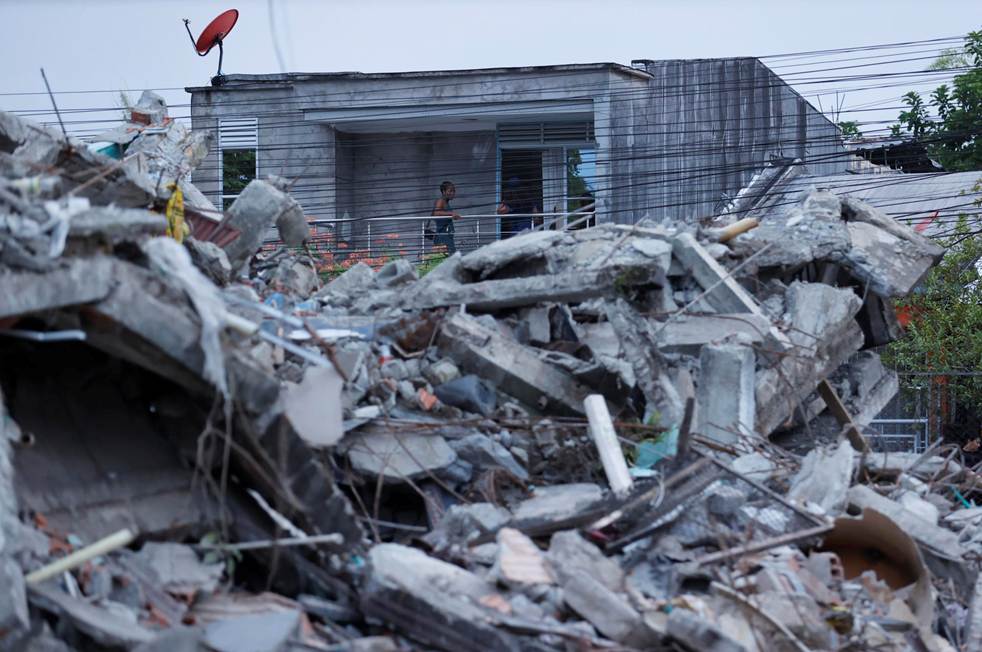
After the 1999 earthquake killed more than 1,000 people, President Andrés Pastrana declared an economic emergency and created the Fund for the Reconstruction and Social Development of the Coffee Axis, known as FOREC. It managed 1.59 trillion pesos then, about 5.2 trillion today, and repaired, replaced, or intervened in more than 136,000 homes. Around 10,000 families were relocated.
FOREC itself did not remain forever. Its institutional logic did.
That model survives because its underlying problem survives. Colombia confronts disasters through a state split between central authority and weak local capacity. Municipalities know where the vulnerabilities lie but often lack money, technical staff, reliable property records, or political leverage. Bogotá controls larger fiscal tools, yet remains distant and easily trapped in procedure.
An extraordinary fund tries to bridge that divide. It centralizes money, attracts international confidence, creates a recognizable authority, and bypasses administrative bottlenecks. A named fund also promises that suffering has an address inside the government.
But speed can weaken oversight. Centralization can silence local knowledge. Contracts can become political prizes. Families without formal deeds may vanish from official records even when their homes are gone. Informal merchants may struggle to prove losses, while rural destruction receives less attention.
FOREC’s real lesson is not that a fund guarantees success. It is that reconstruction requires an institution capable of coordinating housing, infrastructure, credit, social policy, and territorial planning simultaneously. Ordinary ministries are organized by sector. Disasters destroy sectors together.
This architecture persists because Colombia’s seismic geography and social inequalities remain. Building codes cannot retrofit every aging structure. Risk maps cannot give low-income families money to leave unstable land. Informal work keeps millions living near fragile homes and workplaces because proximity to income often outweighs long-term safety concerns.
The earthquake did not create those vulnerabilities. It exposed them in seconds.
Emergency Powers Meet Empty Coffers
The declaration will face review by the Constitutional Court. Presidential urgency does not erase constitutional limits.
Earlier in 2026, the court struck down an emergency declared by former president Gustavo Petro after Congress rejected his tax reform. The justices ruled that extraordinary authority could not overcome a political defeat. De la Espriella’s case is different. A catastrophic earthquake and widespread destruction provide a clearer basis for action.
Still, the court must determine whether each decree is connected to the disaster, necessary, and proportionate. Emergency powers exist to confront exceptional harm, not to give a new president a temporary legislature of his own.
De la Espriella said he would respect the Constitution and the law. His greater obstacle may be economic.
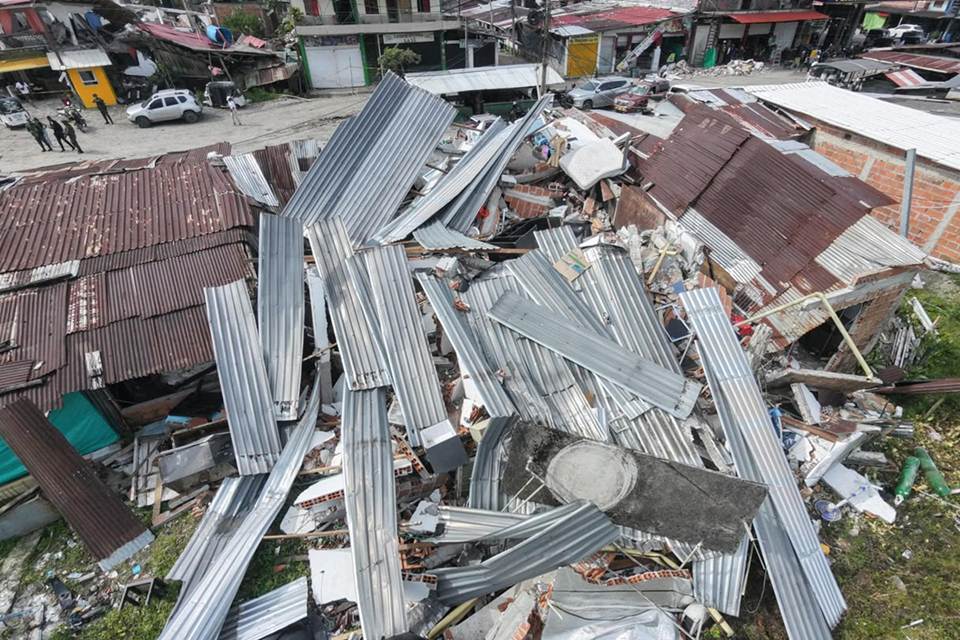
BTG Pactual’s estimate is only an opening figure. The final cost will depend on damage to homes, roads, hospitals, schools, water systems, businesses, and public networks. Reconstruction also reveals losses that emergency counts miss: interrupted education, unemployment, migration, trauma, and commercial districts whose customers never fully return.
The 2027 national budget, projected at nearly 575 trillion pesos, will require painful adjustments. Reconstruction must be financed through new revenue, borrowing, cuts elsewhere, or some mixture of all three. Every choice creates political casualties.
That is why the emergency institution endures. Colombia does not preserve it because leaders enjoy revisiting old disasters. It survives because catastrophe compresses years of neglected investment into one invoice due immediately.
The Fondo Milagro may rebuild bridges and homes. Its harder task is preventing reconstruction from restoring the same vulnerability. A repaired road across unstable terrain is not resilience. A replacement house without secure tenure is not recovery. A subsidy that expires before employment returns is only a pause.
Colombia has reached again for the machinery of 1999 because extraordinary coordination once helped rebuild the Coffee Axis. It should also remember why that machinery became necessary.
The ruins demand speed. History demands something harder: that the state rebuild not only what fell, but the ordinary institutions that failed to make another miracle unnecessary.
Also Read: Colombia Earthquake Cracks Open the Nation’s Deepest Inequality Fault Lines