Chile Watches Deep Snow Bury Its Vital Argentina Border Crossing
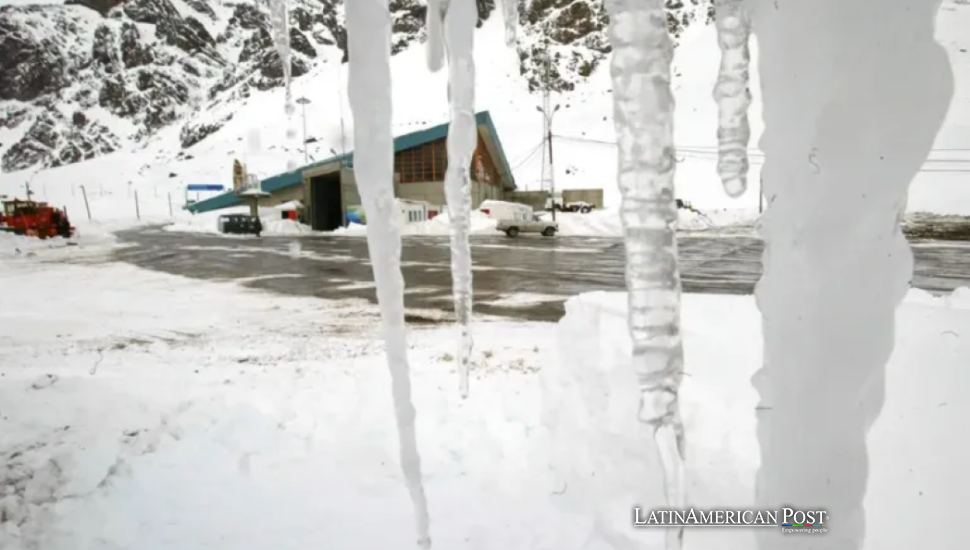
Twenty days after Chile closed Los Libertadores, 6.6 meters of snow still blocks its main road to Argentina. The shutdown reveals how El Niño, mountain physics, fragile infrastructure, and a warming climate can turn essential Andean snowfall into economic paralysis.
The Mountain Has Closed the Door
At Los Libertadores, winter has stopped being scenery. Snow has become wall, weight, and waiting.
The main highway between Santiago and Mendoza has remained closed since July 14. On Monday, Chilean authorities said there were still no safe conditions for reopening the crossing, also known as Cristo Redentor. The shutdown is now the second longest in recent history, behind the 26-day closure recorded during the austral winter of 2023.
Nearly 6.6 meters of snow has accumulated around the crossing. Power interruptions have complicated operations, while forecasts for additional snowfall threaten to cover cleared sections again. Ricardo Figueroa, the presidential delegate for Los Andes Province, said the snow still did not permit safe travel, according to EFE.
The caution is justified. Reopening a high mountain road is not simply a matter of finding the asphalt. Crews must assess visibility, wind, unstable slopes, ice, drifting snow, communications, and rescue capacity. A premature opening could leave trucks immobilized beneath avalanche terrain.
Yet every closed day carries a price. Los Libertadores is Chile’s principal land connection with Argentina and a strategic corridor for supplies, exports, investment, and jobs. Delivery schedules unravel. Perishable cargo loses time, and rising logistics costs eventually reach consumers.
The Andes have always been both border and backbone. They divide republics, but also bind Pacific ports to inland South America. When the passage closes, geography reminds two modern economies that their integration still depends on a narrow ribbon of pavement through rock and snow.
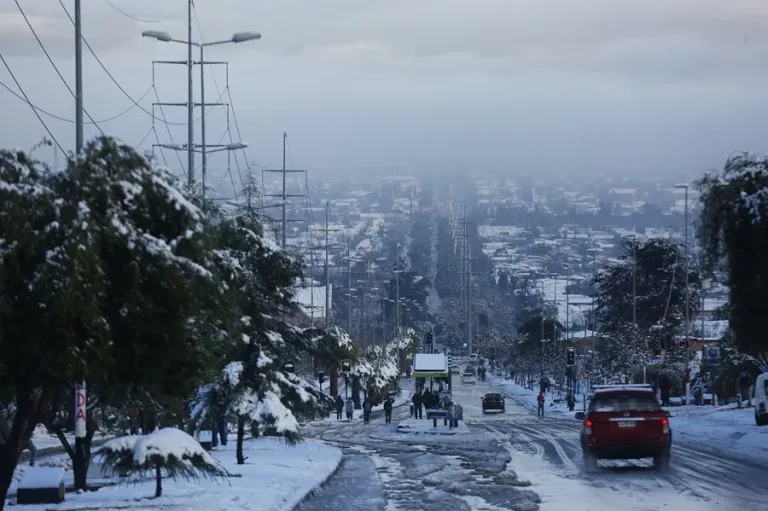
Why So Much Snow Fell at Once
El Niño is part of the explanation, but not a magic answer.
The phenomenon begins with unusual warming in the central and eastern equatorial Pacific. That heat reorganizes tropical rainfall and atmospheric circulation, altering weather systems far to the south. Chile’s Meteorological Directorate said El Niño was established by July and projected above-normal precipitation from Coquimbo to Magallanes during July, August, and September. It has also warned that the Madden-Julian Oscillation and Antarctic Oscillation can amplify or suppress precipitation from week to week.
El Niño loads the dice. It does not roll them alone.
Another possible ingredient is an atmospheric river, a concentrated corridor of Pacific water vapor. When moist air reaches the Andes, the mountains force it upward. The air cools, vapor condenses, and precipitation intensifies. Research published in the Journal of Hydrometeorology found that atmospheric rivers contribute roughly 45 to 60 percent of annual precipitation in subtropical Chile.
Temperature determines whether that moisture arrives as rain, powder, or heavy wet snow. Repeated storms stack layers with different densities. Wind creates deep drifts. Even after plows cut a corridor, fresh accumulation can erase hours of work.
Climate change adds another layer, although this particular closure cannot be attributed to global warming without a dedicated study. A warmer atmosphere can carry more moisture, increasing the potential intensity of heavy precipitation. Higher temperatures also lift the freezing level, raising the chance of rain at lower elevations, wetter snow above, rapid melting, and dangerous rain-on-snow events.
The apparent contradiction matters. Central Chile can endure an extraordinary snowstorm while its long-term snow cover declines. A Scientific Reports study found that snow-cover extent across 18 central Chilean watersheds fell about 19 percent per decade between 2001 and 2022. One buried crossing does not reverse that trend. It shows how a drying climate can still produce concentrated extremes.
A Valuable Resource Arriving as Disaster
Snow in the central Andes is stored water. It feeds rivers, farms, cities, mining, and hydropower during the dry season. After years of drought, a deep snowpack can look like relief. But water arriving too quickly, in the wrong places, and without resilient infrastructure becomes hazard before reserve.
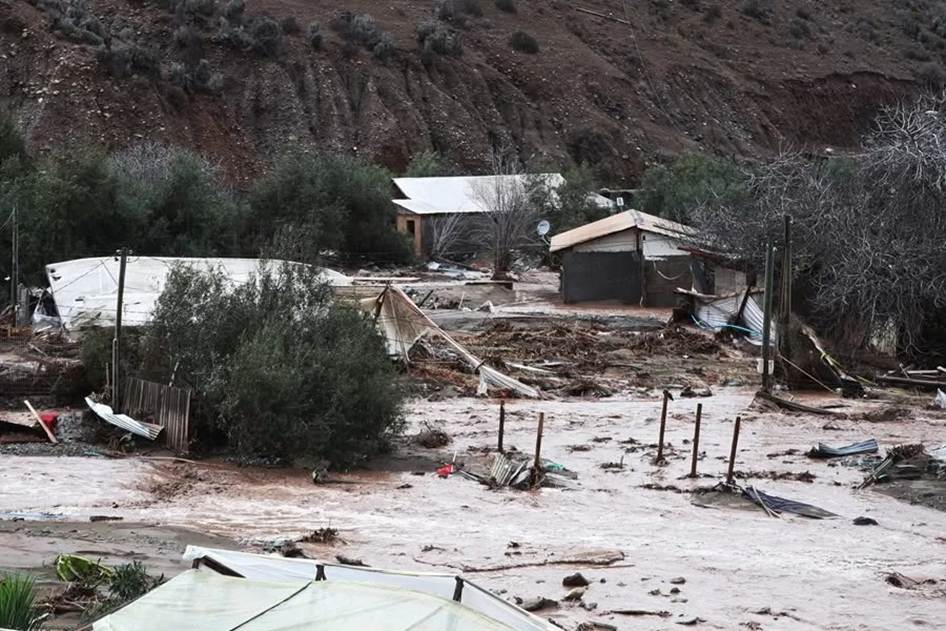
The same frontal systems have battered much of Chile. Ten of the country’s 16 regions were affected during recent storms that killed 13 people and left more than 3,000 disaster victims. The latest system brought two additional deaths, river overflows, mass evacuations, and ten red alerts alongside ten yellow alerts. Senapred reported 5,936 people isolated, 27 homes destroyed, and hundreds more with major damage.
This is the larger phenomenon: compound vulnerability. Snow closes an international artery while rain floods communities farther south. Electricity fails where road crews need it. Economic concentration makes one crossing too important to lose. Climate variability strikes infrastructure designed around older assumptions.
Chile cannot move the Andes, but it can stop treating prolonged closure as an exceptional surprise. Los Libertadores needs redundant power, denser mountain monitoring, stronger avalanche protection, equipment positioned before storms, and binational freight plans that prevent vehicles from accumulating on either side. Transport agencies, emergency officials, customs authorities, and private carriers need one shared operating picture.
Investment must also follow social risk. Angol and Carahue, where families were evacuated as rivers overflowed, deserve the same seriousness given to international commerce. A resilient corridor means little if rural communities remain isolated and households repeatedly rebuild with limited protection.
For now, keeping Los Libertadores closed is not administrative timidity. It is recognition that the mountain sets conditions no decree can repeal. The real failure would be reopening for appearances, or waiting for the next historic storm to discover that Chile’s most important border still has no dependable backup.
Also Read: Cuba Goes Dark Again as Old Machines Outlast Every Promise