Colombia Counts Petro’s Final Words Before His Bombastic, Inflammatory and Erratic Megaphone Politics Goes Silent
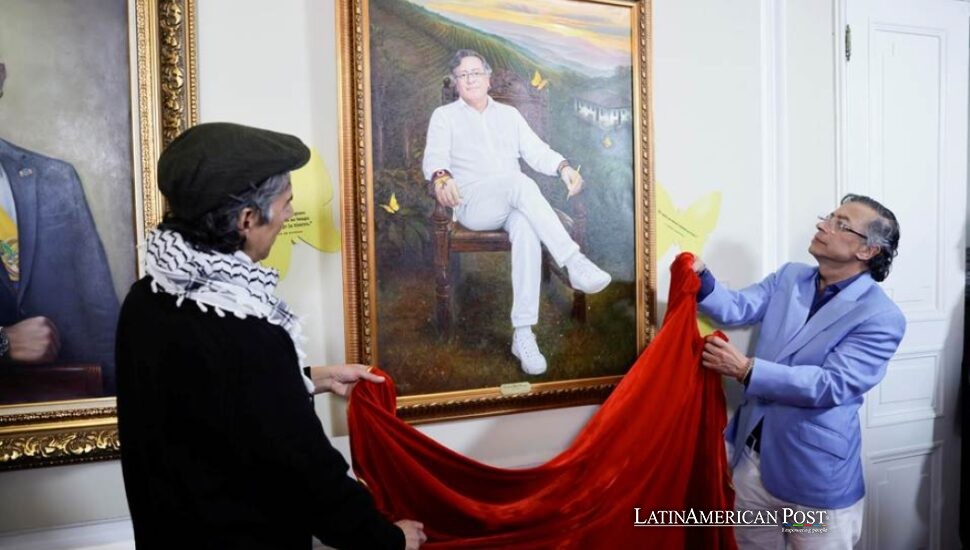
From late-night posts to courtroom-ordered apologies, Gustavo Petro governed Colombia through a torrent of metaphors, provocation and literary detours. As his presidency closes, his language reveals both the democratic force and dangerous excess of politics conducted permanently through a microphone.
A Presidency Spoken in Real Time
When Gustavo Petro leaves the Casa de Nariño on August 7, Colombia will have heard more than a president. It will have listened to a four-year interior monologue, delivered from podiums, televised cabinet meetings, street rallies and a mobile phone glowing after midnight.
Petro made language an instrument of government. He rarely moved in a straight line. A speech beginning with economic policy might wander through Gabriel García Márquez, quantum physics, Hegel, Jürgen Habermas and Simón Bolívar before circling back to its subject. Listeners followed association rather than structure.
That looseness became his signature. So did the pencil he held while gesturing and the professorial air of a man determined to explain not only what Colombia should do but also what history meant. Once he arrived, the microphone seemed to abolish the clock.
Sometimes the result was memorable. Sometimes it was reckless.
“A free woman does whatever she wants with her clitoris and her brain,” Petro said during a televised cabinet meeting in September 2025, according to EFE. He intended to defend women’s autonomy. A court concluded that the phrase reproduced sexist stereotypes and ordered him to retract it. The episode distilled a contradiction in Petro’s rhetoric: an emancipatory argument weakened by the language chosen to dramatize it.
EFE also documented the court-ordered apology that followed his description of several female journalists as “mafia dolls.” Petro sought to expose ties between media, money and power. Instead, the insult redirected attention toward his treatment of women.
Macondo as a Governing Theory
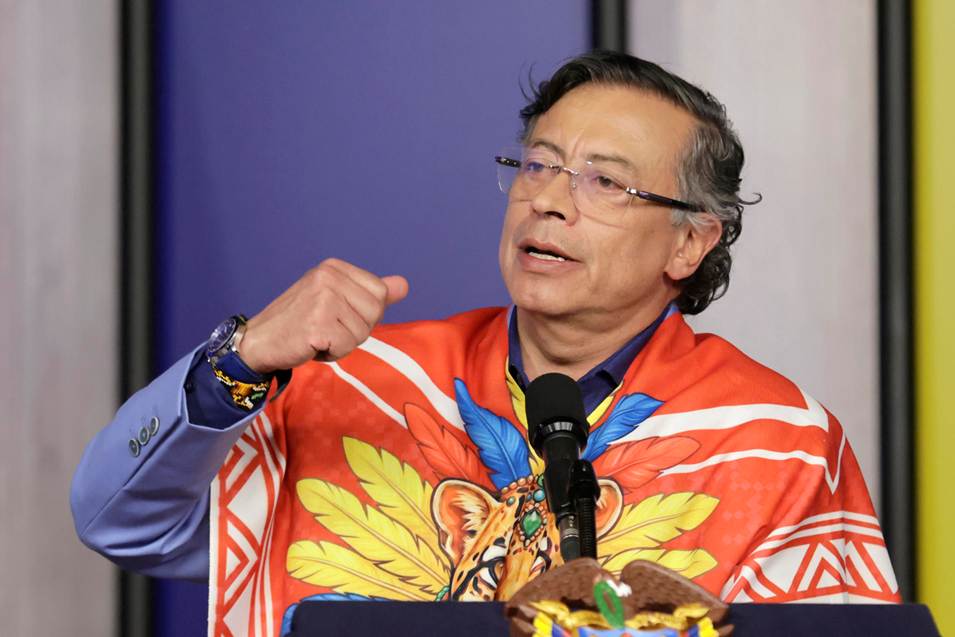
Petro often reached for literature when ordinary political language seemed insufficient. Macondo and Colonel Aureliano Buendía migrated from One Hundred Years of Solitude into presidential speeches as explanations for violence, inequality and national identity.
“García Márquez is our soul because he shows what we are,” Petro said at the April 2025 opening of the exhibition “Gabo Lives in the Casa de Nariño,” in remarks reported by EFE. “We kill each other, but we also love. We love deeply, and we take revenge.”
It was a striking diagnosis because it treated Colombia as more than a collection of policy failures. It became a tragic imagination caught between tenderness and vengeance. Greed explained inequality. Dialectics promised movement through contradiction. Colombia, as a “world power of life,” offered a national project grander than its economic statistics.
Even his wordplay tried to turn language into political chemistry. “The illicit ends by removing the letter I. And it becomes licit,” he said, as EFE recalled. The line revealed his faith that naming a transformation could help bring it about.
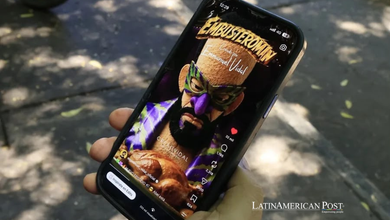
That faith belongs to a Latin American tradition in which speeches can summon a people, create an enemy or turn policy into historical destiny. Petro modernized it for the phone screen. His oratory continued after crowds dispersed through roughly 15,000 posts on X, often marked by spelling or grammatical errors.
Colombians watched the president think aloud, revise himself, quarrel, accuse, and escalate. His phone became a second lectern and sometimes the first office of state.
When Metaphor Becomes a Weapon
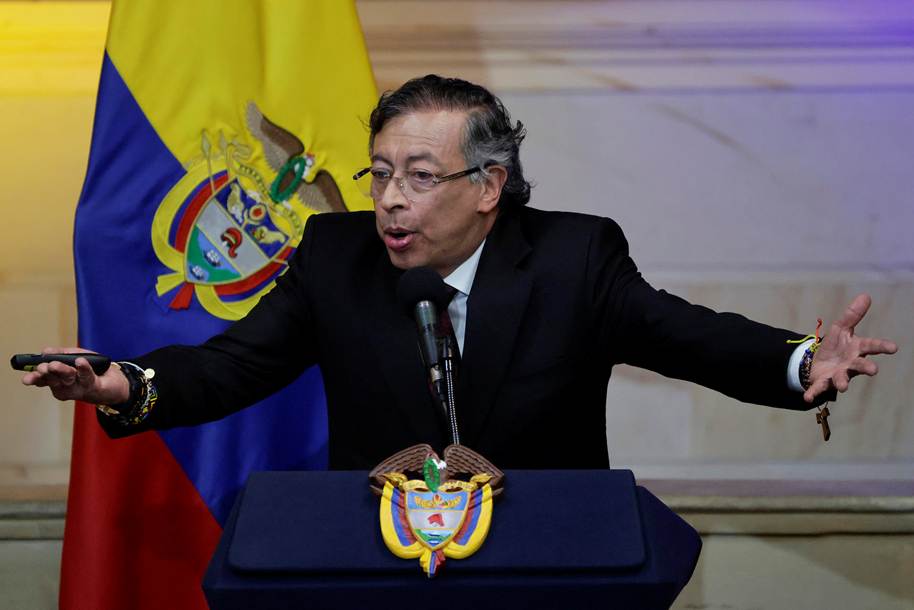
Petro’s personal remarks often produced the widest shock waves. According to EFE, he said some young men from poor neighborhoods stole cellphones for girlfriends because “a man without a woman gets lost.” He spoke of being told he was “very good in bed,” then suggested on X that he might be unforgettable both there and in history.
These were part of a style that interpreted politics through desire, masculinity and social archetypes. “The Brayans” stood in for marginalized young men. “Vampire men” embodied predatory power. Women repeatedly appeared as symbols of freedom, salvation or male disorientation.
The problem was not colloquial speech. Petro could puncture ceremony with warmth, as when he greeted Queen Máxima of the Netherlands with “Quiubo, reina!” in February 2024, according to EFE. Nor was intellectual ambition the problem. Few presidents have tried so openly to connect everyday politics with philosophy and literature.
The danger came when metaphor replaced precision, or comparison became moral annihilation. Petro repeatedly invoked Nazism, fascism and slavery against leaders and projects he opposed, including Benjamin Netanyahu, José Antonio Kast and Javier Milei. The language raised the stakes, but flattened historical distinctions and turned disagreement into existential battle.
In New York in September 2025, outside the United Nations General Assembly, Petro used a megaphone at a pro-Palestinian demonstration to urge American soldiers to disobey President Donald Trump’s orders if they violated humanity. It was an extraordinary image: a Colombian president speaking like an activist at the edge of institutional diplomacy.
Supporters saw moral courage. Critics saw indiscipline. Both readings captured something real.
Weeks before leaving office, Petro presented “The Words of Change,” a ten-volume collection of his speeches. The scale was fitting. His presidency treated words not as a record left after governing, but as governing itself.
Now Abelardo de la Espriella prepares to take power, while the Casa de Nariño is expected to become a museum. Petro’s language will remain outside its walls, archived in videos, rulings, books and midnight posts.
His legacy will not simply be that he spoke too much. It will be that he believed language could remake Colombia, and sometimes forgot that words, once released, also remake the speaker.
Also Read: Cuba’s Economic Opening Splits the Revolution From Its Own Left