Colombia Fights Wildfires While Tolima Counts the Cost in Ash
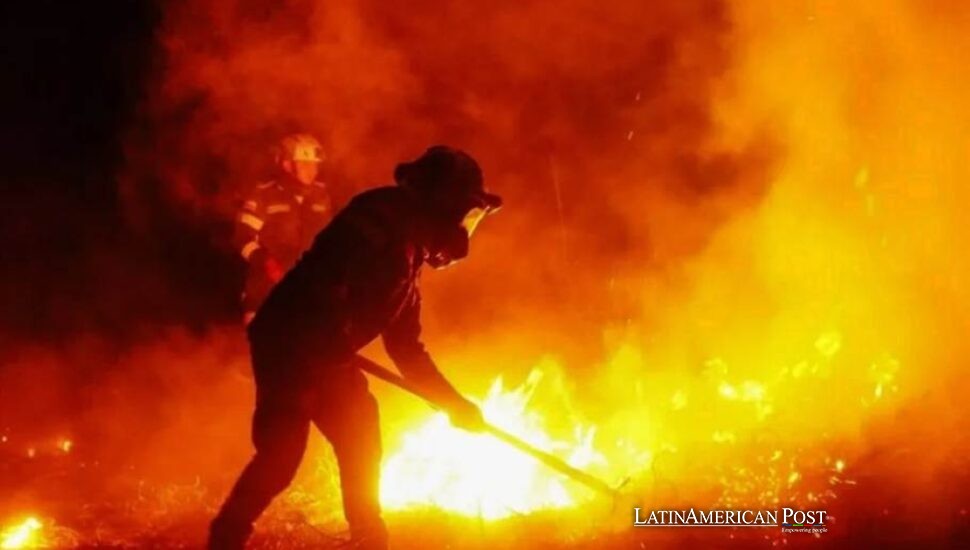
Wildfires scorching Colombia have turned Tolima into the country’s emergency center, threatening a gas pipeline, destroying crops and exposing how extreme heat, rural vulnerability and possible arson can combine into a crisis that survives long after the flames are controlled.
A Pipeline Saved, a Landscape Still Burning
In Gualanday, the good news arrived with smoke still hanging over the countryside. Firefighters, relief teams and local authorities stopped a forest fire in the municipality of Coello before it reached a gas pipeline, preventing one emergency from becoming something larger and more dangerous.
Colombian President Abelardo De la Espriella said the operation protected strategic infrastructure and avoided “an even greater emergency,” according to EFE. The area remained under surveillance Sunday because a controlled fire is not necessarily a finished fire. Heat can persist below ash. Wind can find an ember. A hillside that looks quiet can flare again.
That caution captures Colombia’s wider predicament. The National Unit for Disaster Risk Management reported ten active fires and seven under control, while crews had extinguished another seventy-five during the previous seven days. Teams were putting out more than ten fires a day on average, yet fresh outbreaks kept the map unsettled. Tolima remained the center of the response, with emergencies in Suárez, San Luis, Armero, Coello and Guamo. Fires were also reported in Nariño and Caldas.
The numbers show progress, but not closure. On August 13, when Tolima declared a public calamity, authorities counted thirty-eight active fires in sixteen municipalities. Ten days later, the national tally was far lower. That suggests a formidable suppression effort, although fire counts are snapshots, not a straight ledger. A blaze can move from active to controlled, then flare up again.
Gualanday matters for two reasons. A pipeline was spared, and the response worked. But the operation also revealed the scale of what was at stake. In a dry landscape, a rural fire can become an energy emergency, an agricultural disaster and a test of government capacity at once.
Twenty Thousand Hectares Become a Rural Balance Sheet
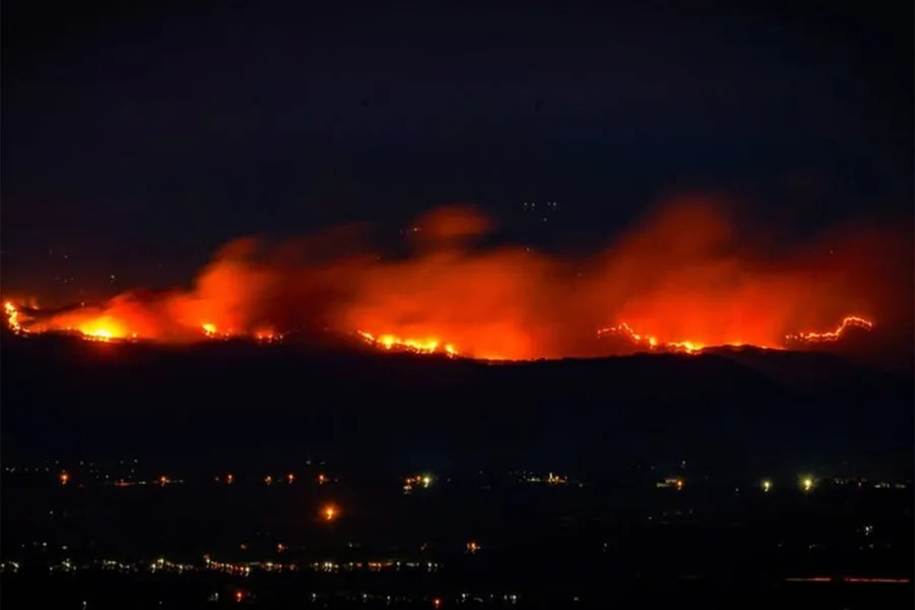
Since the beginning of August, more than 20,000 hectares, roughly 49,000 acres, of vegetation, forest, pasture and crops have burned in Tolima, according to the regional government. Spread across the first twenty-three days of the month, that equals nearly 870 hectares a day. Fire does not advance evenly, but the calculation makes the accumulation visible.
A hectare is an administrative unit until it contains someone’s coffee plants.
The damage includes plantain, coffee and avocado crops, along with thousands of hectares of cattle pasture. Those losses move through rural life in stages. First comes what can be seen: blackened leaves, scorched soil, frightened animals, fencing and irrigation exposed to heat. Then comes what is harder to photograph. A farmer loses the harvest expected to pay a debt. A family postpones repairs. Cattle have less forage. Replanting begins, but income does not return on the same schedule.
Coffee and avocado are unforgiving measures of time. They cannot always be replaced and harvested within weeks. A burned field can erase years of cultivation and leave producers carrying costs long after national attention turns elsewhere. Pasture loss may force ranchers to buy feed, move animals, or sell them earlier than planned. The flame disappears. The financial pressure stays.
This is why the declaration of public calamity is more than bureaucratic language. It recognizes an event that has exceeded ordinary local capacity. Recovery will depend on what happens after suppression: how damage is assessed, whether small producers receive timely support, and whether rural communities are helped before emergency debt becomes permanent poverty.
Tolima’s landscape makes the crisis economically layered. Farms, grazing land, settlements, and infrastructure occupy the same heated territory. Protecting a pipeline while crops burn is not a contradiction—both matter. Strategic infrastructure is easy to identify on a government map. The slow ruin of scattered households is harder to see and often slower to compensate.
Temperatures above forty degrees Celsius, or 104 degrees Fahrenheit, have been recorded in the hardest-hit municipalities. Combined with dry conditions, that heat has allowed fires to spread and narrowed the margin for error. A discarded ember, an agricultural burn, or a deliberately set flame becomes harder to contain when vegetation is already primed to ignite.
The Dangerous Politics of Blaming the Spark
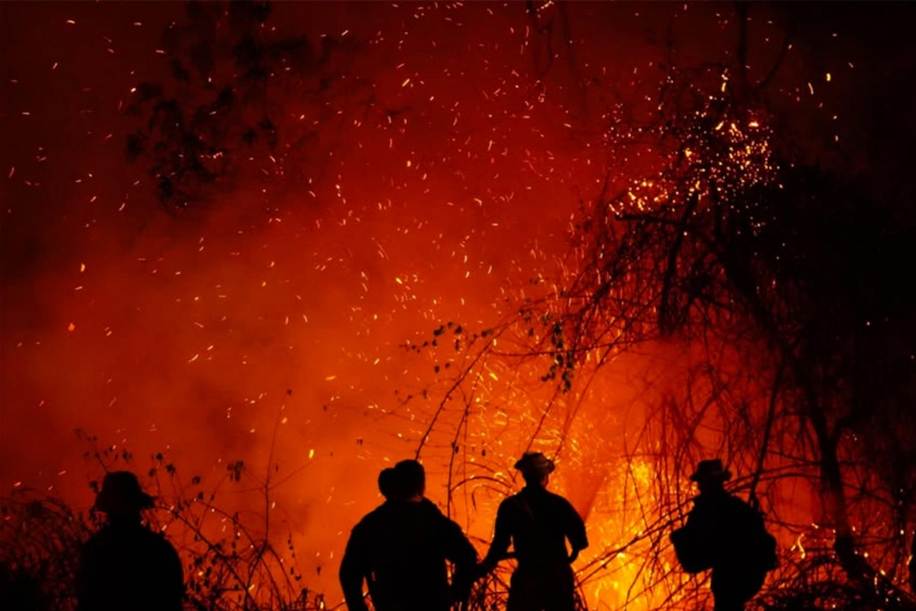
De la Espriella said he ordered a thorough investigation into allegations that some fires were deliberately started. “If it is confirmed that someone caused them intentionally, we will pursue those responsible and bring them to justice,” the president said in remarks reported by EFE.
Tolima Governor Adriana Magali Matiz also gave prosecutors evidence concerning possible “criminal hands” behind some blazes. The allegation is serious, but it remains an allegation. Determining whether particular fires were intentional requires evidence, not the understandable anger that rises when communities watch fields disappear.
The origin of a spark and the scale of a disaster are related, but they are not the same question. An intentionally lit fire may establish criminal responsibility. It does not explain why flames traveled so far, why so many municipalities were exposed, or why agricultural damage became so extensive. Heat, dryness, combustible vegetation, water access and detection speed help determine whether an ignition becomes a catastrophe.
The search for criminal hands can become politically seductive. A culprit gives chaos a face. Climate pressure, land management and uneven rural preparedness are harder to prosecute and less satisfying in a headline. Focusing only on arson could allow the conditions that magnified the fires to survive the investigation.
Colombia needs both accountability and prevention. If fires were deliberately set, those responsible should face justice. Tolima will still need stronger early detection, local firefighting capacity, protected water access, recovery assistance, and land management suited to hotter, drier conditions. Punishing an arsonist cannot restore an avocado grove or replace a season of cattle pasture.
The saved pipeline at Gualanday is a genuine victory. So are the seventy-five fires extinguished in one week. But the harsher measure of success will come later, when the cameras leave, and rural families begin counting what survived.
In emergency language, “controlled” sounds final. In Tolima, it is only the moment when the flames stop advancing. The ash remains, the investigation begins, and Colombia must decide whether it has merely defeated this week’s fires or learned how to face the next ones.
Also Read: Bolivia Arrest Pushes Mexico Deeper into Latin America’s Disinformation Reckoning