South America Courts Korea as Minerals Rewrite the Global Order
South Korea’s courtship of South America promises investment, technology and new markets. Yet beneath the diplomatic language lies a harder question: can the region convert its minerals into lasting industries, or will another foreign power inherit the old extractive map?
The New Map Beneath the Soil
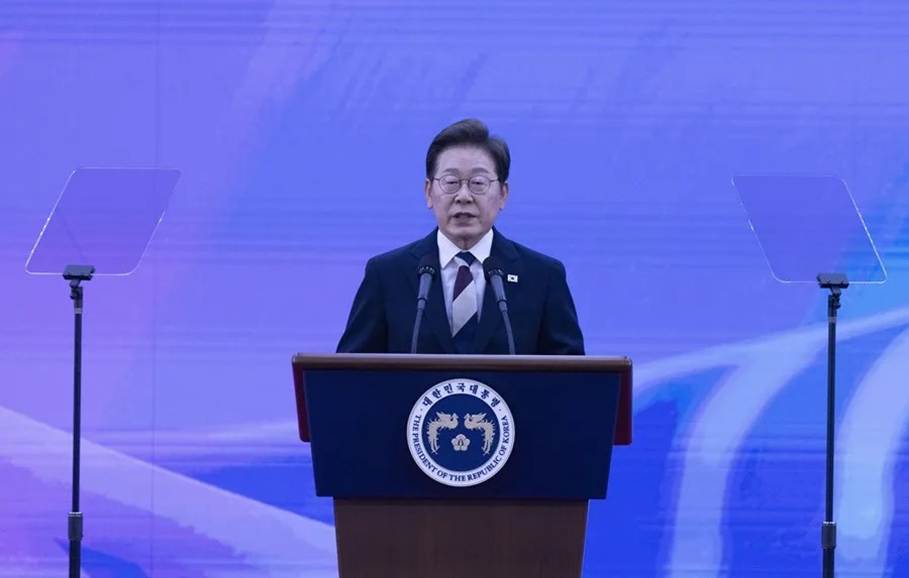
South Korean President Lee Jae Myung arrived in South America carrying the polished language of partnership and the urgent calculations of a country that cannot manufacture its future without resources buried thousands of miles from Seoul.
His tour through Brazil, Chile and Argentina places him at the center of a new contest over lithium, copper, rare earths, energy and the industrial architecture surrounding artificial intelligence. Lee met Brazilian President Luiz Inácio Lula da Silva before a business forum in São Paulo, with Hyundai Motor Group Chairman Chung Euisun among the executives accompanying him. Meetings with Chilean President José Antonio Kast and Argentine President Javier Milei were to follow.
The itinerary looks diplomatic. The geography tells the real story.
Brazil possesses rare earth deposits, industrial depth and the largest consumer market in Latin America. Chile is a copper giant and an essential lithium supplier. Argentina holds vast gas reserves and shares the lithium triangle with Chile and Bolivia. Together, the countries represent much of what advanced economies require to build electric vehicles, batteries, semiconductors, renewable-energy systems and data centers.
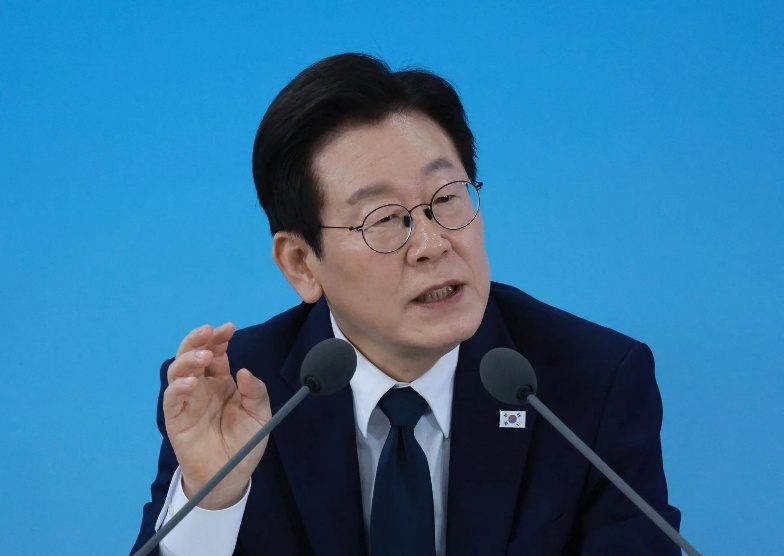
“South America possesses resources that are essential to the industries of the future, while Korea brings advanced technology, industrial know-how, and investment,” Lee told EFE in a written interview.
That sentence captures both the opportunity and the danger.
For two centuries, Latin America has heard variations of the same proposition. The region supplies what the industrial powers need. In return, it receives manufactured goods, financing and promises of modernization. Silver left Potosí. Rubber left the Amazon. Copper left Chile. Oil left Venezuela. The products returned more expensive, carrying foreign patents, foreign branding and foreign profits.
Lee insists the next phase can be different.
“The future of Korea-Latin America cooperation should not be defined simply by the exchange of natural resources for manufactured goods,” he told EFE. “It should be about creating value together through innovation, investment, technology, and human talent.”
The test will be whether those words survive the contract table.
Mercosur Looks Beyond Its Usual Partners
South Korea and Brazil agreed to accelerate negotiations toward a trade agreement with Mercosur, the bloc formed by Brazil, Argentina, Paraguay and Uruguay. The two governments also announced a working group to push discussions forward, giving Lee’s appeal a structure beyond ceremonial photographs.
Negotiations have moved slowly because the interests are not naturally harmonious. South Korea wants reliable access to agricultural products, energy and minerals. Mercosur’s industrial sectors fear competition from Korean automobiles, electronics, machinery and chemical products. A trade agreement that benefits mineral exporters while weakening local manufacturers could reproduce the very dependency Lee says he wants to escape.
Still, the political moment favors movement.
Protectionism is rising. Supply chains remain vulnerable to war, sanctions and shipping disruptions. Instability in the Middle East has intensified anxiety over energy security. Competition between China and the United States has pushed governments to search for partners that offer markets without demanding absolute political loyalty.
“In times like these, countries need reliable partners more than ever,” Lee told EFE.
South America is also searching for room to maneuver. Brazil wants trade relationships that do not leave it trapped between Washington and Beijing. Argentina needs foreign capital but remains politically volatile. Chile has long presented itself as a dependable Pacific gateway, although its development still depends heavily on copper exports.
South Korea offers something unusual in that landscape. It is a United States ally with deep commercial ties to China, a major industrial power without a colonial history in Latin America, and a country whose transformation from poverty to technological prominence carries considerable symbolic force.
Its relationship with the region is already substantial. Trade with Brazil, Argentina and Chile has increased more than fourfold in three decades, according to Lee. Korean vehicles, appliances and electronics are familiar across Latin American cities, while regional minerals and agricultural products flow toward Asian factories.
Chile holds a special place in that history. Its agreement with South Korea, effective since 2004, was Seoul’s first bilateral free trade pact. Lee now wants to modernize it with provisions covering digital trade, environmental cooperation, labor standards, gender and innovation.
Those additions matter because commerce is no longer only about containers crossing ports. Artificial intelligence systems depend on electricity, data regulation, skilled labor and immense quantities of hardware. Digital rules can determine who controls information and where profits accumulate just as decisively as tariffs once determined the price of steel.
A Partnership or Another Extraction Cycle
Lee’s language of resilient value chains arrives at a moment when South America has leverage, but leverage is not the same as power.
A country may possess lithium and still import expensive batteries. It may export copper while buying the technologies that copper makes possible. It may host data centers without controlling the algorithms, patents, or cloud infrastructure operating inside them.
For South America, the strongest agreement would not merely guarantee Korean access to minerals. It would require processing, research, technical training and manufacturing inside the region. Battery components should be made near lithium deposits. Rare earths should be refined before export. Local universities should participate in artificial intelligence partnerships rather than simply supplying graduates to foreign firms.
Otherwise, “high-quality jobs” will remain a phrase repeated at business forums while the most profitable stages of production stay elsewhere.
South Korea has reason to consider that bargain. It needs diversified suppliers, but supply security cannot be built through resentment. Communities near mines increasingly demand water protections, consultation and a larger share of revenue. Governments that ignore those demands may approve projects quickly, only to face years of protests, litigation and political reversal.
The relationship also extends beyond commodities. Korean food, cosmetics, tourism, education and creative industries have developed followings throughout Latin America. K-pop and television dramas opened an emotional corridor before diplomats began speaking seriously about critical minerals.
“Our goal is clear,” Lee told EFE, describing a relationship rooted not only in economic success but in exchanges between societies and opportunities for future generations.
That softer connection may help, but affection for Korean culture cannot substitute for industrial fairness.
South America is not merely the warehouse beneath the digital future. It is a region of engineers, workers, scientists, ports, factories and political memories shaped by repeated promises of development from abroad. Lee’s visit could mark a new phase, as he says.
The difference will be measured underground, inside factories and in who owns what emerges from both.
Also Read: Acapulco Tourism Dream Collides with Cartels, Storms, Fear, and Silence