Latin Families Paint Against Arizona Deportation Fear Brushstroke by Brushstroke
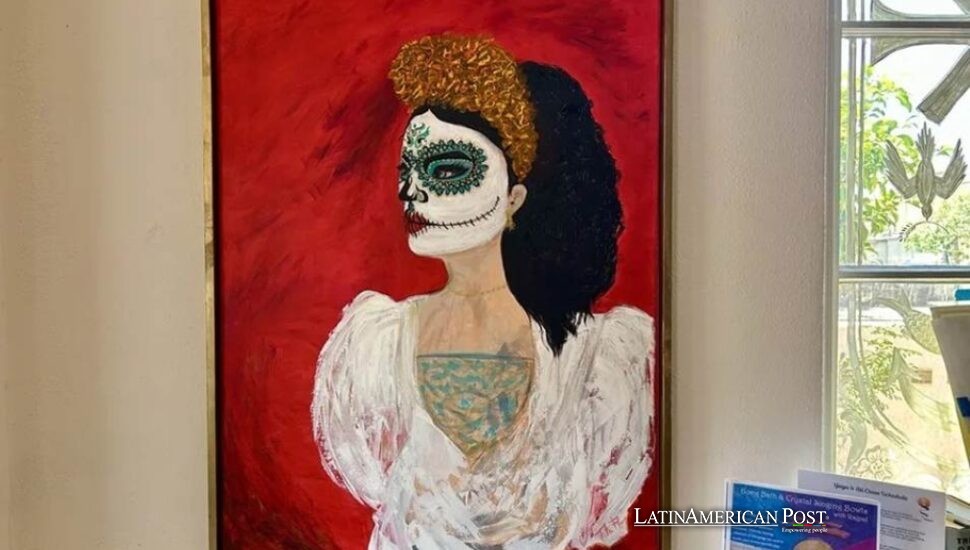
In Tucson, immigrant families afraid to visit churches, schools, or stores are finding refuge at home through La Ristra, an art program bringing paint, brushes, and emotional support directly to households living beneath the threat of immigration arrest and separation.
When the Classroom Had to Disappear
The paint now travels in boxes.
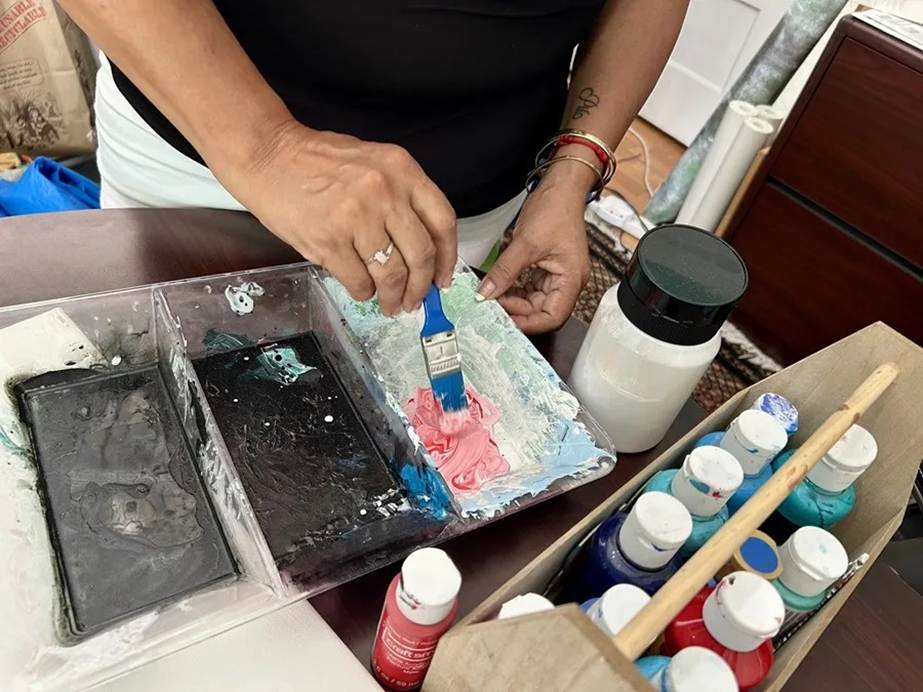
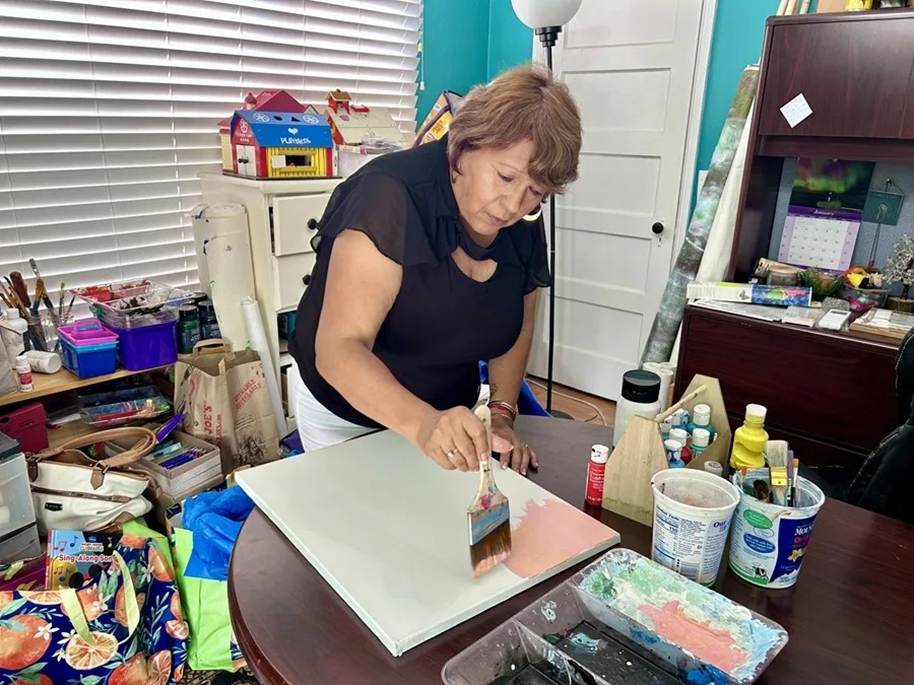
Brushes, canvases, cups, paper, colors. Everything needed for a small art class is carried through Tucson and quietly brought into homes where parents have become afraid to step outside. Children wait at kitchen tables. Adults hover nearby, sometimes hesitant at first, until somebody opens a jar of paint.
La Ristra began in 2025 inside a downtown Tucson church, where immigrant families gathered for painting classes as immigration raids intensified. The project was supposed to provide a public refuge, a room where people could make something beautiful while the political world outside became harsher.
Then the fear entered the room.
As immigration agents became more visible near schools, shopping centers, and neighborhood streets, families stopped feeling safe enough to attend. The program’s founder and director, artist Tita Flores, realized that offering comfort in a fixed location meant little if people were too frightened to reach it.
So La Ristra changed shape.
“We now go to their homes,” Flores told EFE. “We bring the necessary materials so the children and parents can work.”
That shift reveals something deeper than logistical flexibility. In Arizona, fear has altered the geography of ordinary life. A church may no longer feel protected. A school pickup can become a calculated risk. A grocery trip can require a family discussion. Under those conditions, even recreation must be delivered discreetly.
Flores said families often accept the classes first for their children, who may sense panic without understanding the policies driving it. Through drawings, lines, and colors, she said, children find a language for emotions they cannot easily name. Their parents often discover the same thing.
“The immigrant community is under enormous pressure, under great anguish,” Flores told EFE. “They feel powerless because these are external forces they cannot control.”
The project is funded through donations. It cannot stop an arrest, pay every legal bill, or change federal policy. What it offers is smaller, but not insignificant: a period of time in which a family can create rather than anticipate catastrophe.
Flores said she has watched children become more attentive at school after participating. Their behavior improved. Relationships with their parents became calmer. Art did not erase the danger, but it gave the fear somewhere to go.
A State Built by Those It Frightens
The anxiety surrounding La Ristra is not abstract. Immigration and Customs Enforcement reported roughly 43,000 arrests in June, more than 1,400 per day, a record during President Donald Trump’s second administration. In Arizona, immigration arrests tripled in 2025, surpassing 6,000, according to an analysis by CALÓ News and Arizona Luminaria.
Flores calls the atmosphere “psychological terror.”
The phrase reflects the uncertainty of enforcement as much as enforcement itself. A raid does not need to occur on every street to reshape behavior. The possibility is enough. Parents stay home. Children warn them not to leave. Families avoid medical appointments, public spaces, and sometimes schools. Fear becomes preventive detention without walls.
The contradiction is especially sharp in Arizona.
Latinos make up nearly one-third of the state’s population. Roughly 2.4 million Latinos live and work there, supporting agriculture, construction, hospitality, retail, and other industries woven into Arizona’s daily economy. Immigrant labor helps build homes, harvest food, clean hotels, prepare meals, and sustain tourism.
Yet Arizona has also served as a laboratory for aggressive immigration enforcement. The state’s 2010 SB 1070 law sought to expand local police involvement in immigration matters before the U.S. Supreme Court struck down key provisions. Its political legacy remains visible in the suspicion many immigrants feel toward institutions that others encounter without hesitation.
This history matters because deportation policy does not affect only the person who might be removed. It reorganizes entire households. Children born in the United States may live with parents lacking legal status. A traffic stop can become a family emergency. A knock at the door can carry the possibility of permanent separation.
Families need lawyers, rent assistance, food, and reliable information, Flores said. They also need emotional support.
“Beauty is free,” she told EFE. “Art is another way of feeding the soul. Sometimes it is the greatest motivation for relieving our spirit.”
That language might sound delicate against the machinery of federal enforcement. But emotional survival is not decorative. Chronic fear affects concentration, sleep, family communication, and children’s performance in school. La Ristra’s work recognizes that immigration policy reaches into the nervous system.
Painting a Door Out of Fear
Irma understands that pressure intimately.
The Mexican immigrant, who asked EFE not to publish her surname, has lived in the United States without legal status for more than two decades. Her children now worry when she leaves the house. As immigration operations increased, ordinary movement became loaded with risk.
She learned about La Ristra through friends.
“It is difficult to explain,” Irma told EFE. “When you take the brush and combine the colors, for a moment you stop thinking about the problems. You relax. You transport yourself somewhere else.”
That elsewhere may last only as long as the paint is wet. Still, it matters.
La Ristra takes its name from the braided strings of freshly harvested green chiles traditionally hung to dry in places such as New Mexico. A ristra is practical, but also communal and visual. Individual chiles are tied together, preserved through connection.
For Irma, the name captures what the program does.
“You find a family bond that supports us and connects you with your roots,” she told EFE. “For me, it is something very precious. It has helped me morally. It is something we need. It helps me share my problems.”
That sharing challenges one of deportation fear’s most powerful effects: isolation. Families under pressure often withdraw for protection, but withdrawal can leave them without the community ties needed to endure. La Ristra enters the home without demanding that the home expose itself.
Flores hopes eventually to organize an exhibition of the participants’ work. Such a show would carry its own quiet force. Paintings created behind closed doors would enter public view, not as evidence of victimhood, but as testimony that families continued imagining. At the same time, political power tried to reduce their lives to immigration status.
A brush cannot stop an arrest. A canvas cannot reunite a separated family. But art can preserve the person whom fear is trying to shrink.
In Tucson, that preservation begins at a kitchen table, where a child chooses a color and a parent, for one guarded hour, breathes.
Also Read: Cali Cartel Heir Tries Escaping a Surname Built on Cocaine