Mexico Girls Code Past Old Myths and into Tech Futures
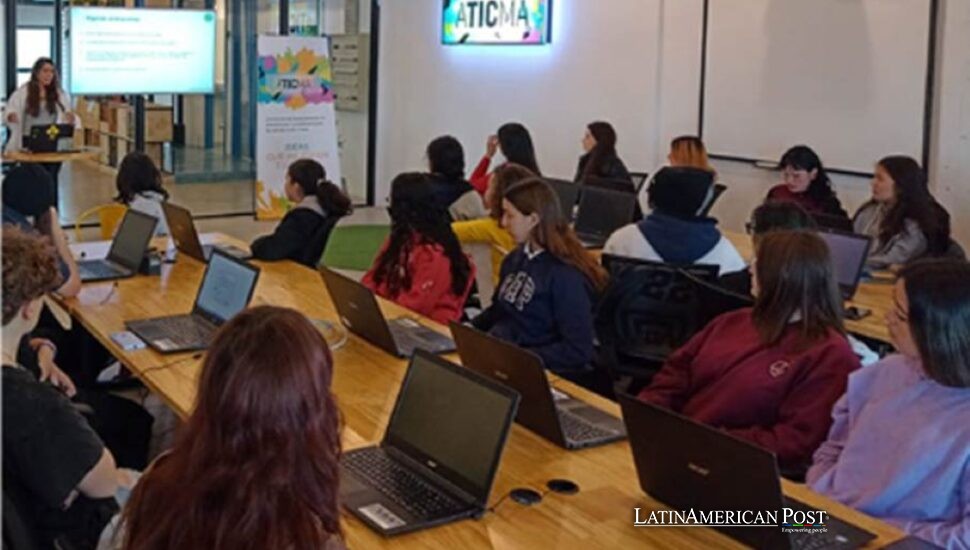
Across Mexico, girls are meeting robots, learning to code, and meeting mentors before stereotypes harden. New STEM programs are not just teaching technology. They are challenging an old social script that kept women from better jobs, leadership, and digital power.
The Gap Starts Before High School
For years, the warning arrived softly. It came in family jokes about girls being “better with people,” in classrooms where boys were pushed toward circuits and machines, in the quiet assumption that math was a test of masculine nerve. By the time many Mexican girls reached adolescence, science already felt like somebody else’s country.
The numbers show how early that border is drawn. In Mexico, only three in 10 STEM professionals are women, according to the Instituto Mexicano para la Competitividad. Among 15-year-olds, the split is even sharper: 28 percent of boys say they want to study science or engineering, while only 9 percent of girls say they want to study science or engineering, according to PISA data cited by UNICEF.
That is not a small difference in taste. It is a map of lost income, lost invention, and lost authority. STEM careers are among the best-paid in the country, with earnings that can be up to 24 percent higher than in other fields. When girls are steered away from those paths, the result is not only fewer female engineers. Fewer women have access to the wages, networks, and decision-making power that shape modern economies.
The inequality fits an old Latin American pattern. Talent exists everywhere, but opportunity often travels through family income, urban access, school quality, and gender expectations. A girl in a home without reliable internet is not simply missing a device. She is missing practice, confidence, language, credentials, and the right to picture herself inside the future.
A Club Can Change a Life
That is why the new alliance between GlobalLogic and Chicas Programadoras matters beyond the language of its corporate press release. GlobalLogic, part of Hitachi Group and specialized in digital engineering, has joined the Club de Chicas Programadoras as a lead regional ally, with programming clubs reaching countries across Latin America, including Mexico.
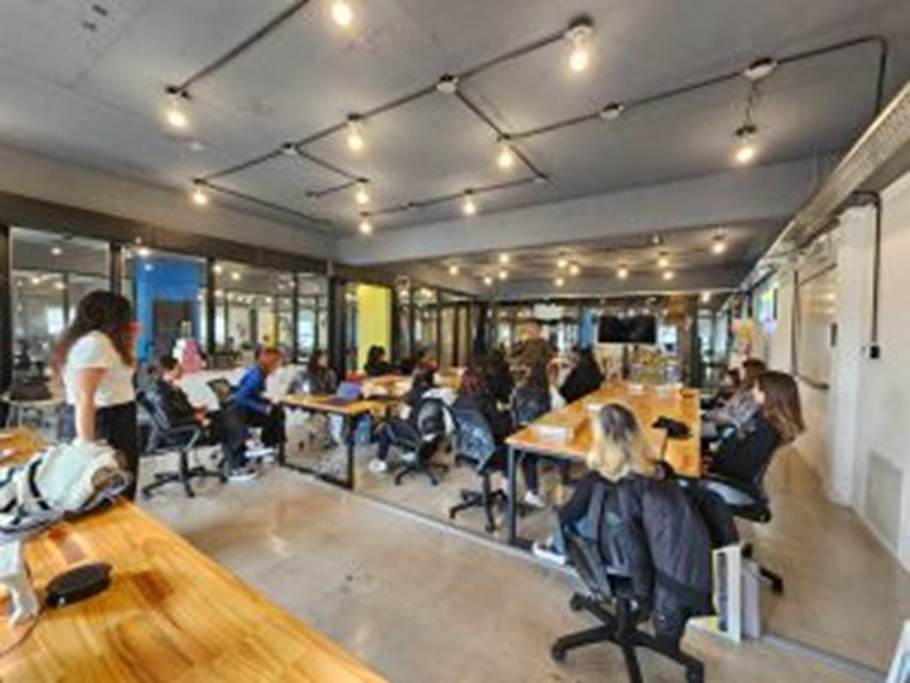
In practical terms, the project is disarmingly simple. Girls ages 13 to 18 can join free virtual programming clubs without previous experience. They learn basic coding, build digital skills, and receive support from mentors. Some also prepare for Technovation Girls, the global competition in which girls design technology-based solutions to real-world problems.
Simple is not the same as small. In Mexico, women account for only 28 percent of jobs in the information and communication technology sector. SECIHTI 2025 data cited in the notes place women at just 12.9 percent of STEM-sector employment nationally, 21.9 percent in engineering and technological development, and 20 percent in artificial intelligence. These figures reveal a pipeline problem and a power problem. The technologies being built now will influence banking, health care, agriculture, education, policing, and public services. If women are absent from the rooms where those systems are designed, bias does not disappear. It gets coded in.
Paula Antonelli, GlobalLogic’s associate vice president of human resources for Latin America, frames the intervention as a question of imagination. When young women experiment with programming, they do more than acquire digital skills, she says. They start seeing themselves as protagonists of the technological future.
That word, protagonists, carries weight in a region where girls have too often been trained to be supportive characters in other people’s ambitions. Chicas Programadoras says more than 13,000 girls have already participated in its initiatives, supported by more than 1,500 mentors in 14 countries. The model depends on something Latin America understands well: community. The club is not only a class. It is a circle, a place where friendship becomes infrastructure and confidence is built collectively.
The program’s mechanics are modest by design. Weekly two-hour sessions. Afternoon schedules that do not collide with school. Mentors, many of them women in technology, are guiding girls with zero, little, or advanced computer knowledge. Computers and internet access are provided free in some club formats. That detail is not decorative. In a region where CEPAL has warned that four in 10 women remain offline, free access is the difference between inclusion as a slogan and inclusion as a lived fact.
Robots, Museums and the Politics of Wonder
The effort is also spreading outside traditional classrooms. In Mexico City, Papalote Museo del Niño has turned scientific wonder into a tool for gender equity. Its free program “Conectadas,” directed at girls ages eight to 10, offers hands-on workshops in robotics, electronics, and mechanics. In 2025, 135 girls were selected from more than 400 applications to build functional robots with real tools.
The age range is crucial. UNESCO has noted that children begin forming vocational ideas around age 8 or 9. By then, stereotypes may already be sitting beside them at the desk. Intervening in primary school is not premature. It may be the last early moment before doubt starts sounding like common sense.
Papalote’s work, supported by Kyndryl México and specialized volunteers, recognizes that curiosity needs witnesses. A girl who sees an engineer kneel beside her robot, ask what went wrong, and help her try again receives a message no poster can match. You belong here. Your error is not proof that you cannot do it. It is part of the work.
Other initiatives widen the field. MakerWomenSTEM, led by an international academic network that includes Tecnológico de Monterrey and financed through the European Union’s Erasmus+ program, links Mexico, Colombia and Ecuador through maker-based learning, mentorship and academic exchange. The maker method matters because it breaks the frozen classroom hierarchy. You test, fail, touch, solder, rebuild. Knowledge becomes physical. Authority becomes shared.
This is where the data and the human story meet. Women represent about 30 percent of researchers worldwide, while Latin America reaches closer to 45 percent. Yet leadership still thins out as women climb. The region can celebrate a stronger research base than many parts of the world and still ask why laboratories, boards, patents, and prizes remain uneven. Globally, fewer than 4 percent of Nobel Prizes in STEM disciplines have gone to women.
No club alone can undo decades of false stereotypes. No museum workshop can fix poverty, weak broadband, school segregation or the old division between “soft” female skills and “hard” male skills. But these programs attack the machinery where it begins: expectation.
A girl who codes at 14 may not become a software engineer. She may become a doctor, designer, teacher, founder, or public servant. But she will know technology is not magic owned by others. She will know systems can be opened. She will know her hands can change them.
That knowledge is economic. It is cultural. In Mexico, it is also quietly political. Because when a girl learns that science belongs to her, she is not only choosing a career. She is refusing an inheritance.
https://www.chicasprogramadoras.club/
Also Read: Ecuador Robot Climbs Chimborazo as Science Gets Altitude and Attitude