Panama’s Crocodiles Go Viral as the City Invades Their Rivers
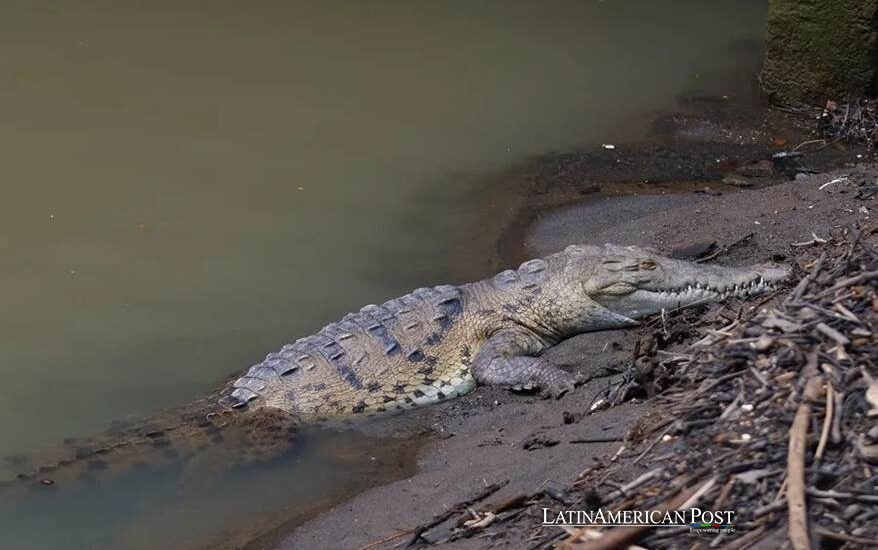
Panama City residents increasingly spot crocodiles beside roads, canals and homes, but scientists see no proven population boom. Instead, expanding neighborhoods, shrinking wetlands and viral phone videos are making urban coexistence newly visible, intimate and dangerously misunderstood across the capital.
The City Reaches the Waterline
A crocodile appears beside a canal in Panama City, and within minutes the encounter belongs to everyone.
A phone rises. Someone zooms in. A video moves through neighborhood chats, then social media, then the news. By evening, another crocodile seems to have entered the capital. Yet it may be the same animal seen days earlier, following waterways that existed long before the surrounding streets.
That distinction matters. Residents increasingly believe Panama City has too many crocodiles and caimans, but researchers say there is not enough evidence to call it overpopulation. What can be measured is the city’s expansion into habitat once occupied almost entirely by wildlife.
“We have, without any doubt, changed the crocodile’s habitat by 50 percent to 80 percent,” biologist Miryam Venegas told EFE. The Colombian-born, naturalized Panamanian researcher has studied crocodiles in the country for more than two decades and earned the nickname “Doctor Crocodile.”
As wetlands and river corridors are fragmented, she said, encounters become inevitable. The animals have not suddenly discovered urban life. Urban life has advanced toward them, covering, narrowing and dividing the places where they feed, rest and move.
That reversal changes the story. A crocodile beside a road looks like an intruder only if the road is treated as the beginning of history.
One of Panama City’s best-known residents is the so-called Matasnillo crocodile, estimated to be between 40 and 45 years old. More than four meters long, it moves through a range of roughly 40 kilometers that includes the Matasnillo River. Its territory crosses the human map without obeying it.
Other animals have acquired names, including Juancho and Tito. Naming them creates familiarity, even affection. It can also create a dangerous illusion. A crocodile with a nickname remains a wild predator governed by distance, season, hunger and defense.
The Phone Manufactures a Population Boom
American crocodiles, known locally as cocodrilos aguja, have lived for decades in waterways around the capital. Venegas told EFE there have been no reported attacks by the species in Panama City, a remarkable record given how close the encounters have been.
That history should reduce panic, not caution. The absence of attacks suggests coexistence has been possible. It does not mean the animals are tame, harmless or available for a closer photograph.
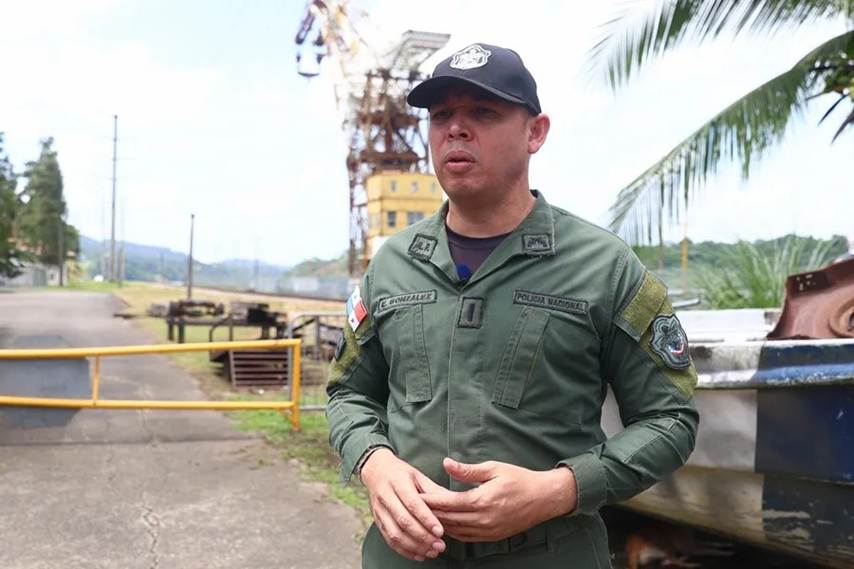
Environmental Police Second Lieutenant Edgardo González told EFE that mobile phones have transformed public perception. Citizens now document sightings that once passed unnoticed. Multiple clips can make several encounters look like several animals, even when one crocodile is circulating through the same connected habitat.
The Environmental Police rescue about 70 crocodiles and caimans each year and relocate them, mainly to protected natural areas. Reports increase during the rainy season, when rising water changes the routes animals use and brings them into spaces people notice.
Seventy rescues sound like evidence of abundance. More accurately, they measure contact between wildlife, urban development, and a public equipped to report every appearance. Without population surveys, rescue totals cannot establish that crocodile numbers are surging.
They may instead reveal how frequently the city produces conflict at its edges. Relocation solves an immediate encounter, but it does not restore a blocked corridor or recover a wetland buried beneath construction. Remove one animal, and the landscape that created the meeting remains.
González emphasized that a crocodile’s presence does not automatically signal danger. In many cases, the animal is simply occupying a place that remains part of its natural habitat.
The Risk Begins Behind the Camera
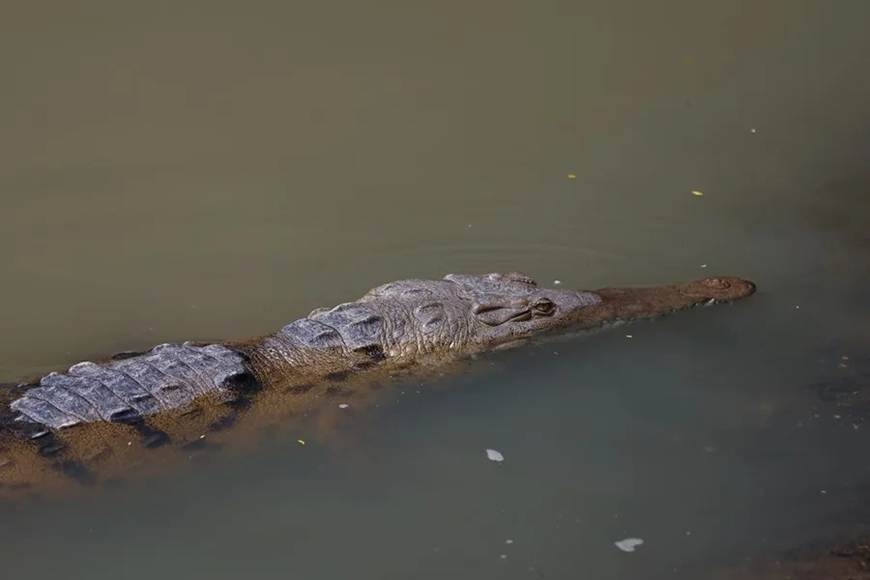
In some encounters, the most dangerous creature may be the person seeking a better angle.
Someone notices a crocodile and approaches with a phone. If the animal does not turn, the observer calls, throws something, or moves closer. The goal is a reaction. That is precisely when an animal that had been still may feel cornered.
Julio Alexander Montero, a biologist with Panama’s Environment Ministry, told EFE that wildlife does not need to be hunting to become dangerous. It only needs to feel threatened. Defensive behavior is especially likely during mating season or when adults are guarding young.
Human beings often fail to understand that boundary, he said. His recommendations are simple: do not feed the animals, do not disturb them, and maintain a prudent distance.
Feeding is particularly damaging because it teaches a crocodile to associate people with food. A viral encounter can then become a learned pattern, increasing risk for residents and often ending badly for the animal, which may be captured or removed after behaving exactly as humans trained it to behave.
Panama’s dilemma is larger than wildlife etiquette. The capital rises within a tropical landscape, and its future depends on whether growth can preserve functioning waterways and corridors rather than treating nature as empty land awaiting development.
Every video of a crocodile between houses contains two timelines. One is immediate, dramatic, and shareable. The other is slow: wetlands narrowed, channels altered, buildings advancing and animals adjusting until their ancient routes cross asphalt.
The crocodiles did not arrive late. They survived long enough for the city to meet them. Panama must decide how much wildness its prosperity can tolerate.
Also Read: Ecuadorean Film Tests Family Loyalty Against Quito’s Violent Criminal Underworld