Dominican Republic Games Turn Heat, Humidity, and Dust Into Rivals
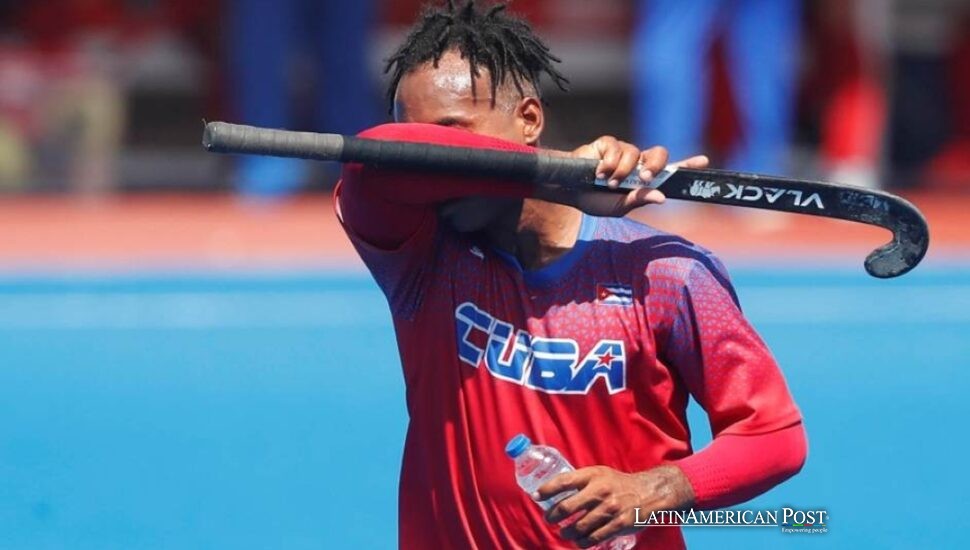
Six days before Santo Domingo welcomes 6,200 athletes, brutal heat, coastal humidity, and Saharan dust are reshaping the Central American and Caribbean Games, forcing competitors to battle not only for medals, but also against the limits of human physiology itself.
When Sweat Stops Working
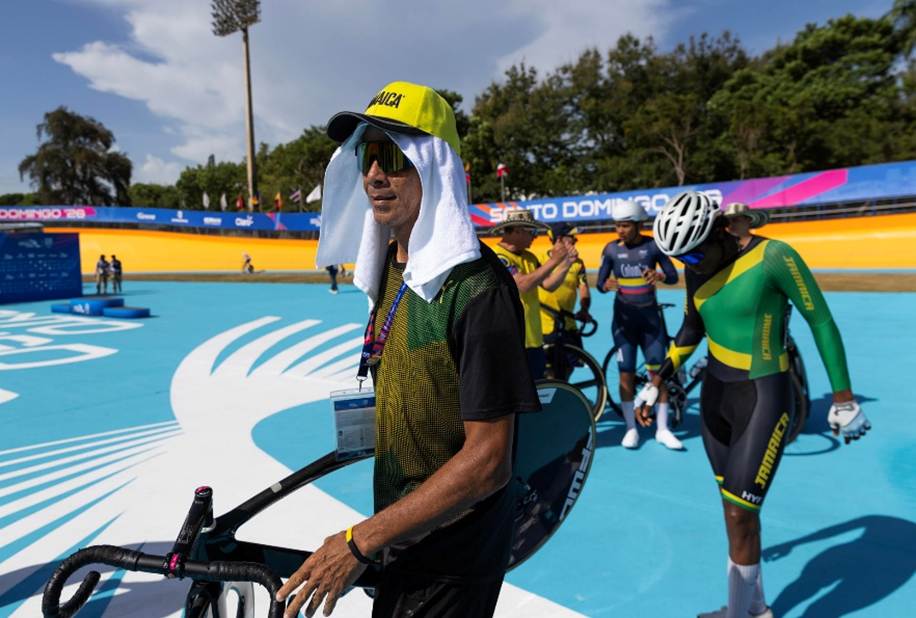
By midmorning in Santo Domingo, the air no longer feels passive. It presses against the face, thickens each breath, and turns a warm-up into something closer to negotiation. For the athletes arriving from 37 countries for the twenty-fifth Central American and Caribbean Games, that heaviness has become an opponent no coach can scout.
Daily temperatures have hovered between 33 and 35 degrees Celsius, according to the Dominican Institute of Meteorology. Along the coast, humidity near 80 percent makes those readings deceptive. The body sweats, but the moisture cannot evaporate efficiently. It runs down the skin without dissipating enough heat, pushing the perceived temperature above 40 degrees.
That distinction can decide a race. An elite athlete’s body responds by sending more blood toward the skin in an attempt to cool itself. Less remains available for working muscles. The heart accelerates to preserve the same pace, a process known as cardiovascular drift. Effort rises while performance falls.
In ordinary language, the athlete feels suddenly emptied.
At the Juan Pablo Duarte Olympic Center, dehydration and heat-related fainting have already been reported during preparations. They are warnings, not curiosities. In an event built around fractions of seconds and centimeters, the climate can erase years of training before the finish line appears.
The burden will not fall evenly. Competitors from better-funded programs may arrive with cooling garments, tailored hydration plans, and medical teams monitoring every symptom. Smaller delegations often depend more heavily on what organizers provide. Heat, therefore, becomes not only a safety issue but also a question of competitive fairness across a region marked by sharp economic inequality.
The Desert Arrives by Air
Then came the dust.
A dense Saharan cloud has crossed the Atlantic and settled over the Dominican capital, adding microscopic particles to an atmosphere already difficult to breathe. The phenomenon is familiar across the Caribbean, where African dust has traveled westward for centuries. During a major sporting event, however, its consequences become brutally immediate.
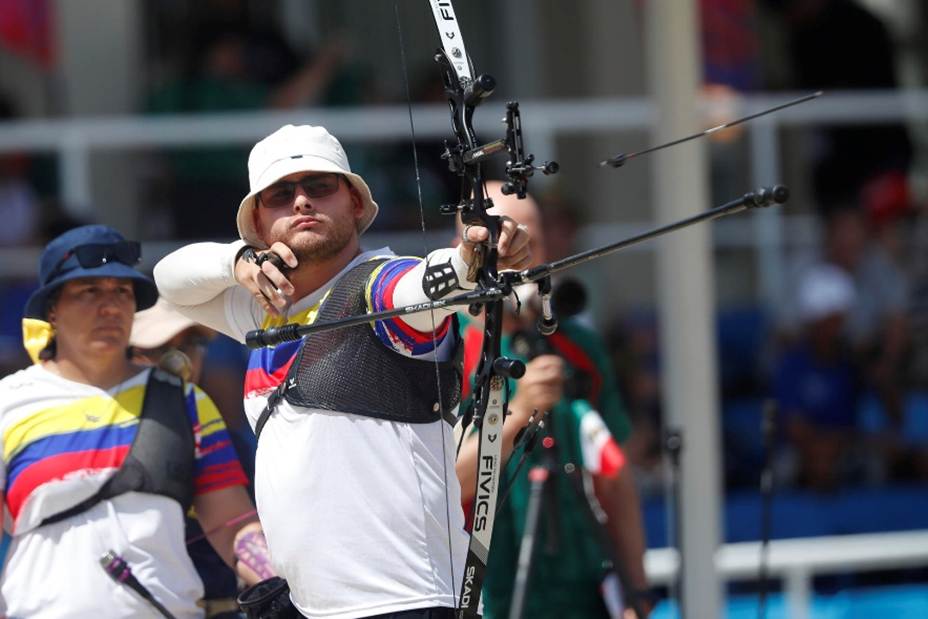
The particles can reach deep into the lungs, irritating airways and drying tissue. In endurance events such as track, road cycling, and rowing, the result can feel like a respiratory handbrake. Athletes need maximum oxygen intake precisely when the air itself is making that exchange harder.
The image is almost mythic: a Caribbean competition disrupted by sand lifted from another continent. Yet there is nothing mystical about what it does to the lungs. A runner who begins coughing loses rhythm. A cyclist whose throat tightens spends energy controlling panic. A rower cannot negotiate with reduced oxygen in the final meters.
Experts consulted for EFE’s reporting have stressed the need for real-time alarms, rapid-cooling stations, misting fans, and carefully calibrated rehydration. Olympic medical protocols also recommend confirming suspected heatstroke through core-temperature measurement and using ice-water immersion when seconds matter.
Those precautions are not luxuries. They are the difference between discomfort and organ damage.
Centro Caribe Sports is using the international Wet Bulb Globe Temperature index, or WBGT, which combines heat, humidity, and solar radiation. But organizers apparently have not established a fixed reading that automatically suspends competition. Elsewhere, running when WBGT exceeds 32.2 degrees Celsius is generally considered unsafe. In Santo Domingo, judges may hold the final authority.
That discretion creates a dangerous gray zone. Officials must balance television schedules, packed calendars, national expectations, and athlete health. Once a race begins, institutional pressure favors completion. Nobody wants to cancel the event that took years and millions of dollars to stage.
The Medal Table Meets the Climate Crisis
Organizers have shifted the most punishing competitions to early morning, before 10, and toward evening. The adjustment is sensible, but it cannot neutralize the humidity that remains high after sunrise or the heat stored in concrete throughout the afternoon.
Early failures have sharpened concern. Air-conditioning interruptions in enclosed arenas and water shortages in training areas forced hasty logistical adjustments. These were not merely inconveniences. In this climate, a broken cooling system changes the medical risk of an entire venue.
The Games carry enormous symbolic value for the Dominican Republic. They display infrastructure, hospitality, and regional leadership before an audience stretching from Mexico to the Caribbean and northern South America. That prestige also creates temptation to treat endurance as proof that everything is functioning.
But the truest measure of organizational strength may be the willingness to pause.
Changing the dates is nearly impossible because the global sports calendar is crowded. Rain and partial cloud cover are unlikely to solve the problem. The only practical answer lies in urgent adaptation: high-evaporation uniforms, cold misting, mineral-balanced drinks, shaded recovery zones, abundant water, and medical personnel empowered to stop competition without political hesitation.
Santo Domingo 2026 will still reward speed, strength, balance, and nerve. Yet every medal will also record something less visible: who managed heat best, whose lungs tolerated the dust, and whose body remained intact long enough for talent to matter.
These Games are no longer only a festival of regional sport. They are a rehearsal for the athletic future of a hotter Caribbean, where preserving the competitor may become the first competition of all.
Also Read: Venezuelan Judoka Trains Through Ruins Toward an Unbroken Olympic Dream