Chile Remembers Allende as Silence Reopens Latin America’s Old Democratic Wounds Again
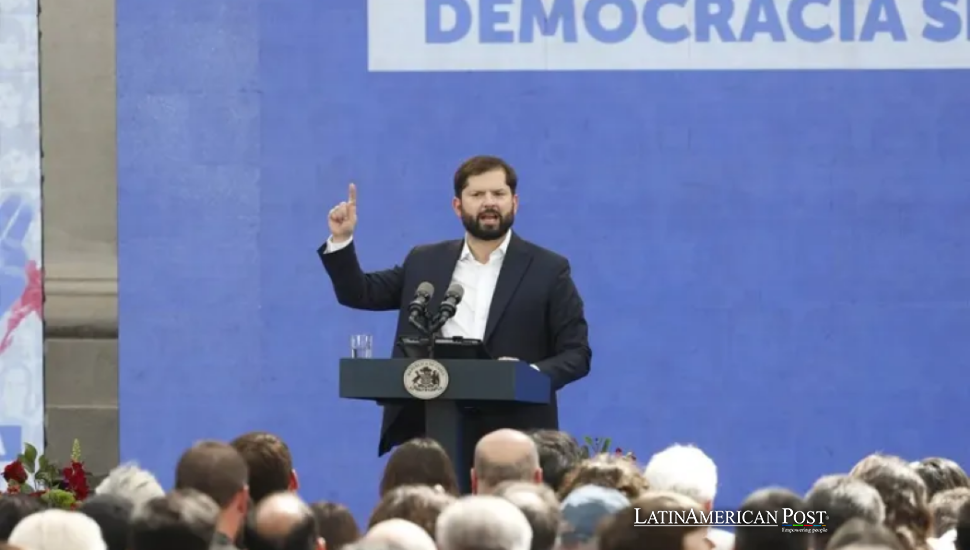
Fifty-three years after Chile’s military coup, Gabriel Boric returned to Salvador Allende’s tomb while President José Antonio Kast held no official commemoration. The contrast revives questions about memory, authoritarianism, and why Chile’s past still resonates across Latin America today.
The Ceremony That Government Did Not Hold
At Santiago’s General Cemetery, former president Gabriel Boric stood before Salvador Allende’s mausoleum and described the socialist leader as a president who “sacrificed his life defending democracy.”
The setting mattered almost as much as the words.
September 11 remains one of the defining dates in modern Chilean history. On that morning in 1973, the armed forces overthrew Allende after months of escalating political, economic and institutional crisis. Hawker Hunter jets bombed La Moneda presidential palace. Allende was later found dead inside, having died by suicide as troops closed in, according to Chilean judicial investigations and the historical consensus.
Boric extended his tribute to the victims of the military dictatorship that followed under Augusto Pinochet. Chilean official investigations have recognized more than 40,000 victims of execution, forced disappearance, political imprisonment and torture during the dictatorship from 1973 to 1990. Thousands were killed or disappeared, and tens of thousands endured detention and torture.
For Boric, that history remains inseparable from democratic identity. “History is written in the soul of the Chilean people,” he told Chile’s 24 Horas, according to the notes provided.
Former president Michelle Bachelet, herself detained and tortured alongside her mother after the coup, also marked the anniversary by remembering victims and emphasizing truth, justice and reparation.
Yet this year contained a striking absence.
For the first time since Chile returned to democracy in 1990, the national government held no official September 11 commemoration. President José Antonio Kast spent the day outside Santiago on a working visit to Valdivia.
That decision inevitably changes the symbolism of the anniversary. A state ceremony does not determine whether history exists, but state participation communicates what a democracy considers worthy of institutional remembrance.
Boric responded that official ceremonies were not necessary to remember history. In one sense, he is correct. Memory survives through families, archives, trials, cemeteries and testimony. But the absence of government recognition also reveals how contested the meaning of 1973 remains more than half a century later.
Chile’s Coup Was Never Only Chilean
Chile in 1973 sat at the center of the Cold War struggle over what political and economic models Latin America could pursue. Allende had been democratically elected in 1970 promising a peaceful transition toward socialism through constitutional institutions. His government nationalized copper, expanded state ownership and pursued ambitious redistribution while confronting severe inflation, shortages, strikes, political polarization and a hostile opposition.
The United States did not directly execute the September 11 military coup, according to declassified CIA documentation. But Washington actively worked to undermine Allende’s government, financed opposition political forces and media, restricted Chile’s access to international finance and had earlier explored ways to prevent Allende from taking office. President Richard Nixon had instructed the CIA in 1970 to intensify pressure against Allende and “make the economy scream.”
That history left a lasting geopolitical scar.
For generations of Latin Americans, Chile became evidence that Washington’s Cold War commitment to democracy had limits when elected governments threatened U.S. strategic or economic interests. After the coup, the Nixon administration rapidly supported consolidation of Pinochet’s regime despite mounting evidence of killings, torture and political repression.
Chile also became part of something larger and darker.
During the 1970s, South American military dictatorships coordinated intelligence, kidnappings and assassinations through Operation Condor. Chile, Argentina, Uruguay, Paraguay, Bolivia and Brazil participated in varying forms of transnational repression against political opponents.
By the middle of that decade, authoritarian military regimes governed most of South America. Chile’s coup therefore became both symbol and precedent within a regional political transformation in which anticommunism repeatedly justified the destruction of democratic institutions.
Yet the consequences moved in another direction too.
The brutality of Pinochet’s dictatorship helped energize international human rights organizations and congressional scrutiny of covert U.S. operations. Investigations in Washington into Chile and other CIA activities contributed to new restrictions and oversight mechanisms governing American foreign policy.
Chile’s suffering helped change the global language of human rights.
Memory Has Become a Present-Tense Argument
That is why the dispute over commemorating September 11 is not simply about whether Chileans admire Allende.
Allende’s government remains historically contested. It faced severe economic problems, political fragmentation and bitter opposition. None of those facts, however, transforms a military overthrow followed by systematic repression into an ordinary transfer of power.
The distinction matters for Latin America today.
Across the region, democratic systems face pressures from very different ideological directions. Executives challenge courts and legislatures. Political opponents are sometimes treated as enemies rather than competitors. Governments invoke emergencies, security threats or revolutionary legitimacy to justify extraordinary concentrations of authority.
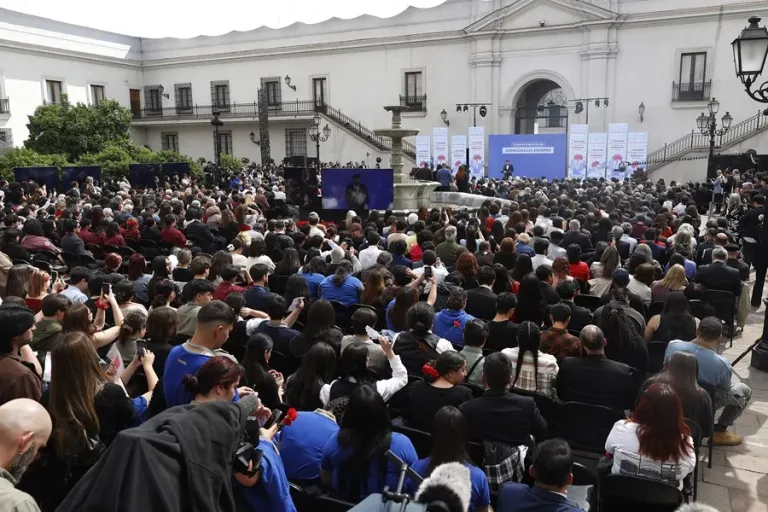
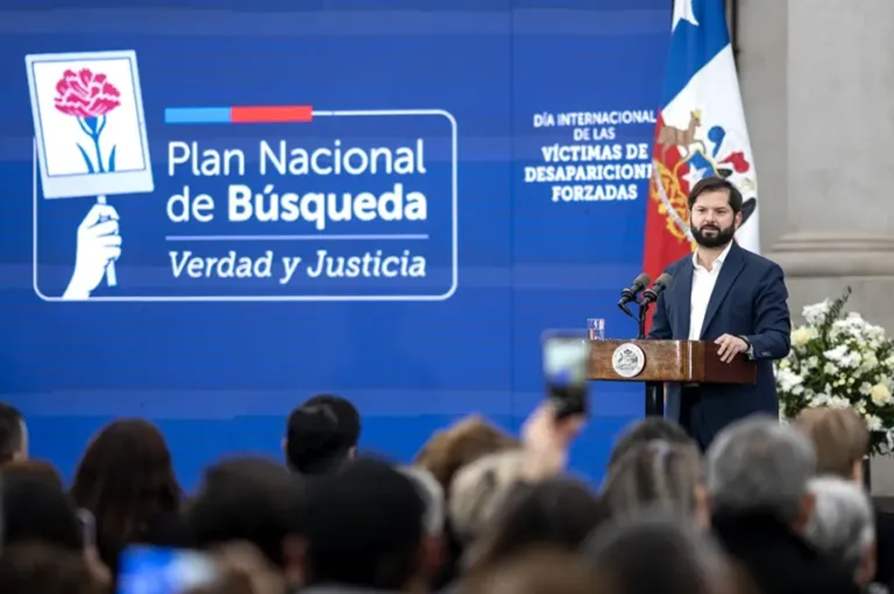
Boric made that point explicitly during the official 2025 commemoration at La Moneda, warning against political movements that relativize human dignity or subordinate democratic institutions to ideological, economic or racial interests.
He also deliberately universalized the argument. “A political prisoner is one in Nicaragua, in Iran, or wherever,” Boric said.
That formulation is important because historical memory loses credibility when it becomes partisan property.
Condemning Pinochet while excusing authoritarian repression by governments of the left turns human rights into ideology. Condemning left-wing dictatorships while minimizing Chile’s military regime produces the same distortion from the opposite direction.
The stronger lesson of September 11, 1973 is simpler.
Democratic institutions matter most when societies are polarized enough to distrust them.
Chile is still searching for people who disappeared under Pinochet. Boric’s government launched a National Search Plan intended to establish the fate of victims whose families have waited decades for answers. Historical investigations have documented how some bodies were secretly removed from graves and disposed of in efforts to conceal crimes.
That means September 11 is not entirely history. For families who still do not know where a relative was buried, it remains unfinished business.
Kast’s government can choose not to stage a ceremony. Future governments can commemorate the anniversary differently again.
But the geopolitical significance of Chile’s experience is harder to dismiss.
The 1973 coup demonstrated how quickly political polarization, institutional breakdown, economic crisis, foreign interference and ideological certainty can combine to destroy a democracy that once appeared durable.
Fifty-three years later, that may be the most uncomfortable reason Chile still matters to Latin America.
The bombing of La Moneda belongs to history.
The conditions that made it possible do not.
Also Read: Ecuador Turns Pacific Fishing Boats Into Test of Washington’s New Security Order