Peru’s Ancient Serpents Reveal How Caral Survived a Thirsting World
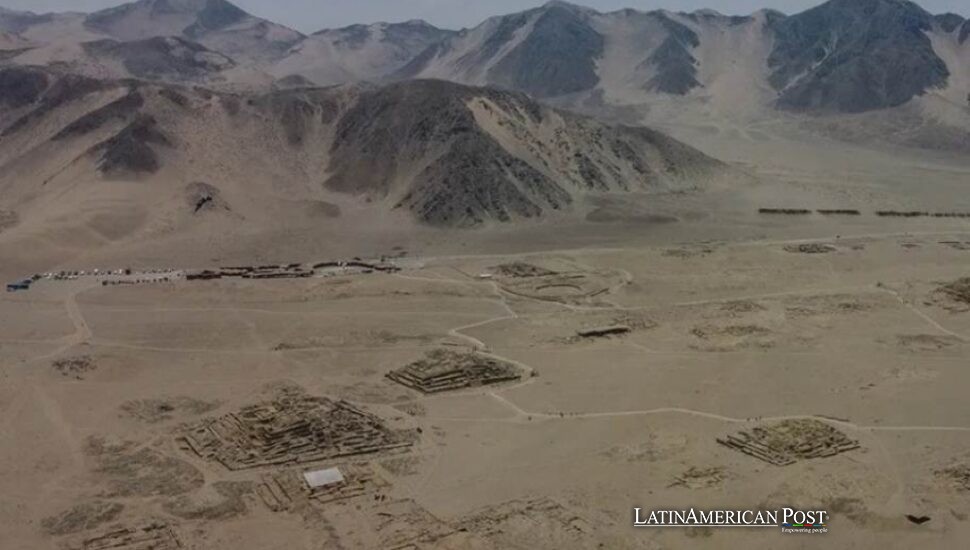
Discoveries at Vichama, a Caral-linked city north of Lima, show snakes carved in bone, wood, and antler as symbols of rivers and survival, revealing how ancient Peru transformed catastrophic drought into enduring ritual memory and communal resilience across generations.
When the River Became a Serpent
The objects are small enough to hold, yet they carry the scale of a vanished climate. One polished bone, about eight inches long, ends in a serpent’s head. Other snakes appear in wood, bone, and deer antler. A clay woman seems to wear one around her neck.
After 19 years of excavation at Vichama, 110 miles north of Lima, archaeologists say the repetition is deliberate. “The serpent always represents the river,” Ruth Shady, director of the Caral Archaeological Zone, said during the presentation of the latest discoveries, according to EFE.
That sentence opens a window into the emotional life of a city built around water’s uncertainty. Vichama developed roughly 3,800 years ago as an agricultural and fishing center connected to Caral, the 5,000-year-old civilization regarded as the oldest known in the Americas. Its people lived between fertile valleys and the Pacific, close enough to fish but dependent on rivers to make the coastal desert produce food.
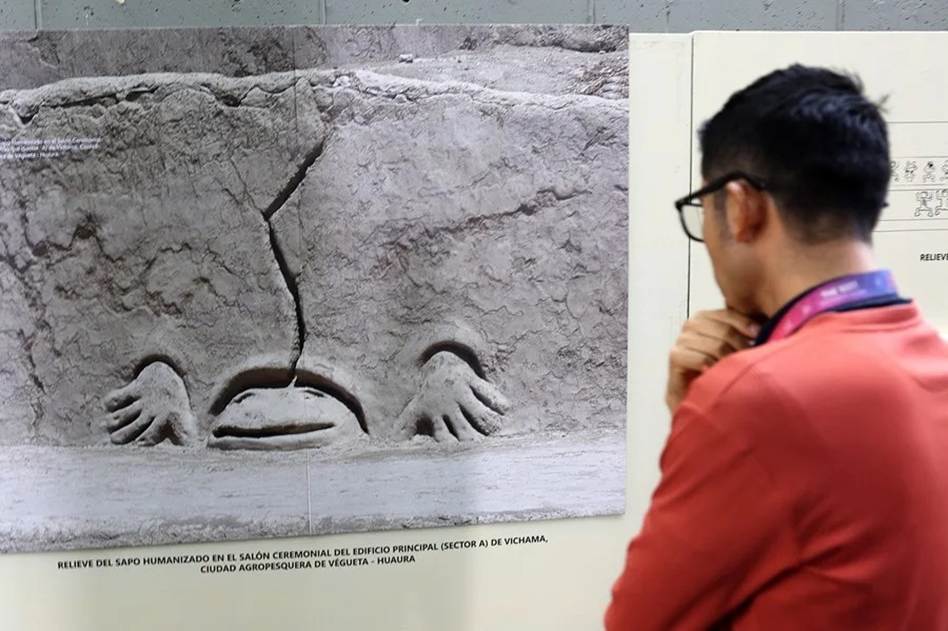
In Vichama’s public buildings, the serpent repeatedly appears beside the frog, another creature associated with water and fertility. The symbols become darker beside the site’s friezes. Those walls show emaciated people, bodies marked by hunger during a severe drought that damaged agricultural production.
The newest objects deepen that story. One deer-antler carving has a dead human figure on one side, resembling the starving bodies on the friezes, and a living serpent on the other. Death and water occupy the same object. The contrast is direct. When the river disappears, people die. When it returns, society can begin again.
Tatiana Abad, who directs research at Vichama, told EFE that the serpent belongs to the site’s symbolic repertoire and that some pieces likely served ritual purposes. Ritual here was not decoration. It helped communities organize fear, memory, and collective response when water could not be taken for granted.
Archaeologists have uncovered 27 public buildings at Vichama. The city is one of 12 Caral settlements under investigation, but its imagery is unusually intimate: environmental disaster recorded as hunger visible in the human body.
A Climate Warning Beneath a Growing Town
Vichama almost disappeared a second time, not through drought, but beneath modern expansion. Excavations began 19 years ago when urban growth from the municipality of Végueta threatened the buried buildings.
“When we arrived, the site was completely abandoned,” Shady recalled, according to EFE. The mayor sought out her team, and research began before the architecture could be destroyed. What looked like empty ground was a city preserving evidence of climatic shock.
That rescue complicates the language of development. In fast-growing Latin American towns, archaeological land can appear economically idle where housing and roads are urgently needed. Yet once a site is paved over, its evidence is gone. Vichama shows that buried heritage can preserve knowledge about scarcity, public organization, and disaster.
Culture Minister Alberto Beingolea placed the discovery in contemporary terms. “Those who do not know their history are condemned to repeat it,” he said, according to EFE. Archaeologists, he added, should not only describe the past but help society decide how to view the future.
The warning is more than ceremonial. Natural hazards become social catastrophes when states forget where water fails, which settlements are vulnerable, and who absorbs the greatest losses. Vichama’s famished figures suggest that climate crisis was also about food systems, labor, authority, and institutional survival.
Another discovery farther north shows how incomplete Peru’s early history remains. In the inland Moche River valley, archaeologists found five burials about 4,500 years old, the first funerary contexts of such antiquity identified there. Two adults, two children, and a newborn lay about six feet underground at Castillo de Jesús María, formerly Menocucho.
Aldo Watanave, director of the Menocucho Archaeological Research Project, told EFE that the absence of ceramics placed the burials in the preceramic period. The larger, crescent-shaped tomb held an adult man who may have been a leader. Beside him were a mortar, a grinding stone, two Southern Cross pendants, and a marine shell.
The graves challenge the assumption that complex societies first concentrated only along Peru’s shoreline. Menocucho’s people lived inland, farmed cotton, worked transparent quartz, made red pigment, and moved highland goods through a collection center. The marine shell suggests connections beyond one ecological zone. Long before empire, Peru was already a web of rivers and exchange.
China Arrives at an Ancient Crossroads
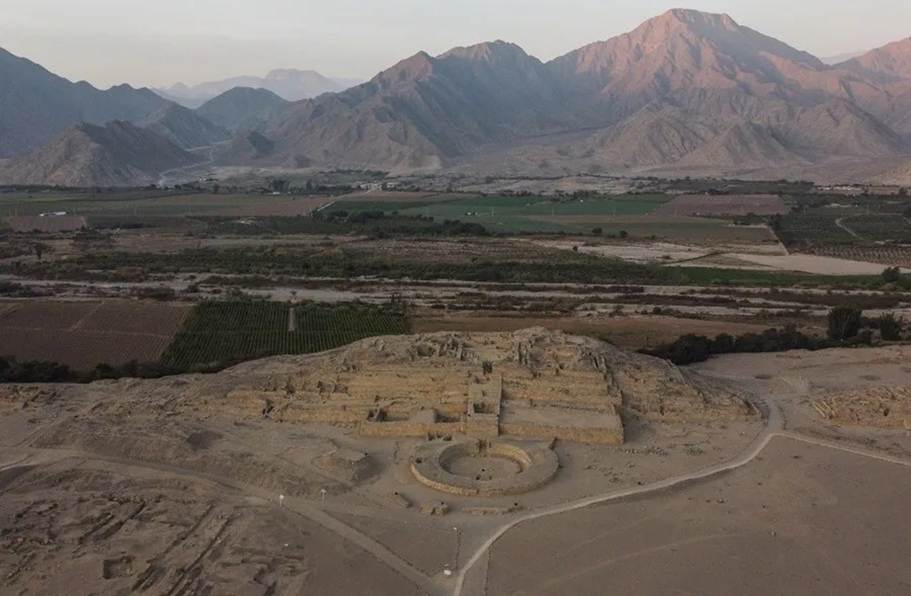
That ancient network is now entering a modern international one. Peru and China have agreed to conduct joint archaeological research through the Chinese Academy of Social Sciences, the Caral Archaeological Zone, and San Marcos University.
The agreement includes fieldwork, scientific archaeology, conservation, and specialist training. Initial surveys will examine the Chancay and Supe river basins, including the Sacred City of Caral and Áspero, with possible expansion into Inca sites. Chinese media called it the first formal Chinese archaeological field partnership in South America.
The geography is difficult to ignore. Chancay is also home to the Chinese-backed megaport inaugurated virtually during President Xi Jinping’s November 2024 visit, when Lima hosted the APEC summit. Peru and China have maintained a comprehensive strategic partnership since 2013, shaped heavily by trade, infrastructure, and Pacific access.
Archaeology now joins that relationship. The cooperation may provide conservation capacity and training that Peru’s heritage sector needs. It also creates a responsibility. Cultural partnership should strengthen Peruvian stewardship, not reduce ancient civilization to diplomatic scenery for a commercial corridor.
There is a striking continuity. Five thousand years ago, settlements in the Supe and neighboring valleys organized life around water, exchange, and movement between ecological worlds. Today, the same coast is being remapped through ports, investment, and trans-Pacific ambition.
Vichama’s serpent reaches beyond archaeology. It is a river made visible, a warning carved after hunger, and a reminder that prosperity can fail when its foundations are treated as permanent. Peru’s oldest cities left no written chronicles. They left bodies, walls, tools, and creatures shaped from bone.
One carving says almost everything. On one side, a dead person. On the other, a living snake. Between them lies the oldest political truth in the desert: without water, even a civilization can become a memory.
Also Read: Colombia Finds Water Democracy Beneath La Mojana’s Ancient Raised Fields