El Salvador and Guatemala Watch Lake Güija’s Rainy Season Come Up Short
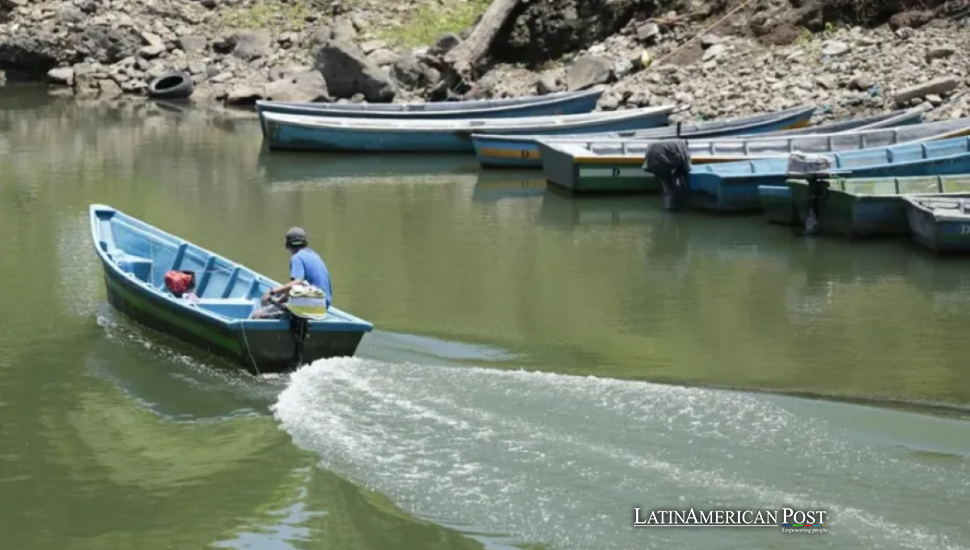
At Lake Güija, El Niño is threatening fishing, farming, and water supplies shared by El Salvador and Guatemala. Families await rain before November ends, while the drought exposes how a protected wetland can remain dangerously vulnerable to poverty and politics.
The Rain That Never Added Up
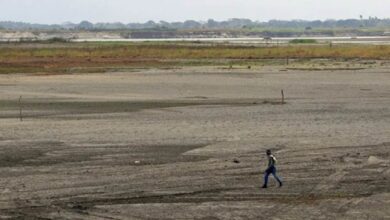
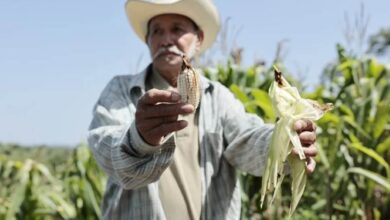
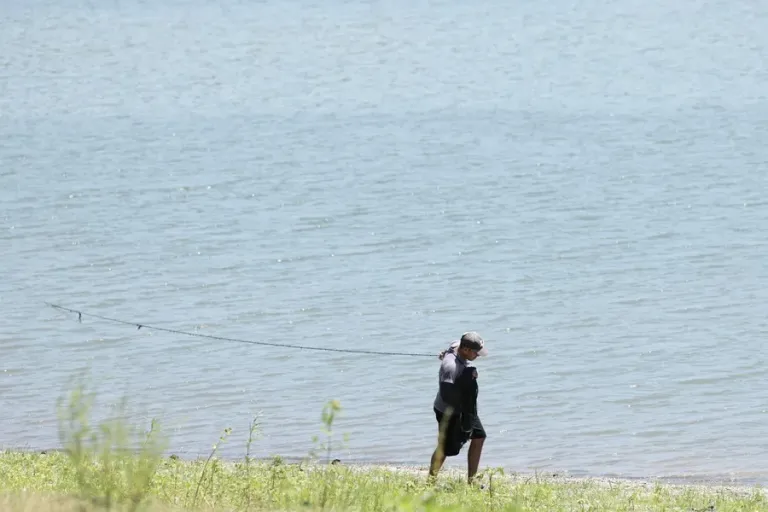
For Marlon López, the missing rain has a duration, not just a name. The farmer told EFE that the area around Lake Güija went “a month and 15 days without a single drop of rain.” Showers eventually returned. They still did not fill the lake.
Near Metapán, in western El Salvador, fishermen told EFE that the water had failed to rise as it normally does during the rainy season. Their anxiety reaches beyond today’s catch. They fear entering the dry months without enough water to sustain the fish their families depend on.
One fisherman, who asked EFE not to identify him, worried that insufficient rainfall would undermine reproduction before the dry season. That is a warning from experience, not a measured fish population forecast. The reporting provides neither catch totals nor a breeding survey, so the possible loss cannot responsibly be assigned a percentage.
The broader rainfall figures are troubling enough. El Salvador’s August 25 drought alert reported a 41 percent rainfall deficit in May. That means the season began with only 59 percent of normal rainfall, nationally. It does not mean Güija lost 41 percent of its water.
The World Meteorological Organization’s September outlook puts the probability of El Niño persisting through February 2027 near 100 percent. That does not guarantee drought in every locality, the agency cautions. Still, preparations at Güija cannot assume that the Pacific’s disruption will conveniently end with the rainy season.
Nor is November necessarily a generous deadline. The national alert anticipated the dry season becoming fully established by late October or early November. Families hoping for rain through November may have less time than the calendar suggests.
Two Countries, One Water Budget
EFE puts Güija’s surface at about 45 square kilometers, with 74 percent in El Salvador and 26 percent in Guatemala. That works out to roughly 33.3 and 11.7 square kilometers. Those proportions divide a map. They do not divide the consequences of inadequate rainfall or contaminated water.
The Ostúa and Angue rivers bring water from Guatemala, according to a United Nations Development Program project description. El Salvador’s larger share of the lake therefore does not translate into control over its incoming supply or upstream land use.
The lake connects to the Lempa River basin, whose waters support irrigation and electricity generation. Its condition therefore matters beyond the fishermen’s landing places. But a national energy concern and a household income emergency operate on different scales: a family cannot wait for basinwide statistics before deciding how to eat.
Fishing and farming are separate sources of income. Here, both depend on the same replenishment. If crops suffer while catches shrink, households cannot necessarily substitute one livelihood for the other. The lake’s value includes food eaten at home as well as fish sold, making lost production doubly costly.
Biologist Rubén Sorto told EFE that people around Güija also use lake water because drinking water is unavailable in their communities. He explained that withdrawals contribute to falling levels, normally offset by rainfall. Yet the reporting does not quantify household use against evaporation, irrigation or other demands. Blaming residents would outrun the evidence.
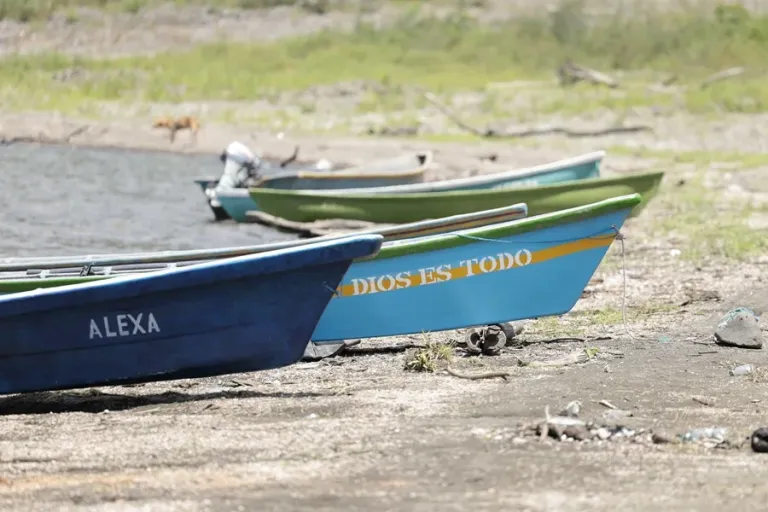
Fishermen have installed small breeding enclosures for tilapia, EFE reports. Those efforts show that communities are not simply waiting for rescue. But cultivation within the lake still depends on the lake. It cannot provide an independent water reserve when the wider system fails to replenish.
Protection Beyond the Shoreline
Güija belongs to a wetland complex recognized under the Ramsar Convention in 2010, alongside the San Diego and San Felipe Las Barras protected area. Its birds and reptiles share habitat with the communities’ working waters. Conservation here cannot sensibly mean protecting wildlife while leaving people without a dependable water supply.
Another concern lies across the border. EFE identifies a contamination threat associated with the Cerro Blanco gold project near Asunción Mita, Guatemala, about 17.9 kilometers from the lake. Proximity alone, however, does not establish that mining has caused the current shortfall or that particular contaminants have reached Güija.
The project’s ownership has changed. Aura Minerals acquired its owner, Bluestone Resources, in January 2025 and now calls it Era Dorada. In January 2026, Aura announced a construction license and early works, including mine dewatering. The company says it is pursuing underground operations and commits to responsible environmental management.
That makes independently checked water data essential, not optional. Both countries need compatible measurements of lake levels and inflows, with public testing that distinguishes pollution sources from drought effects. A promise of safe operations is not a substitute for results that downstream households can inspect.
El Salvador’s drought declaration calls for stronger water supply arrangements and targeted temporary cash transfers for vulnerable families. Those commitments offer a practical test: whether help reaches lakeside households before falling production becomes an unpaid bill or a missed meal.
For López and the fishermen interviewed by EFE, rain remains the immediate hope. It should not be the entire public policy. A lake shared by two countries ought to have more than the weather standing between its communities and an empty table.
Also Read: Honduras Counts Empty Corn Rows as Drought Steals the Final Planting Season