Cocoa Farmers Face a Bitter Twist as Heavy Rains Threaten Their Harvests
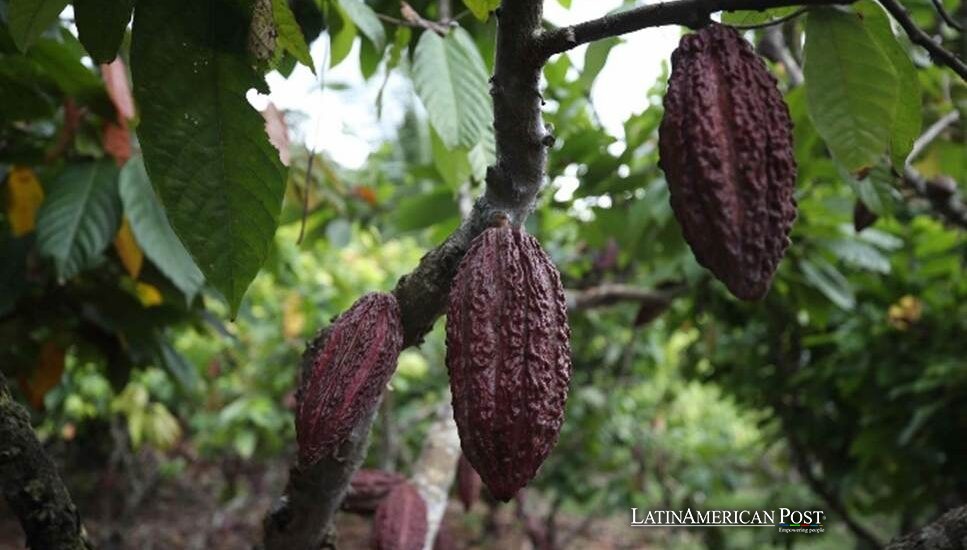
Cocoa needs rain, but a new study finds that intense downpours can undermine harvests. Evidence from Ecuador, Ghana, and Indonesia reveals why timing matters, with consequences for millions of smallholder farmers whose livelihoods depend on flowers surviving the wet season.
The Trouble Arrives Before Harvest
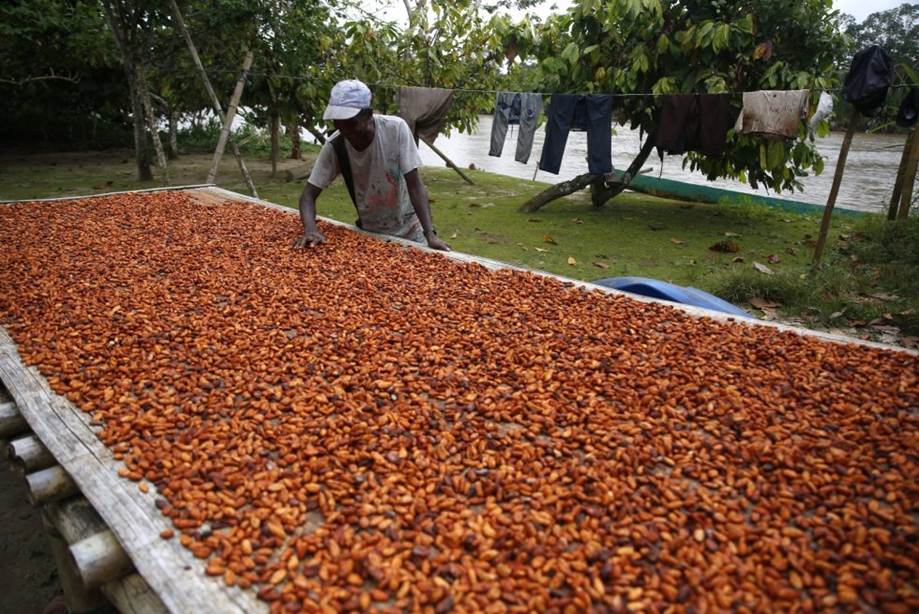
The damage can begin long before there is anything to sell. In Ecuador, the heaviest rains fall from February through April, overlapping with flowering and early pod development. Trouble during those months can surface in harvests much later. For a household depending on cocoa, the weather and the missing income arrive on different schedules.
That delayed vulnerability anchors “Rainfall extremes drive cocoa yield losses across the tropics,” published in Proceedings of the National Academy of Sciences. Researchers from Harvard and the University of Ghana identify heavy rainfall as the strongest climatic constraint on yields across the regions studied. Nearly six million smallholder farmers depend primarily on cocoa for their income.
A sharp global supply shock provides the backdrop. The International Cocoa Organization estimated a roughly 13% global production decline in 2023–24. But that total cannot be assigned entirely to rainfall: drought, disease and aging trees also damage harvests. This study isolates weather relationships, not every cause of scarcity.
“Drought is a real threat to cocoa,” lead researcher Anna Lea Albright said in a Harvard Salata Institute release. But she explained that heavy rain during flowering and early pod development has received insufficient attention.
In Ghana, excessive wet-season rainfall and dry-season drought together explained 68% of annual yield variability. That does not mean rain destroyed 68% of the crop. It describes how closely those weather measures tracked year-to-year fluctuations after removing longer trends.
The same trees can therefore face opposite dangers within one growing cycle. A reassuring seasonal rainfall average may conceal damaging downpours followed by an extended dry spell.
The researchers propose several pathways. Forceful rain can damage flowers and young pods or disrupt pollination. Splashing water can also help spread pathogens responsible for black pod disease. These are plausible explanations supported by earlier field research, not mechanisms individually proven by the statistical analysis.
Ecuador’s Numbers Tell Two Stories
Ecuador supplies an important test beyond West Africa. Using national yield records, the researchers compared harvest fluctuations with rainfall intensity during the three wettest months. Their measure focused on the upper end of daily rainfall, the 95th percentile, rather than the season’s total water.
With two rainfall datasets, that single measure explained 29% and 27% of yield variance over 1983 to 2021. A rain-gauge dataset covering 1983 to 2016 explained 52%.
The difference matters. Matching the observation periods did not eliminate most of the gap: estimates from the other datasets remained substantially lower. Measurements of the rain itself changed the model’s apparent strength.
Yet all three datasets agreed on the direction. More intense wet-season rainfall was associated with lower yields. The recurring relationship is stronger evidence than any one headline percentage, while the disagreement cautions against treating a national model as a precise forecast for an individual farm.
Ecuador’s production history adds another complication. Yields began rising around 2010, a change the authors associate with improved practices, more productive growing areas and adoption of higher-yielding varieties. They removed those longer trends before examining annual weather effects.
Among those varieties is CCN-51. According to research cited in the paper, it accounted for about 70% of Ecuadorian production by 2017, after adoption accelerated following the destructive 1997–98 El Niño.
That history places climate adaptation inside a distinctly Ecuadorian agricultural dilemma. Heirloom cocoa is prized for its flavors, but the authors note that such varieties generally yield less and face greater disease susceptibility. Protecting incomes can therefore complicate preserving prized varieties.
The new findings do not erase those improvements. Even after accounting for the longer rise in productivity, intense wet-season rainfall remained associated with poorer yields.
Forecasts Must Reach the Farm
The ocean may offer a warning system. El Niño and related Pacific temperature patterns explained about 42% of the variability in Ecuador’s extreme wet-season rainfall. That is rainfall variability, not the percentage of harvest losses that can be predicted.
Regional differences are crucial. El Niño typically brings heavier rain to coastal Ecuador while reducing rainfall in West Africa and Indonesia. A warning useful on one side of the tropical cocoa economy cannot simply be copied to the other.
The study also finds no identical warming signal everywhere. After removing El Niño effects, extreme wet-season rainfall increased in the West African records but declined in Ecuador’s record beginning in 1983. Bahia, Brazil, showed no statistically significant residual trend. Vulnerability to downpours is not evidence that every producing region has already become wetter.
The authors suggest targeting splash transmission, protecting vulnerable flowers and pods, adjusting planting density and timing disease treatments more carefully. Harvard’s account emphasizes that forecasts that give farmers enough preparation time remain under development.
That distinction separates a promising finding from a service a grower can actually use. Knowing that dangerous rain is possible differs from knowing when to act, on which trees, and with what resources.
For Ecuador’s cocoa households, the practical measure of this research will not be another warning about chocolate. It will be whether useful information arrives before the flowers fall, while there is still a harvest to protect.
Also Read: El Salvador and Guatemala Watch Lake Güija’s Rainy Season Come Up Short