Malvinas Veterans Carry Ashes Back to a War That Never Left Them
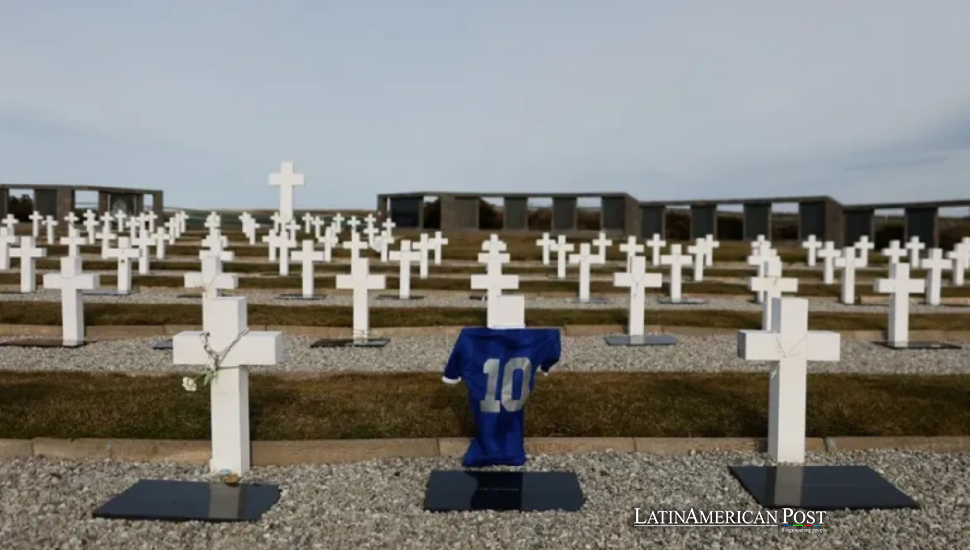
Forty-four years after the Malvinas War, Argentine veterans and grieving relatives return to Darwin cemetery carrying letters, rosaries, and a comrade’s ashes. Their journey reveals the distance between national claims, unfinished mourning, and the names finally restored to the dead.
What the Body Remembers
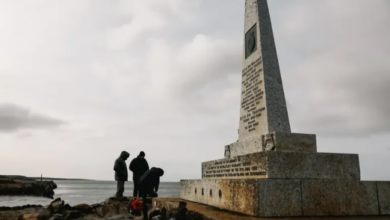
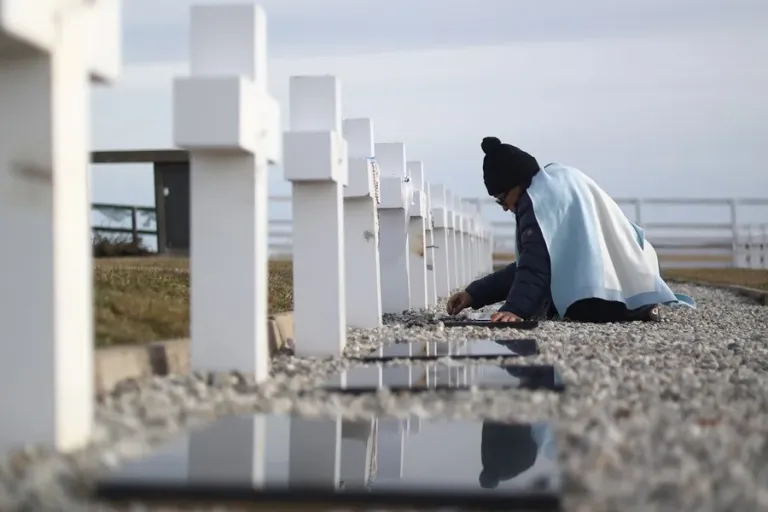
Ramón Robles brought someone who could no longer make the journey himself. A fellow veteran, dead for a year, had asked for his ashes to rest beside his wartime companions. Around Robles, the other members of an eleven-person Argentine group moved among Darwin’s 230 white crosses. They found brothers, friends and a nephew. They held headstones, left rosaries and spoke to people who had been gone since 1982.
The road there runs across open country beyond Mount Pleasant, the British military base built after the conflict. Sheep graze in the surrounding fields. The wind is bitter. Robles, who fought nearby, described the visit to EFE as “a humanitarian journey, to close chapters and free ourselves of ghosts.”
For seven days, the group searched hillsides, beaches and fields where trenches and rusting ammunition remain. At night, back at their hotel, they reconstructed what they had found. Locating an old position brought men in their sixties back to their teenage selves, Robles said. One question kept returning: “How did we endure this?”
Eduardo Albornoz was 18, with three weeks of military training, when they sent him to the islands. As supplies dwindled under the British blockade, he recalled, his daily food shrank to a small cup of semolina soup each morning and another each night. He returned to the mainland 14 kilograms lighter, about 31 pounds.
That number cannot describe every soldier’s experience. It records what this soldier carried home in his own body. Albornoz told EFE he cried at Darwin and Mount Longdon, remembering a war he considered absurd and an army he remembered as poorly equipped.
The conflict killed 649 Argentines, 255 Britons and three islanders: 907 people. Darwin’s crosses are not a complete register of those losses. Nor can a death toll encompass the decades that survivors and relatives have spent trying to make sense of them.
The Ground Has Moved On
Albornoz could not find the positions he had hoped to revisit. One lay on private property he could not enter. Another had disappeared beneath the growth of the archipelago’s only city. The landscape had continued changing while particular places remained fixed in his memory.
Robles sees a bitter historical reversal in that development. In his view, Argentina’s wartime government helped bring about a stronger British presence and investment after the fighting. His interpretation distinguishes the cause he still supports from the consequences of the military campaign undertaken in its name.
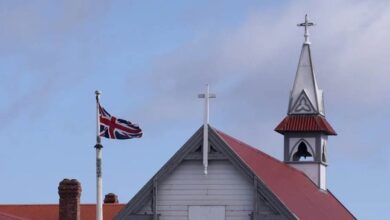
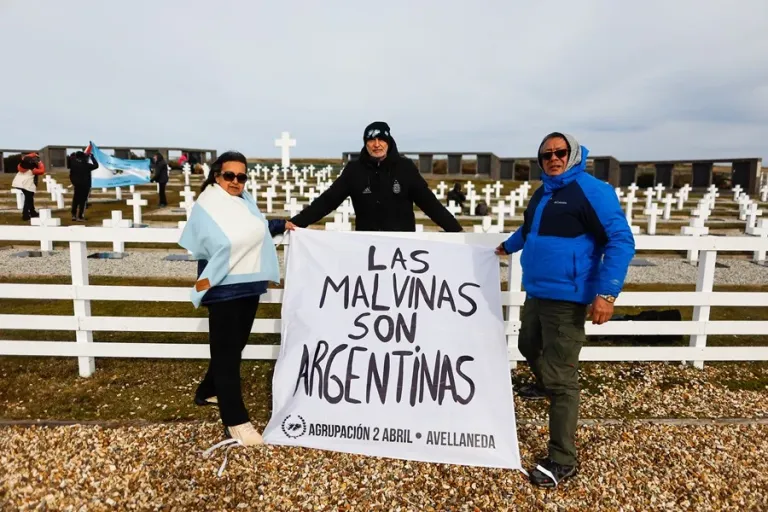
Their return coincided with renewed diplomatic tension. On September 17, President Javier Milei submitted legislation to strengthen Argentina’s sanctions against resource exploitation around the disputed islands without Argentine authorization. Britain administers the territory, also known as the Falkland Islands; Argentina maintains its sovereignty claim.
Asked about the latest measures, veterans interviewed by EFE expressed skepticism, extending that frustration to previous governments. Robles said he wanted younger generations to pursue Argentina’s claim through political negotiation. He described preserving memory as the contribution former combatants could make.
Yet even an arrival stamp carries weight. After each visit, Robles obtains a new passport rather than retain the island authorities’ stamp, which he personally interprets as recognizing British administration. The gesture does not change who controls entry. It shows how visiting a cemetery can require navigating a dispute the visitor refuses to consider settled.
A Name After Thirty-Six Years
Miriam Gramisci had never visited the islands. Her brother Donato died in combat three days before Argentina surrendered. For decades, his grave carried the inscription “Argentine soldier known only to God,” the designation used for unidentified remains.
In 2018, DNA analysis through a humanitarian project agreed by Argentina and Britain, coordinated by the International Committee of the Red Cross, identified him. His name replaced the inscription. Thirty-six years separated his death from that identification. Another eight passed before Miriam’s first visit.
Those intervals measure different kinds of waiting. Learning which grave holds a brother is not the same as reaching it. The identification also demonstrates something specific about cooperation: governments can resolve a family’s uncertainty without resolving their competing territorial claims.
“I think this is his place,” Miriam told EFE. She wanted him to remain there, far from the family home. Argentina’s opposition to repatriation rests on its position that the soldiers already lie on Argentine soil. A sister’s attachment and a state’s territorial argument can lead to the same decision without meaning the same thing.
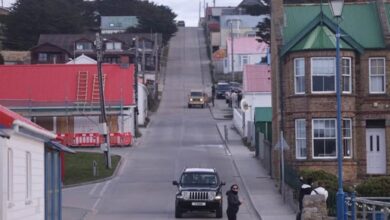
Because many families leave their dead in Darwin, remembrance requires journeys rather than a visit to a neighborhood cemetery. Those trips also bring Argentines into limited contact with island residents, making the same archipelago a battlefield of memory, a disputed territory and somebody else’s home, with its ongoing routines.
Miriam had little contact with islanders, but tried to remain respectful. She spoke of mutual resentment while questioning whether residents deserved blame. Her account was not evidence that everyone shared those feelings. It was one bereaved woman beginning to recognize other lives shaped by the same conflict.
“We are all paying the consequences of a war,” she told EFE. Her brother was still gone. This time, she could stand beside his name.
Also Read: Guatemalan Farmers Lose Their Harvests and Find Hunger Growing in Their Place