Colombia Puts Former FARC Chiefs to Work Searching for the War’s Missing
Colombia’s former FARC commanders have begun serving sentences through victim reparations, including searches for the disappeared. At one cemetery, 54 bodies have been recovered but only nine identified, exposing the distance between a court judgment and the answers families await.
A Cemetery Becomes a Sentence
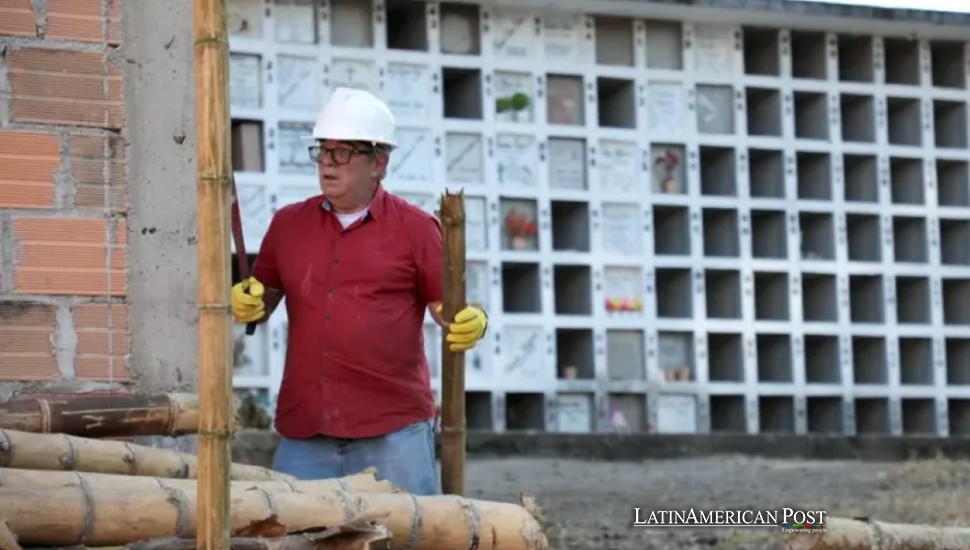
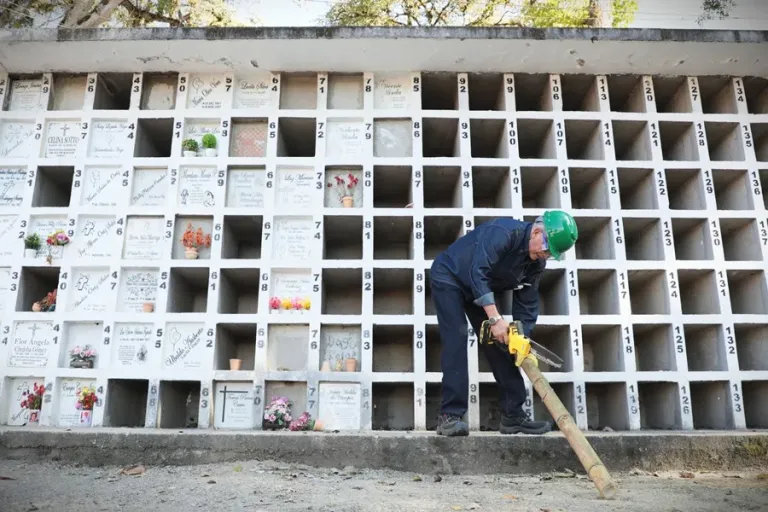
A body can be buried in a cemetery and still be missing to a family. At San Antonio de Padua in Pitalito, Huila, Colombia’s war left people beneath the ground without the names that would allow relatives to find them. Now some of the guerrillas’ former commanders are working there under court orders.
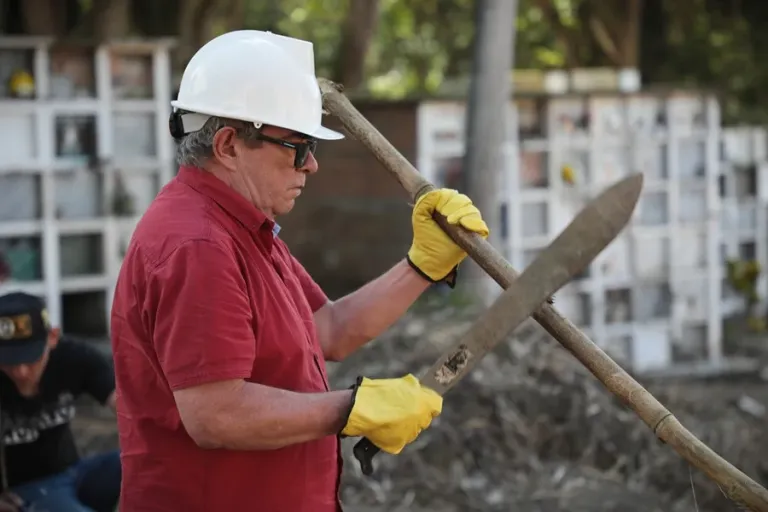
Images released by the Special Jurisdiction for Peace, known as the JEP, and distributed by EFE show Rodrigo Londoño, the FARC’s last leader, and former commander Rodrigo Granda participating in recovery work. They are not there as volunteers. Their presence marks the implementation of criminal sentences handed down last year.
The judgment covers seven members of the FARC’s final Secretariat, its highest leadership body, for more than 21,000 kidnappings committed between 1982 and 2016. Alongside Londoño and Granda, the court sentenced Jaime Alberto Parra, Milton de Jesús Toncel, Pablo Catatumbo, Pastor Alape and Julián Gallo. The sanctions run for up to eight years and combine restorative work with restrictions on liberty. EFE reports that the men must maintain fixed residences, follow strict work schedules, and wear geolocation devices, with their movement beyond assigned territories and outside Colombia restricted.
That arrangement differs from an ordinary prison sentence, but it also differs from unrestricted community volunteering. Attendance and movement are enforceable obligations. Whether the work produces useful results is a separate question from whether the men appear at the designated place.
Fifty-Four Bodies, Nine Names
The cemetery’s broader recovery effort has located at least 54 bodies, nine of which have been identified. Those totals reflect work at the site, not the commanders’ first-day achievements. The JEP had reported the same figures before their arrival.
Using the minimum of 54 recoveries, nine identifications represent at most one in six, approximately 16.7%. At least 45 bodies still lacked confirmed identities in the reported count. Finding remains and establishing whose remains they are remain different stages of the search.
For a family, the difference is everything. News that a body has been recovered can open a possibility without settling whether a missing relative has been found. A growing recovery total can therefore coexist with continuing uncertainty among the people waiting for answers.
The JEP’s implementation notice places the Pitalito work under the technical direction of Colombia’s missing-persons search unit. Former commanders support specialist teams. Their participation does not make them forensic experts or establish responsibility for every death represented in the cemetery.
EFE cites the search unit’s estimate that at least 137,000 people have disappeared in Colombia since 1921. That national historical figure is not a tally of FARC kidnappings. The two counts cover different periods and categories, and the cemetery’s recoveries cannot be turned into a reliable national completion rate.
The numbers nevertheless reveal the scale of the task. Seven sentenced men can provide labor, but identification also depends on the institutions doing the searching. Their presence is one part of a process that must continue beyond the current cemetery operation, scheduled through September 30.
The Years After the Verdict
The JEP was created through the November 2016 peace agreement. Its first sentence came almost nine years later; implementation now begins nearly a decade after the accord. The earliest kidnappings covered by the judgment date back 44 years. The legal timetable and the victims’ waiting have never moved together.
The seven-stage program runs from September 2026 to March 2034 across different regions. Beyond searching for the disappeared, it includes humanitarian mine clearance, infrastructure reconstruction and environmental work. Economic projects are also intended to benefit victims.
In Bogotá, another group of former Secretariat members will work on memory projects. According to EFE, these include organizing information, developing accounts that honor victims, and supporting commemorative events and symbolic reparations that make the consequences of kidnapping visible.
The Bogotá work addresses a related problem: making individuals recognizable within a mass crime. More than 21,000 kidnappings can become an abstraction unless the record preserves who was taken, what happened during captivity, and how the absence affected those left behind.
These activities address different consequences of violence. A mine-clearance project concerns danger that remains in the ground. A memory project concerns how the suffering of someone held captive enters the public record. Completing either task does not substitute for locating a person whose whereabouts remain unknown.
The distinction also matters when measuring compliance. Hours worked can establish attendance. They cannot, by themselves, demonstrate that information has helped a search or that an account of captivity reflects a victim’s experience. A work schedule records effort; a useful outcome requires something more specific.
The start of a sentence does not settle how those harmed understand it. A photograph can show a former commander working. It cannot tell us whether a missing person’s family sees accountability, insufficient punishment, or something else.
At Pitalito, the first images are already public. Many identities are not. The sentence has a calendar stretching into 2034; the search has a different milestone, reached whenever an unnamed body can finally be connected to the person a family has long been missing.
Also Read: Mexico Investigates Claudia Tacoronte’s Murder as Other Victims’ Families Still Wait for Answers