Ecuador Clears Its Fishermen While Washington Leaves Due Process on the Seabed
Ecuador’s acquittal of 32 fishermen exposes the central scandal of U.S. boat strikes: military punishment arrived before courtroom proof. For coastal families, the drug war has destroyed workplaces while officials demand trust in evidence prosecutors failed to produce at trial.
The Verdict Cannot Refloat a Boat.
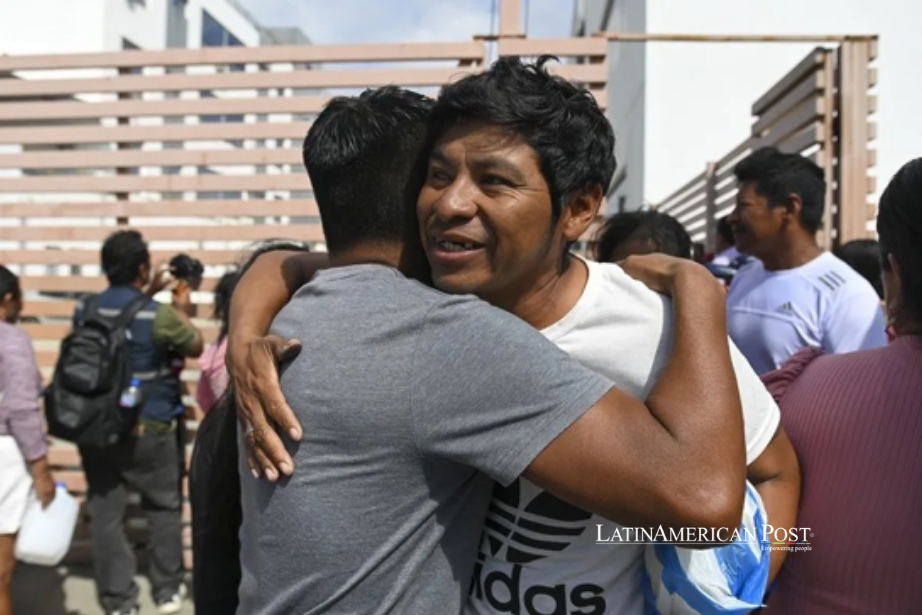
A court can restore a fisherman’s good name. It cannot haul his workplace off the Pacific floor. On October 7, an Ecuadorian judge acquitted eight crew members from the Conquista 2 and 24 from the María Candelaria of unlawful association. Their boats had already been destroyed. “There was no crime,” their attorney, Juan Alvia, told EFE.
The ruling, which can still be appealed, did not adjudicate the legality of the American attacks. Its significance is nonetheless devastating: after military force imposed irreversible losses, prosecutors failed to establish the offense they alleged. Alvia said they produced no U.S. investigative report connecting his clients to drug trafficking or illicit fuel sales. Intelligence may justify investigating. It does not make destruction self-justifying.
The numbers expose that inversion. Thirty-two of the 88 crew members reported facing trial, roughly 36 percent, have now been acquitted. Another 56 await decisions, while 70 others reportedly were not charged. Those outcomes cannot be flattened into an innocence rate. They do show why eight boats sunk between August 28 and September 16 cannot honestly function as eight certified victories against organized crime.
A Boarding Is Not a Blank Check
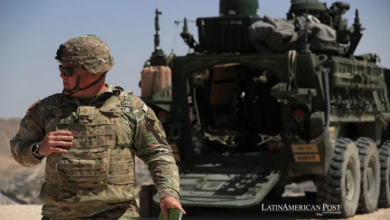
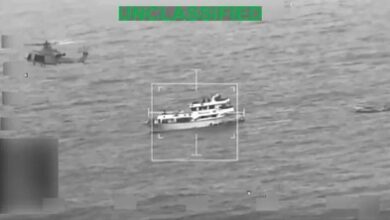
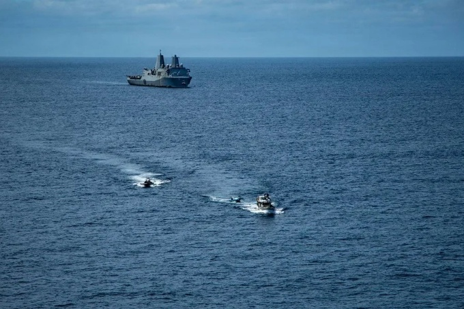
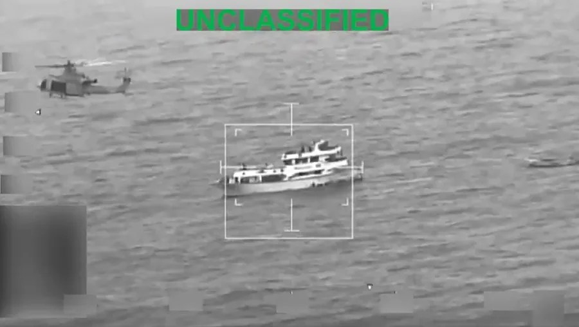
The method matters. Marines approach in fast boats, remove the crews, and then destroy the vessels with weapons fired from helicopters. Taking people off before firing is better than killing them. But it also sharpens the legal question: once personnel control a vessel and its occupants, what specific necessity requires sinking it rather than securing it for investigation? Washington says the boats supplied fuel to speedboats moving cocaine northward for Los Choneros. That allegation deserves investigation; the absence of cocaine aboard would not, by itself, disprove a refueling role. Yet a criminal case requires evidence connecting defendants to the alleged scheme, not merely the presence of fuel aboard a fishing boat. Working in waters traffickers also cross is not, by itself, a criminal identity.
Nor does calling Los Choneros a terrorist organization automatically turn every alleged supplier into a wartime target. Whether armed-conflict law applies depends on facts, not presidential vocabulary. Governments cannot borrow the language of war to avoid the evidentiary obligations of policing, then invoke policing to escape scrutiny of military destruction.
Ecuador’s cooperation does not cure that problem. Permission for foreign forces to operate and permission to destroy property are separate questions. The American Convention on Human Rights protects property and due process, placing obligations on Ecuador that political agreements cannot simply erase. A genuinely dangerous vessel might require disposal. But a documented safety emergency is not interchangeable with an unsupported trafficking allegation. Without demonstrated necessity and lawful authority, destroying secured boats amounts to arbitrary destruction, not legitimate interdiction.
The Coast Pays for the Spectacle
This is an economic absurdity, too. A fishing vessel is not only an asset belonging to its owner. It is a workplace for people who may own none of it. The María Candelaria alone accounts for 24 acquitted crew members. Destroying that working platform imposes losses beyond any person suspected of arranging a fuel transaction. An acquittal provides no replacement berth.
For President Daniel Noboa, who publicly asserted that “clear evidence” existed, the failed prosecution demands more than another declaration of resolve. His government cooperated in the operations. Ecuador cannot present itself as merely receiving decisions made in Washington. Sovereignty should mean answering for what happens to Ecuadorian citizens, not simply granting a stronger ally permission to act against them.
The regional precedent should worry governments far beyond Quito. Washington invokes intelligence and supplies firepower, a Latin American partner supplies consent, and local judges inherit the evidentiary wreckage. That arrangement risks reducing national courts to damage control after the decisive act. Cooperation should strengthen the capacity to investigate criminal networks, not make a country dependent on allegations its own prosecutors cannot substantiate. Otherwise, the spectacle of sovereignty masks the surrender of accountability.
The fishermen’s reported response has been to broadcast boardings on TikTok until they take their phones. That detail deserves more attention than the spectacle of an exploding hull. People on fishing decks are trying to preserve a record of encounters that two governments have not adequately explained. A phone becomes a small, precarious counterweight to military secrecy.
Destruction also risks sabotaging the stated investigation. An intact vessel can help establish what its tanks carried and how it was used. A wreck makes reconstruction harder. If a genuine criminal network exploited these boats, sinking them could destroy evidence and obstruct the prosecutions needed to dismantle it. If none did, the operation has destroyed innocent livelihoods for nothing.
Human Rights Watch has demanded disclosure of the operations’ legal basis and investigations into alleged abuses. That is the minimum, not an ambitious reform. The bombings should stop while independent investigators examine the targeting decisions and treatment of crews. Unlawful losses should trigger compensation, rather than leaving families to finance a second legal battle after surviving the first.
Ecuador’s judge has supplied a necessary reminder: suspicion is not a verdict. Washington and Quito should not be allowed to make that distinction meaningful only after the boat is gone.