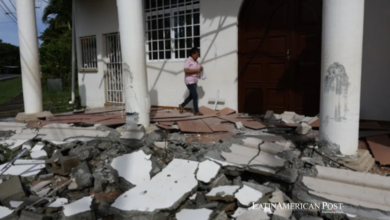
Cali Rebuilds After Earthquake as Three-Year Recovery Clock Starts Ticking
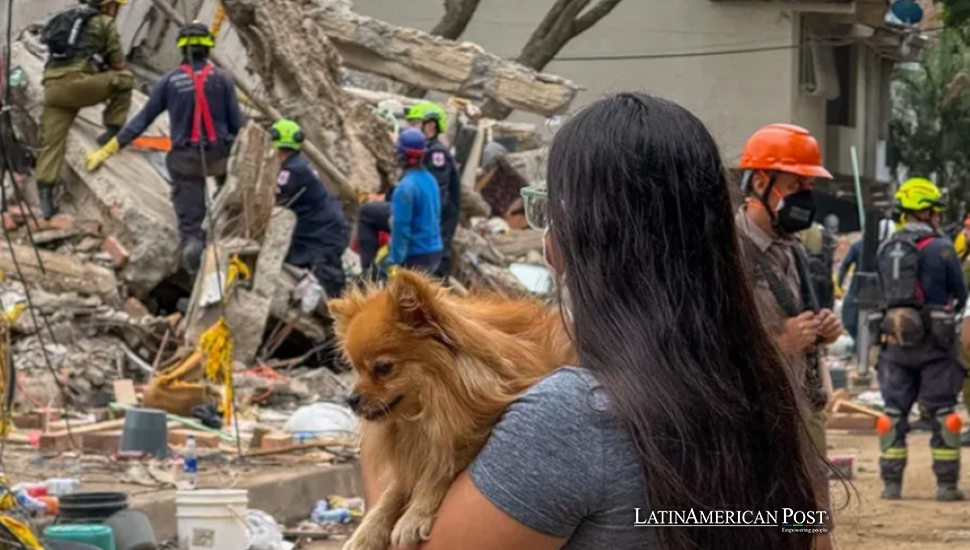
Cali restored power with remarkable speed after a magnitude 7.4 earthquake, but true recovery will take years. Beneath the statistics are families without homes, workers clearing mountains of rubble, and a city confronting what resilience must actually cost in practice.
The Rescue Phase Ends
For the first week, Cali moved by one command: find the living.
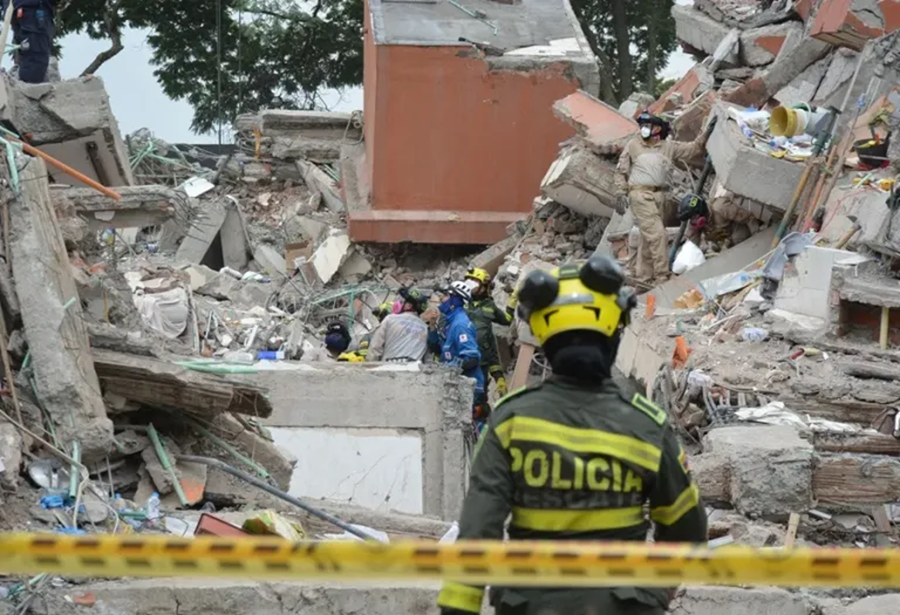
Rescue crews dug through the remains of Torres del Limonar and other collapsed structures, listening for voices beneath concrete and cutting through twisted metal. Then the rhythm changed. Search operations became the recovery of bodies. Families who had waited beside barricades began receiving the news they feared.
“At first, there was only one mission: save lives,” Mayor Alejandro Eder told EFE. After that first week, he said, authorities shifted at collapsed buildings from rescue work to the extraction of the dead.
The change is procedural, but it is also emotional. Rescue contains hope. Reconstruction begins after hope has narrowed into paperwork, temporary shelter, engineering reports and the quiet inventory of what cannot be replaced.
Eder estimates Cali’s emergency will last about three years. “We have to rebuild Cali,” he told EFE, describing a city that should emerge more resilient, more inclusive, more focused on young people and more capable of imagining a future beyond the rubble.
That language is ambitious because the earthquake did not strike a blank map. Cali entered the disaster carrying deep social divides, uneven housing quality and neighborhoods where public investment has long arrived slowly. Rebuilding what was there could mean restoring the same vulnerabilities. The promise matters only if reconstruction changes who receives safe housing, reliable infrastructure and access to opportunity.
More than 30 municipal departments have been activated. The Infrastructure Secretariat has removed 25,032 tons of debris, an industrial figure that conceals bedroom walls, family photographs, store counters, broken pipes and the dust of ordinary lives. Each truckload clears a street, but also erases physical evidence of how families lived before the city was rearranged in seconds.
Power Returns Before Certainty
The fastest sign of institutional recovery came through electricity.
The earthquake knocked out service to 350,000 users, more than half of Cali’s customers, and disabled 44 electrical circuits. In less than two days, municipal utility Emcali restored normal power to 99 percent of users, according to general manager Roger Mina.
That achievement deserves attention. Electricity powers hospitals, refrigeration, water systems, communication and the phones through which relatives search for one another. Restoring it quickly prevented a structural catastrophe from becoming a prolonged public health and security crisis.
Emcali also installed 12 mobile satellite internet points around the city. Mina told EFE the connections were intended to help rescuers and affected families communicate. In a disaster, connectivity becomes essential infrastructure. It lets crews transmit locations, displaced people reach relatives, and officials map needs before rumors fill the vacuum.
Yet the contrast is revealing. A circuit can be repaired in hours. A home cannot. Power may return while a family remains under a plastic roof, uncertain whether its building is safe or whether compensation will arrive. Services create the appearance of normality long before normal life returns.
This is why the three-year estimate should be read not as a deadline but as a political test. Emergency management rewards visible speed. Reconstruction demands coordination among engineers, planners, neighborhood leaders, contractors and residents who may distrust promises made after earlier crises.
Solidarity has softened the first shock. Eder said Cali received help from El Salvador, Peru, Mexico and the United States through the national government, as well as support from Bogotá and other Colombian cities. Above all, he told EFE, residents of Cali responded with generosity.
The city opened coordination spaces for food, humanitarian aid and basic supplies. Such networks reveal one of Cali’s strengths: a civic culture built through neighborhoods, churches, community kitchens and informal care. But donations cannot enforce building codes or finance years of safe reconstruction.
A City Must Decide What Returns
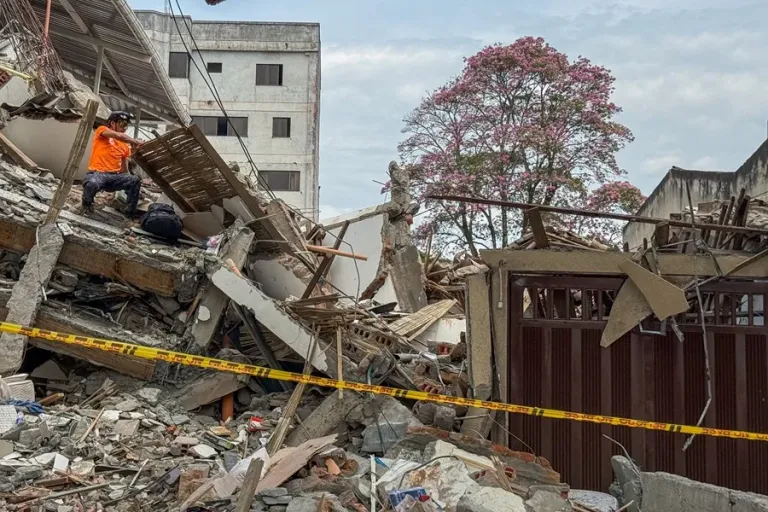
The hardest image may be a destroyed home in Cuarto de Legua, where the Saavedra triplets lived. Two of the girls died with their parents. The surviving spaces do not look like an urban planning problem. They look intimate, almost indecent to observe, because disaster has opened private life to the street.
That is the scale on which recovery will be judged.
Eder acknowledged the emotional burden of leading the response. A government official must keep moving, he said, because protecting life is the central responsibility of public office. “There are moments when one breaks,” he told EFE.
That admission matters in a region where political leadership is often performed through hardness. Cali does not need theatrical invulnerability. It needs a government able to grieve without losing discipline, move quickly without bypassing scrutiny, and speak of transformation without turning suffering into a slogan.
Three years can rebuild roads, schools, utilities and apartment blocks. It can also reproduce the old city under newer paint. The difference will depend on whether officials treat resilience as stronger concrete alone or as a social contract extending to renters, informal workers, young people and families in neighborhoods that were precarious before the ground moved.
Cali has already shown that it can restore power. Now it must prove that recovery can redistribute safety.
The earthquake lasted moments. The decisions it exposed will shape the city for a generation.
Also Read: Chocó’s Earthquake Exposes the Fault Lines Beneath Colombia’s Forgotten Wealth