Peru Awaits Pope Leo as Faith Meets Fragile Politics Again
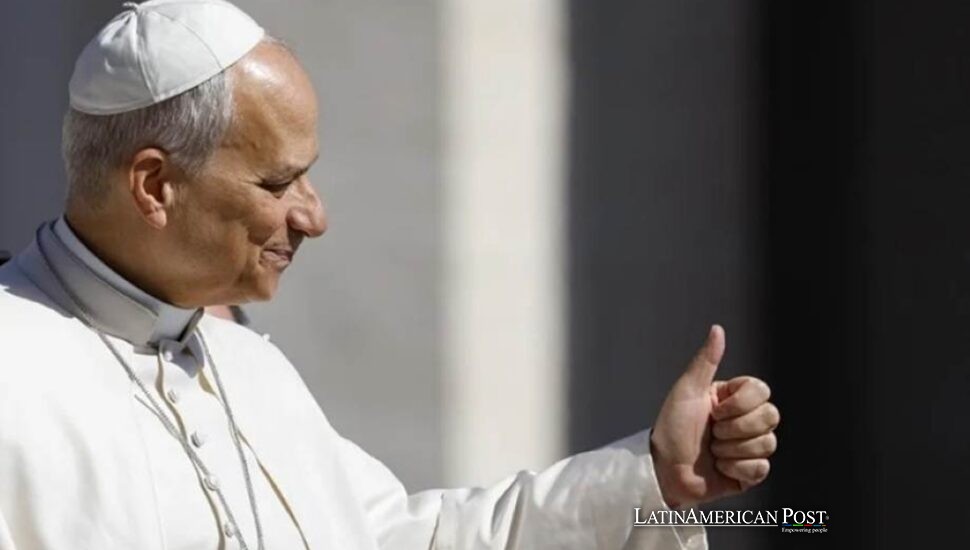
Pope Leo XIV’s expected return to Peru has become more than a pastoral homecoming. It is a national mirror in which faith, memory, poverty, tourism, and political transition meet under the gaze of a country searching for recognition once more today.
The Pope Who Belonged Elsewhere First
A year after the shock and euphoria of Leo XIV’s election as leader of the Catholic Church, Peru is preparing for the return of a man it has already claimed as one of its own.
The visit has not been officially announced, but the expectation is no longer quiet. According to EFE reporting and interviews, the Peruvian Episcopal Conference anticipates the pope’s long-awaited return in the final months of the year, likely in November or early December, unless a force majeure event prevents it. That timing matters. Peru is in the middle of a general election cycle, and the proposed window would place the visit after the new government is expected to take office on July 28, but before Christmas, when Catholic symbolism, popular emotion, and political theater all become harder to separate.
Leo XIV was born in Chicago, United States. Yet from the first hours of his papacy, Peru understood that biography differently. His roots may begin in North America, but his spiritual geography was unmistakably Peruvian. He spent more than two decades of pastoral life in the Andean country, especially in Chiclayo, the northern coastal city where he served longest as bishop and where his public identity as a shepherd among ordinary people took shape.
From the balcony of St. Peter’s Basilica, newly presented as pontiff, he sent a greeting in Spanish to his “beloved Diocese of Chiclayo, in Peru,” recalling a faithful people who had accompanied their bishop in sharing the faith. The gesture was brief, but in Peru it landed like a bell. He spoke Spanish. He named Chiclayo. He offered no English in that first personal salute. For many Peruvians, that was enough to turn distant Vatican ritual into something intimate.
Almost immediately, images from his years in Peru began circulating online. They showed not the polished staging of Vatican corridors, but the lived textures of the country: meals in popular kitchens, a traditional seco de chivo served in suffocating northern heat, an Inca Kola on the table, children welcoming him in rural communities, and a bishop arriving at a village on the back of a donkey. These images matter because they suggest not a visiting cleric performing poverty, but a pastor whose memory had been stored in the ordinary archive of the people.
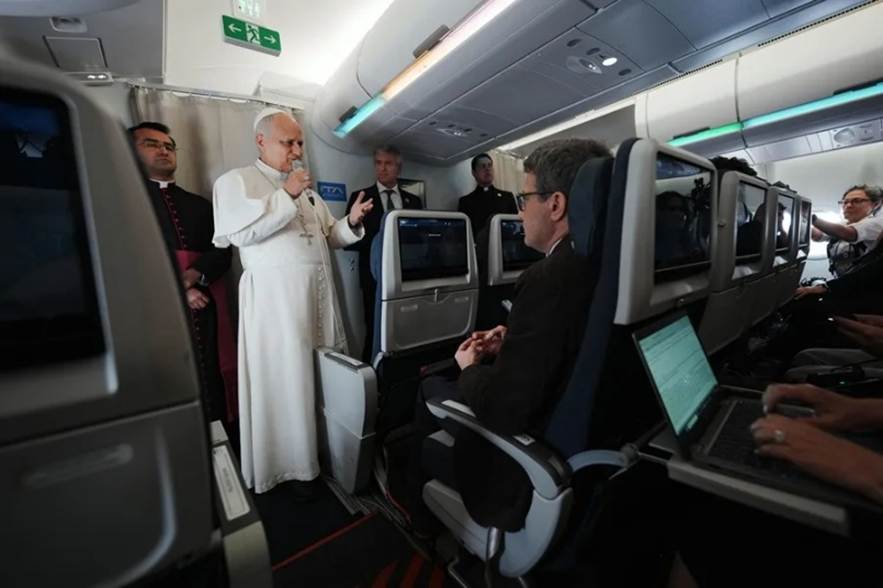
Chiclayo Prepares for a Sacred Return
The route remains uncertain. Lima is likely. Chiclayo feels almost inevitable. Depending on the final agenda, a third city or region could be included, perhaps one of the other places that shaped his pastoral life: Chulucanas in Piura, near the Ecuadorian border; Trujillo; the Amazonian city of Iquitos; or Callao, the port province near Lima from which Pope Francis eventually took him to Rome to lead the Dicastery for Bishops.
That itinerary would not be random. It would map Peru’s neglected truths. The north, the coast, the Amazon, the port, the poor neighborhoods, the regional margins that rarely feel central until someone powerful remembers them.
Peru has already begun building a public memory around Leo XIV. In Lambayeque, the region whose capital is Chiclayo, authorities have inaugurated up to three sculptures of the pope since his election. The most imposing is a five-meter statue guarding the southern entrance to Chiclayo, roughly 780 kilometers north of Lima. The government has also created a tourist route called “The Pope’s Paths,” linking 38 attractions across Lambayeque, La Libertad, Piura, and Callao, all places associated with his work.
There is tenderness in that. There is also a strategy. Peru knows what papal attention can do. It can bring pilgrims, cameras, hotels, infrastructure promises, international headlines, and a rare moment of national softness in a country better known lately for political instability. A pope who chose Peru personally offers something no branding campaign can easily manufacture: legitimacy wrapped in affection.
But there is a danger too. The state can turn memory into merchandise. A route can honor a life, or flatten it into tourism. A statue can express gratitude, or become a shortcut around the harder demands of the poor communities that shaped him. Leo’s Peruvian story is powerful precisely because it has endured hardship, not because it can be neatly packaged for visitors.
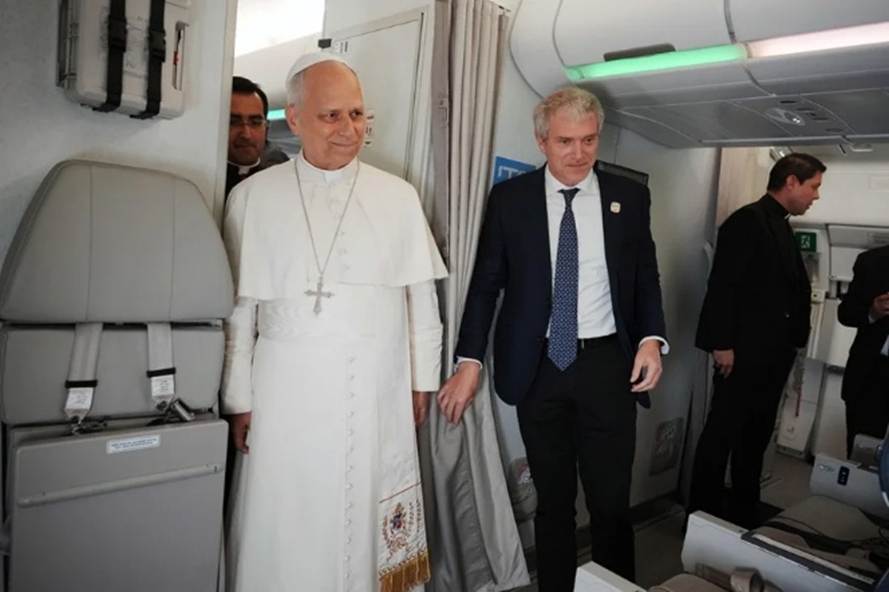
A Region Looking Toward Rome
For Peru, the expected visit arrives at a delicate hour. The country has lived through presidents, protests, interim governments, distrust, and exhaustion. Institutions feel brittle. Politics often appears transactional and remote from the daily life of citizens. In that setting, Leo XIV’s return could offer a rare moment of shared emotion across political lines.
But it will also test the next government. A papal visit is never only religious. It is diplomatic, logistical, and symbolic. Every image will be read. Every stop will be interpreted. If he visits Chiclayo, Peru, he will see a pope returning to the place that formed him. If he visits a poorer region, the message may feel like a call to remember the forgotten. If the visit stays too official, some may see the state trying to borrow holiness without confronting inequality.
For the region, Leo XIV’s connection to Peru carries broader significance for Latin America. The Catholic Church in Latin America has always been a contradiction: an institution tied to conquest and hierarchy, but also to liberation theology, popular devotion, Indigenous syncretism, barrio kitchens, human rights struggles, and the moral language of the poor. A U.S.-born pope who chose to become Peruvian complicates easy categories. He is not simply North speaking to South. He is someone who crossed into the South and was marked by it.
That matters in a region suspicious of foreign power, but still hungry for global recognition. Peru’s pride in Leo XIV is not only religious pride. It is the pride of a country often treated as peripheral, seeing one of its own memories elevated to the center of the Catholic world. Chiclayo, Chulucanas, Iquitos, and Callao become part of the Vatican story, not as scenery, but as formation.
The deeper question is what Peru will do with that recognition. A papal visit can bless a nation for a week. It cannot repair democracy, feed families, clean institutions, or end regional abandonment. But it can create a mirror. It can ask why the places that shaped a pope remain places where many Peruvians still wait for dignity.
Leo XIV’s return, if confirmed, will be celebrated with flags, Masses, crowds, and tears. Yet beneath the celebration sits a sharper truth. Peru is not only preparing to welcome a pope. It is preparing to be seen by someone who knows its kitchens, its heat, its borderlands, its children, and its faith from the ground up. That kind of witness is harder to stage, and much harder to ignore.
Also Read: Colombia Faces ELN’s Kidnapping Courts as Rebel “Justice” Turns Rotten