Chile Tracks Deadly Hantavirus Trail as Cruise Mystery Deepens Again
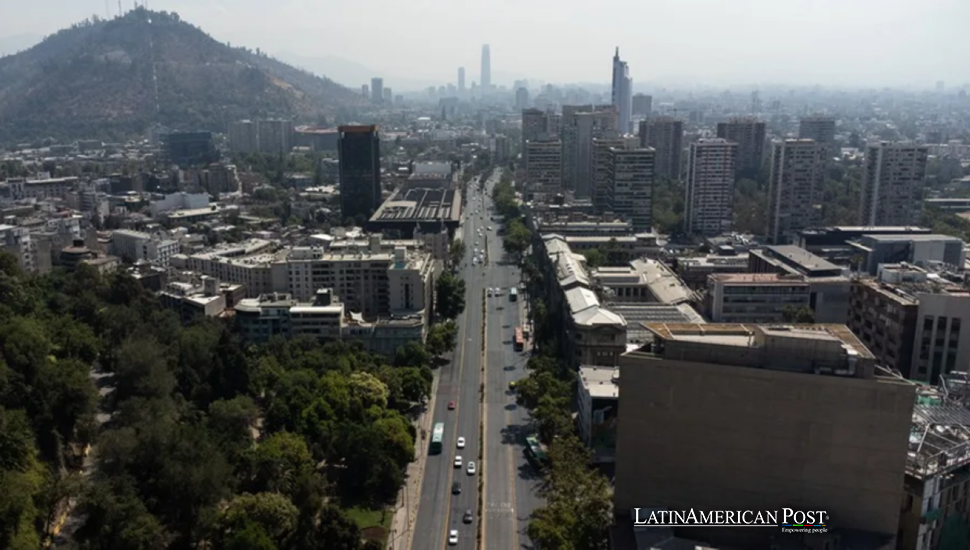
Chile’s rising hantavirus fatality rate, confirmed by Health Ministry data shared with EFE, has turned an endemic disease into a regional alarm, linking forests, rodents, delayed diagnosis, cruise travel, and public health trust across the southern cone again this year.
A Virus Already Living in the Landscape
In Chile, the suspect does not move through airports with a passport or hide behind a false name. It lives low to the ground, in damp forests, sheds, rural paths, woodpiles, cabins, and the invisible dust that rises when human life brushes against rodent territory.
The country has confirmed at least 39 hantavirus cases so far this year and 13 deaths, according to figures provided to EFE by Chile’s Health Ministry. That means a fatality rate of 33 percent, a sharp and worrying increase compared with 2025, when the ministry recorded 44 cases and eight deaths, for an 18 percent fatality rate.
Hantavirus is not new in Chile. It is endemic. Between 2020 and 2024, public epidemiological data show the country registered between 30 and 70 cases a year, with a five-year fatality rate of 26 percent. Those numbers describe a familiar danger. But 2026 has given that danger a harder edge because the share of patients dying has climbed.
“The higher fatality rate could be related to factors specific to the patients and the timing of diagnosis, which reinforces the importance of seeking care in time for any compatible symptom,” the Health Ministry said in a statement sent to EFE.
That sentence is clinical, but behind it sits the whole mystery of a disease that punishes delay. Hantavirus can begin like something ordinary, the kind of fever, muscle pain, or fatigue people may try to wait out. Then it can turn. The virus can cause severe cardiorespiratory complications, and by the time the body’s alarm becomes unmistakable, the window for survival may have narrowed.
The confirmed cases have appeared in nine of Chile’s 16 regions, especially in the central and southern zones: Metropolitana, where Santiago sits, along with O’Higgins, Maule, Ñuble, Biobío, La Araucanía, Los Ríos, Los Lagos, and Aysén. It is a map that follows both human movement and ecological reality, from urban edges to the humid southern landscapes where the long-tailed mouse, the virus’s main reservoir, finds its habitat.
The Andes Variant and the Cruise Shadow
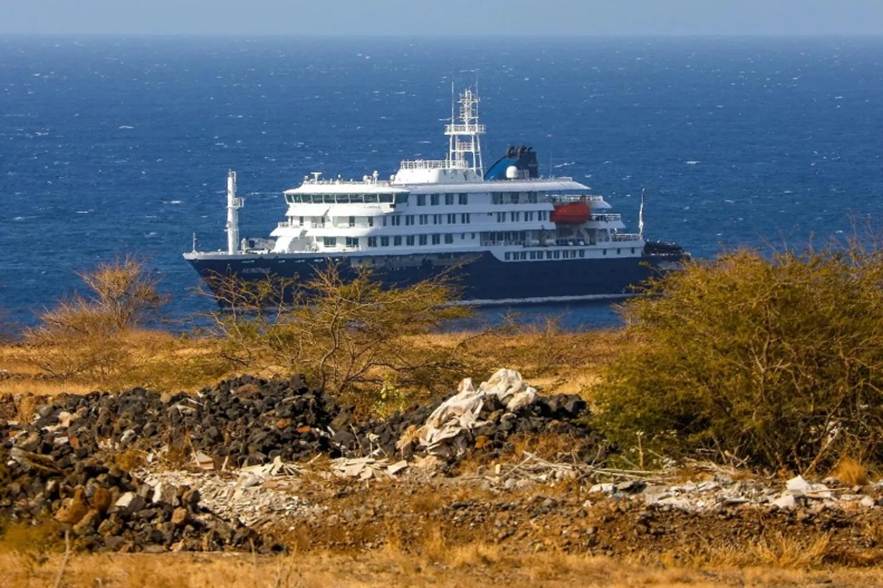
The dominant strain in Chile and Argentina is the Andes variant, one of the most dangerous forms of hantavirus and the only one known to be capable of person-to-person transmission. That fact gives the current moment its regional tension, especially after the Dutch cruise ship MV Hondius reported a hantavirus outbreak with eight infected people and three deaths.
The ship departed Argentina on April 1, and a World Health Organization hypothesis suggests that one of the infected passengers may have contracted the virus in Argentina before boarding. Argentina is investigating whether the first two people to show symptoms aboard the cruise became infected on land before embarkation. They were a Dutch couple who later died and had spent four months traveling through Argentina, Chile, and Uruguay.
Chile’s Health Ministry, however, told EFE that “currently there is no background information indicating that the confirmed cases from the cruise passed through national territory.” Still, the ministry added that its National Liaison Center has requested information from the World Health Organization under the International Health Regulations.
That distinction matters. In an outbreak narrative, countries can become suspects too quickly. A route becomes an accusation. A stop becomes a headline. Chile is right to draw a line between confirmed evidence and regional speculation. But it is also right to ask for information because viruses do not respect the emotional needs of national reputations.
The last documented person-to-person hantavirus transmission in Chile dates to 2019, the ministry said, describing it as a specific and controlled situation. Since January, Chile has maintained a nationwide health alert. That alert now functions like a quiet perimeter around a known enemy, not panic, but vigilance.
This is where the story takes on the rhythm of an investigation. The rodent is known. The terrain is known. Seasonality is known, with most Chilean cases occurring during the austral summer. The symptoms are known. Yet people still die. The case file remains open because the challenge is not only identifying the virus. It is getting human systems to move faster than the disease.
A Regional Test of Trust
For Chile, the hantavirus numbers raise a difficult public health question: how does a country communicate danger without fear outrunning evidence? The disease is serious, but it is not everywhere. Person-to-person transmission is possible with the Andes variant, but rare. Most cases in Chile come from direct animal-to-human transmission, usually through inhaling viral particles from the feces, urine, or saliva of infected long-tailed mice.
The practical message is simple. The political message is harder. Rural and southern communities must trust that health warnings are not just seasonal press releases from Santiago. Travelers must understand that nature tourism carries real biological risks. Clinics must recognize symptoms early. Authorities must coordinate across borders before rumors do the work of epidemiology.
For the region, the MV Hondius case is a reminder that South America’s public health map is now global by default. A virus possibly acquired on land in the southern cone can become a cruise emergency off Africa, a concern for European passengers, a question for the WHO, and a reputational issue for Argentina, Chile, and Uruguay. The route of tourism becomes the route of uncertainty.
Chile’s situation also exposes the unequal relationship between landscape and state capacity. The country is long, diverse, and difficult to govern evenly. Its forests, islands, rural settlements, and tourist zones are not just postcard territory. They are epidemiological spaces. The beauty that draws visitors south is the same geography where diseases can hide in cabins, storage rooms, and trails.
That does not mean Chile should retreat from tourism or dramatize every case as a catastrophe. It means the region must treat endemic disease as part of its infrastructure. Signs, rural education, rodent control, early testing, local clinic capacity, and cross-border notification systems matter as much as airports and ports.
There is a human sorrow in the statistics. The thirteen dead in Chile this year is not only a fatality rate. It is families who thought the illness might pass. It is doctors racing against a respiratory collapse. It is the old Latin American tension between distance and care, between the central state and the far-off place where the emergency begins.
Chile knows hantavirus. That is what makes the rise in fatality more troubling, not less. The country is not facing an unknown invader. It is facing a known threat that may be finding gaps in timing, awareness, and diagnosis.
For Chile and the region, the lesson is blunt. In the southern cone, public health does not begin in the hospital. It begins in the forest, the cabin, the trip itinerary, the local clinic, the regional alert, and the moment a person decides whether a fever is worth attention. The killer is small. The warning is not.
Also Read: Caribbean Waters Turn Deadly Again as Washington Intensifies Drug War Militarization