Colombia Faces ELN’s Kidnapping Courts as Rebel “Justice” Turns Rotten
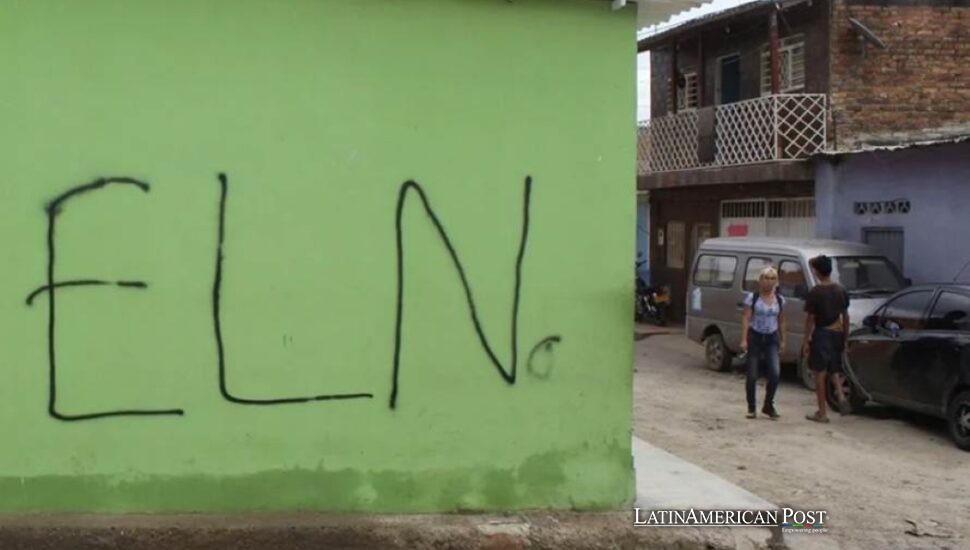
The ELN’s self-styled sentences against kidnapped Colombian officials turn captivity into a grotesque courtroom drama, exposing Arauca’s narco-war landscape, the limits of peace rhetoric, and a country still held hostage by armed groups that claim law while practicing terror daily.
A Verdict Written in Captivity
The announcement sounded like a sentence from another century. Still, it landed in Colombia with the force of a fresh crime.
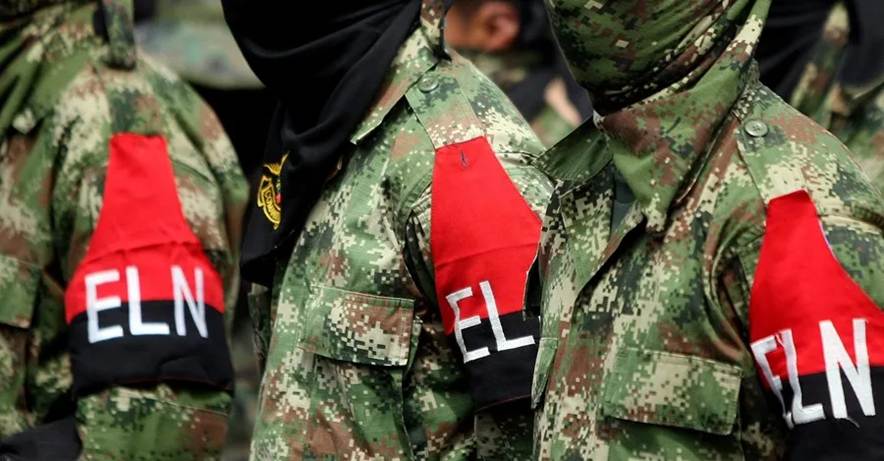
The National Liberation Army, known as the ELN, said Tuesday that it had imposed up to five years of what it calls “revolutionary prison” on four kidnapped state officials it has held since last year. There was no court recognized by Colombia. No judge with constitutional authority. No defense guaranteed by the state. No legitimate justice. Only a guerrilla group reading out punishments over people it had already deprived of freedom.
The victims are Jesús Antonio Pacheco Oviedo and Rodrigo Antonio López Estrada, members of the Technical Investigation Corps of the Colombian Prosecutor’s Office, known as the CTI. They were kidnapped in May 2025 in Arauca, in eastern Colombia. According to a statement read by a member of the ELN’s Eastern War Front, Pacheco Oviedo must remain in captivity for 60 months. López Estrada for 55 months because they belonged to a state body, the guerrilla is accused of committing crimes against humanity.
The ELN also said two police officers from Dijin, the criminal investigation directorate, received sentences of 36 and 32 months. Franki Esley Hoyos Murcia and Yordin Fabián Pérez Mendoza were kidnapped in Arauca in July. The group accused them of espionage and perfidy.
The vocabulary is the first weapon. The ELN says “condemned.” Colombia hears kidnapped. The ELN says “revolutionary trials.” Colombia sees forced captivity dressed up as a procedure. The ELN says it chose not to impose the death penalty. Colombia understands the cruelty of a captor pretending mercy while keeping four families suspended between fear and waiting.
That is the dark theater of the case. The guerrilla has not only held men hostage. It has attempted to narrate the hostage-taking as justice.
The Kidnapper Poses as Judge
There is something especially chilling about an armed group pretending to reduce a sentence it created by force. In its statement, the ELN said it had granted a sentence reduction because of the captives’ behavior during the trial and while serving their punishment. It also said it would recognize the time the men have already spent deprived of liberty since capture as part of the sentence.
This is bureaucratic horror. It is the language of paperwork applied to the crime of kidnapping. It turns the jungle, the camp, the hidden place of captivity into a fake courthouse. It asks Colombia to accept the legal grammar from the very people committing the crime.
The ELN even said the captives could be included in “humanitarian exchange mechanisms” for prisoners of war with the national government. That phrase reveals the political intention. The group wants to elevate kidnapped officials into bargaining pieces. It wants the state to meet it not only as an armed actor but also as a judicial actor, a military equal, and a parallel authority.
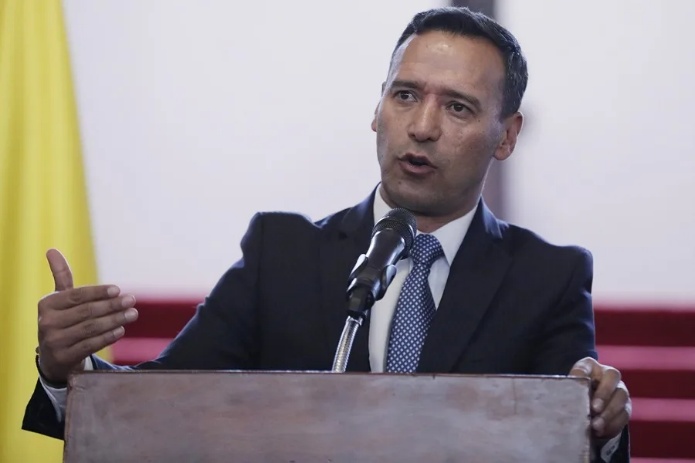
Colombia’s Defense Minister, Pedro Sánchez Suárez, immediately rejected that claim. He called the ELN’s announcement cowardly and said the guerrilla has no legitimacy to exercise judicial functions. “The ELN is not an authority. It does not represent justice. It is a drug trafficking cartel,” he said.
His words were not only angry. They were a defense of the state’s monopoly on justice, a principle Colombia has watched weaken in many territories where armed groups tax, threaten, recruit, punish, and decide who lives under what rules. When a group can kidnap state officials and later declare them “sentenced,” it is not only challenging a government. It is telling civilians that national law ends where armed power begins.
Colombia’s ombudsman, Iris Marín Ortiz, also warned that these actions do not change the nature of the crime. Kidnapping remains kidnapping. Under international humanitarian law, she said, deprivation of liberty must end without conditions.
That legal clarity matters because the ELN’s method depends on confusion. It wants the country to debate its punishment as if the first act were not already criminal. It wants the fake trial to obscure the original violence. But no political cause, no old revolutionary vocabulary, no claim of war can erase the basic fact: four people were seized and are still being held.
Arauca’s War Behind the Words
Arauca is not a neutral backdrop. It is one of the Colombian departments most battered by armed conflict, and its geography helps explain why this case matters so deeply. The region has long been shaped by border tensions, illicit economies, and armed actors fighting over routes, influence, and survival. The ELN, FARC dissidents, and other illegal groups dispute control of drug trafficking corridors and illegal economies there.
That makes these kidnappings part of a wider map. The ELN’s announcement is not only ideological theater. It is territorial messaging. In places like Arauca, power is demonstrated through the ability to capture, hold, accuse, and punish. A kidnapped CTI official or police investigator is not only a hostage. He becomes proof that the armed group can strike the machinery of the state and then force the country to listen to its script.
For Colombia, this is a hard reminder that the conflict did not vanish with peace agreements or political language. It changed shape. Some groups demobilized. Others fragmented. Others adapted to drug routes, illegal mining, extortion, and border economies. The old guerrilla slogans remain, but the money often tells a more honest story.
That is why the defense minister’s description of the ELN as a drug trafficking cartel matters politically. It reflects a broader frustration in Colombia: many citizens no longer believe armed groups can hide behind revolutionary mythology while profiting from illicit economies and terrorizing communities. The romantic language of rebellion has curdled. In its place, many Colombians see hostage-taking, narcotics, territorial control, and cruelty.
The case also lands at a time when the country is still wrestling with how to pursue peace without rewarding violence. Negotiation can be necessary. Colombia knows the cost of endless war. But talks become morally unstable when an armed group keeps kidnapping and then invents courts to justify captivity. Peace cannot mean allowing parallel justice systems to grow in the shadows.
For the families, these debates are not abstract. Every public statement is another day without their loved ones at home. Every invented “sentence” is another calendar of fear. Sixty months. Fifty-five months. Thirty-six. Thirty-two. These numbers are not legal penalties. They are measured absences. Birthdays missed. Children aging. Parents praying. Wives, husbands, siblings, and friends are forced to live by the clock of kidnappers.
Colombia has heard the language of captivity before. It remembers cages in the jungle, proof-of-life videos, forced marches, humanitarian exchanges, and the terrible patience demanded of families. The ELN’s announcement drags that memory into the present and stains it with a new insult: the captor posing as the court.
The country’s challenge now is larger than securing the release of four men, though that must come first. Colombia must also reject the fiction that armed groups can manufacture legitimacy by staging trials over people they seized. If that line collapses, then every hostage becomes a defendant, every camp becomes a courthouse, and every criminal command can dress itself in the guise of law.
In Arauca, the war speaks through many masks. This week, it wore a judge’s robe. Colombia should recognize it for what it is.
Also Read: Peruvian Suspect Extradited in Women’s House of Horror Livestream Murders