Peru Election Fury Turns Fraud Claims Into Democratic Crime Scene
Rafael López Aliaga’s fraud accusations have pushed Peru’s election dispute into darker territory, where anger at electoral authorities, fear of communism, and fragile trust in institutions now threaten to stain a second round before voters even reach it.
The Loser Who Called It a Coup
In Peru, the crime scene is not a back alley. It is a ballot count.
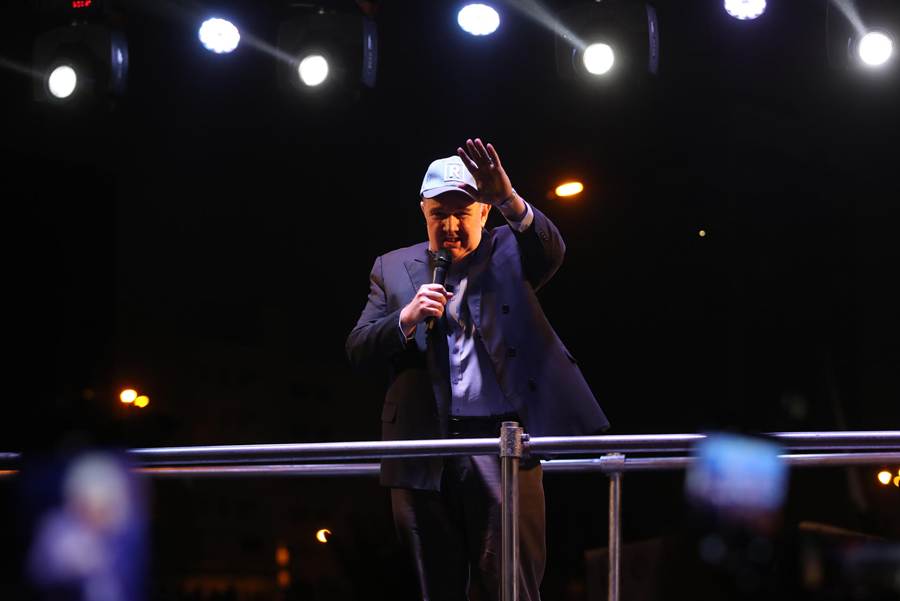
Rafael López Aliaga, the far-right presidential candidate left outside the second round by roughly 23,000 votes, stood before the headquarters of the National Elections Jury in Lima and accused its president, Roberto Burneo, of carrying out an “electoral coup.” He said it with the fury of a man who does not merely believe he lost an election, but that the election was taken from him.
The charge is explosive because it comes without proof. López Aliaga says delays in opening polling stations in Lima, caused by missing electoral material, were deliberate and cost him hundreds of thousands of votes in his strongest electoral bastion. He has repeatedly stated that the April 12 election was fraudulent and has demanded the annulment of the results, complementary elections in Lima, and an international audit of the process.
Yet the numbers so far tell a different story. With 98.4 percent of the vote counted, right-wing candidate Keiko Fujimori leads with 17.14 percent of valid votes, followed by leftist Roberto Sánchez with 12.04 percent. López Aliaga sits third with 11.89 percent, close enough to win, but not close enough, according to the count, to enter the runoff.
That narrow defeat is the gasoline. Peru has seen contested elections before, and the country knows how quickly suspicion can become a second campaign. But this moment feels especially volatile because López Aliaga is not only challenging procedures but also challenging the very foundations of the system. He is challenging legitimacy itself.
“Burneo has carried out an electoral coup,” he declared, accusing the election chief of handing Peru to “international communism.” Later, he warned that Burneo would be responsible if Peru returned to the communist orbit, and said his life “will not be so easy.” The phrase hangs heavily. In a country with a long history of political violence, insurgency, state repression, and unstable presidencies, threats against electoral officials are never just rhetorical noise.
Fraud Talk as Political Weapon
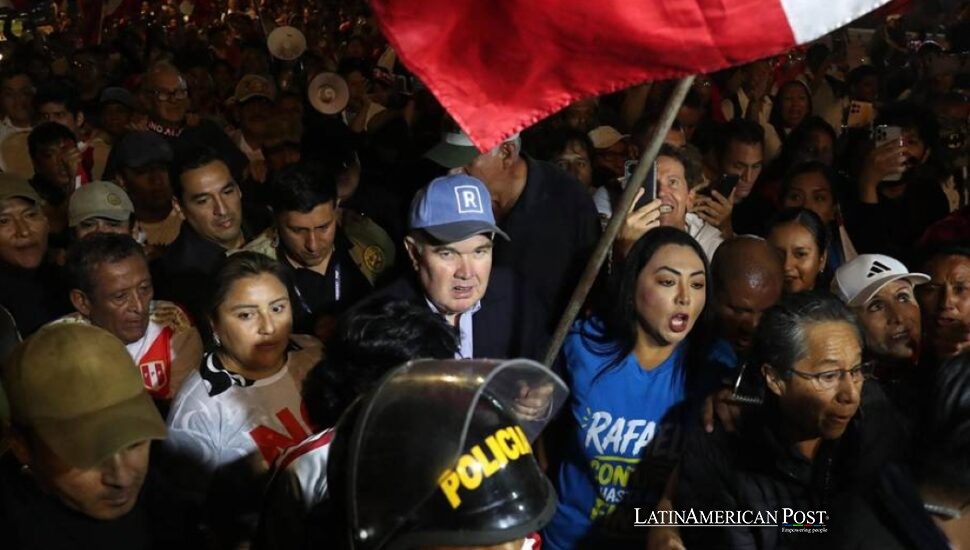
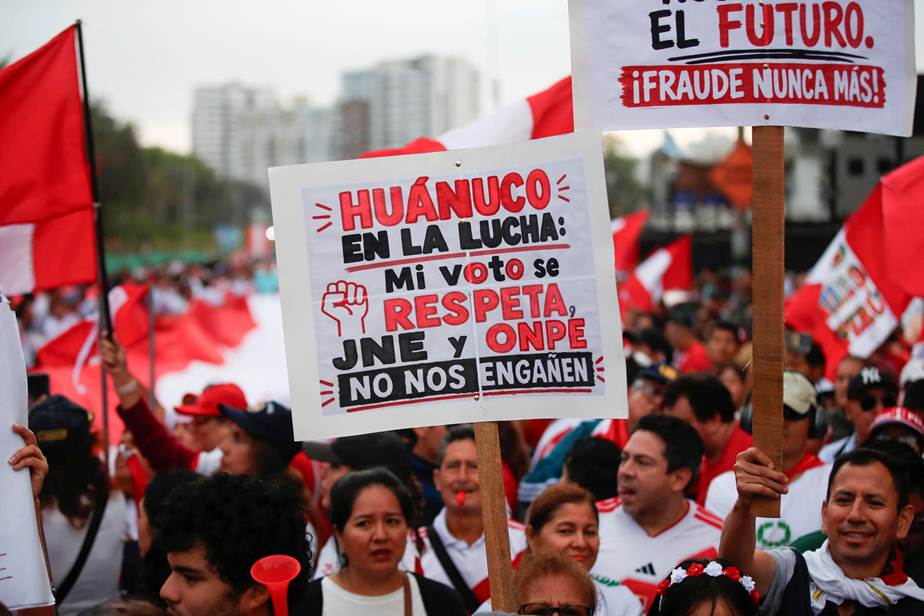
The march López Aliaga called carried the slogan “It is not just a vote, it is your future, and it is not negotiable.” It was designed to sound civic, even protective. But outside the electoral authority, the language grew harsher. He called the JNE a jury of fraud, referred to officials as “trash people,” and described the National Office of Electoral Processes as a corrupt mafia.
Supporters shouted “no to fraud” and “no to communism.” They cheered when López Aliaga said they would not recognize the runoff or its result, calling any future government illegitimate.
That is the most dangerous line in the story. Alleging irregularities is one thing. Democratic systems need complaints, review, audits, and pressure. But declaring in advance that the next round will not be recognized risks turning a procedural dispute into a legitimacy crisis. It asks supporters to see the system not as flawed, but captured. It transforms defeat into proof of conspiracy.
Peru’s institutions are already fragile enough. The country has cycled through presidents at a brutal pace. Congress is deeply distrusted. Parties often function as electoral vehicles rather than stable democratic organizations. Many Peruvians feel that politics is a locked room where elites trade power while ordinary people inherit insecurity, rising costs, and public services that fail at the edges.
In that atmosphere, fraud claims do not need proof to travel. They need anger. They need a close margin. They need a villain. López Aliaga has named his villains: Burneo, the JNE, the ONPE, and, indirectly, Keiko Fujimori, whom he accused of pretending not to see what he says is fraud because she benefits from entering the runoff.
He also claims that 1.5 million Peruvians were prevented from voting, both inside and outside the country, due to irregularities. But an observation report by the civil association Transparencia determined that the delays would not alter the final result. That finding is crucial. It does not mean every logistical failure was harmless. It means the leap from disorder to stolen election remains unsupported by the evidence presented in the notes.
A Region Watching Democracy Fray
For Peru, this dispute is about more than one candidate’s loss. It is about whether the country can still process defeat without treating the referee as a criminal. Every democracy depends on a difficult civic ritual: losers must be able to protest, but also eventually accept verified outcomes. When that ritual collapses, elections stop functioning as release valves and become detonators.
The regional implications are clear. Latin America is living through an age of low trust, high polarization, and viral accusations. Electoral bodies, once boring by design, have become targets. Candidates who lose close contests can now build entire movements around the idea that the system itself stole the future. The script has appeared elsewhere in the Americas. Peru now risks performing its own version.
The fear of “communism” also carries particular weight in Peru. It is not merely campaign language. It touches the memory of the internal armed conflict, the trauma of Shining Path violence, the fear of state collapse, and the persistent divide between Lima and the rest of the country. When López Aliaga frames Sánchez as a communist threat and the electoral authority as complicit, he is activating a deep national nerve.
But there is another danger. If every left-wing advance is described as a criminal plot, and every institutional disagreement as treason, politics becomes impossible. Opponents cease to be rivals and become enemies. Election officials cease to be administrators and become suspects. The ballot ceases to be a civic mechanism and becomes evidence in a permanent trial.
That is why this moment feels like a true crime without a corpse. The mystery is not who killed someone, but whether public trust can survive another wound. The suspects, depending on whom one asks, are electoral officials, party elites, communists, opportunists, or the long decay of Peru’s own political system. The victim may be legitimacy itself.
The next government, whether led by Fujimori or Sánchez, could begin under a cloud if López Aliaga’s followers reject the runoff before it happens. That would weaken governing authority from day one, deepen street tension, and make Peru even harder to stabilize. In a region where instability travels through markets, migration, security cooperation, and ideological alliances, Peru’s crisis will not stay neatly inside its borders.
For now, the count points one way, and the accusation points another. Between them stands a country exhausted by broken promises, suspicious of power, and vulnerable to anyone who can turn disappointment into a conspiracy. Peru’s election is not only about choosing a president. It is testing whether democracy can still close a wound without opening another.
Also Read: Peru Bets on F-16s as Region Watches Its Skies Closely