Guatemala Maras Trade Extortion Fear for Cocaine Cash and Control
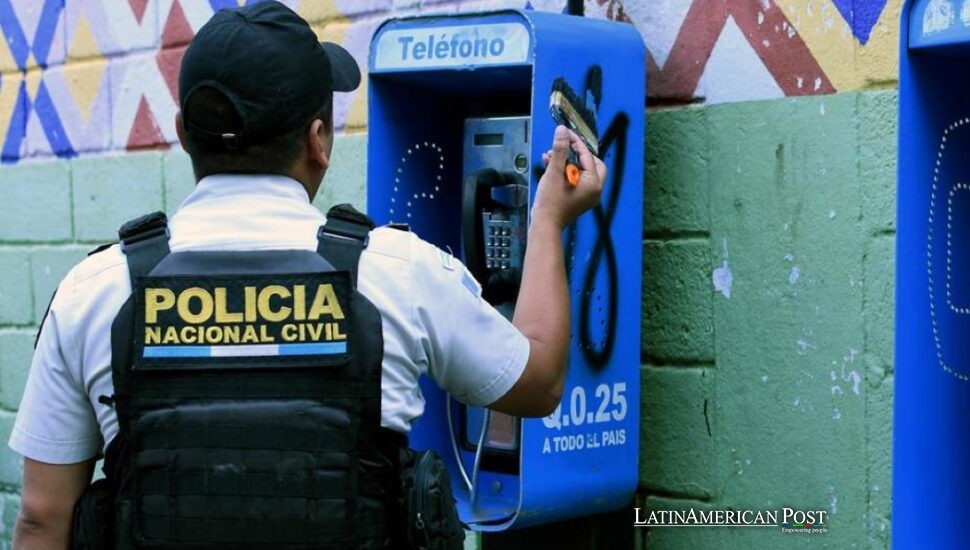
Guatemala’s police say Mara Salvatrucha and Barrio 18 are moving beyond extortion into drug trafficking, a dangerous shift that could deepen violence, test President Bernardo Arévalo’s security strategy, and expose a broader Latin American struggle over gangs, territory, and power.
The Gang Business Is Changing
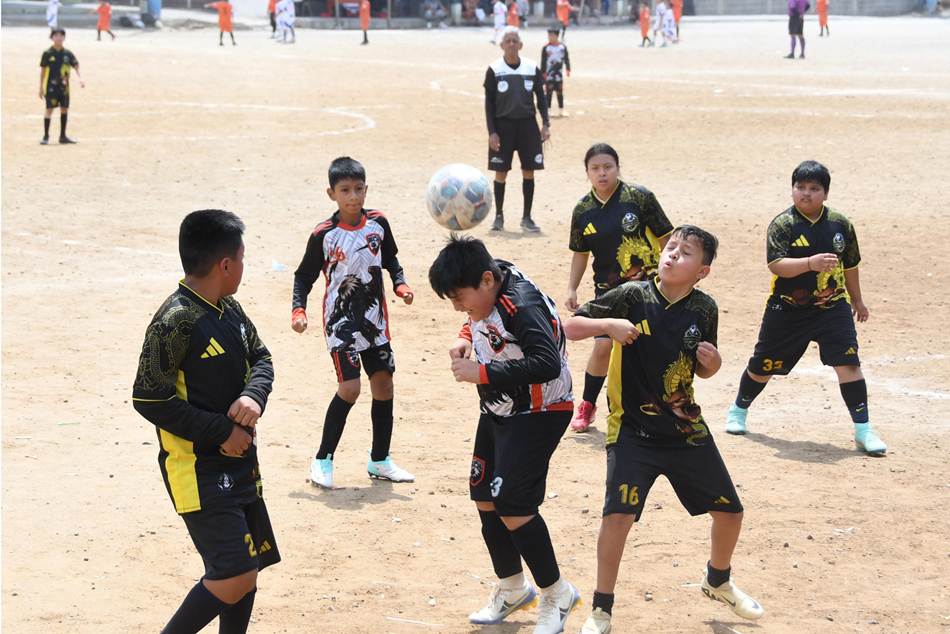
In the neighborhoods where children still kick soccer balls between painted walls and watchful corners, Guatemala’s gang problem is no longer just about the phone call that demands money. It is not only the shopkeeper paying to stay alive, the bus driver taxed by fear, the family calculating whether the next knock is a threat.
According to David Custodio Boteo, director of Guatemala’s National Civil Police, the country’s most feared gangs are mutating. In an interview with EFE, he said Mara Salvatrucha and Barrio 18 have moved from extortion and local drug sales into narcotrafficking itself, buying and moving larger amounts of marijuana and cocaine across the territories where they already exercise influence.
“The dynamism that both gangs, Mara Salvatrucha and Barrio 18, have had is precisely to get directly involved in small-scale drug dealing,” Custodio Boteo told EFE, adding that authorities can now say “with total propriety” that the gangs no longer dedicate themselves only to street-level sales, but also to drug trafficking.
That sentence matters because it marks a change in scale. Extortion is parasitic. It feeds off the existing economy, squeezing buses, bakeries, markets, families, school routes, and street vendors. Drug trafficking is different. It brings capital. It brings contacts. It brings weapons, mobility, phones, surveillance, and a reason to compete more fiercely for corridors and corners.
Guatemala has long lived in the shadow of geography. It sits between South American production routes and North American demand, a corridor where weak institutions, poverty, and impunity have allowed criminal economies to grow. But when maras move deeper into drugs, the old map becomes more intimate. Trafficking is no longer only a border or cartel problem. It settles into the block.
Custodio Boteo told EFE that gang members are even “knocking down,” or stealing, drugs, and acquiring large quantities of cocaine and marijuana to sell in different departments where their influence is strongest. That suggests not just participation, but confidence. It points to groups with enough structure to buy, steal, protect, and distribute product while maintaining their older extortion networks.
Money Buys Territory
The police chief’s warning is rooted in command. Nothing happens in the street, he told EFE, without a direct order from gang bosses or clique leaders in Guatemala’s different territories. That vertical control is the spine of the crisis. The teenager on a motorcycle may be the face of the threat, but the decision lives higher up, in leadership structures that know how to turn fear into accounting.
The transition from extortion to drug trafficking has given gangs more money and more logistical muscle. Custodio Boteo said the shift has allowed them to expand coverage and buy equipment, motorcycles, firearms, and cellphones, including phones handed to victims. The detail is chilling. A phone can be a tool of connection, but in this context, it becomes a leash. It allows criminals to call, track, pressure, and remind the victim that the gang can enter daily life without entering the house.
The reported use of street surveillance systems adds another layer. EFE notes that criminal groups have installed video surveillance in parts of Guatemala to monitor security forces, though police say they have dismantled several of these schemes. That detail places Guatemala inside a wider Latin American pattern: gangs that once relied mostly on intimidation now adopt technologies of territorial governance. Cameras, phones, motorcycles, and firearms become the equipment of parallel authority.
This is not only a security story. It is an economic one. In countries marked by informality, gangs exploit the same absence that the state leaves behind. They tax where the treasury does not protect. They recruit where schools fail to hold. They offer a sense of belonging where public life has already retreated. The Latin American tragedy is that criminal groups often understand local vulnerability with more precision than governments do.
Guatemala’s police say they are responding with a multisector strategy. Custodio Boteo highlighted prevention programs, such as Safe Schools in historically troubled areas, as well as backpack checks in educational centers. The goal is to shield public schools from the influence of cliques, the operational arms of the maras.
That approach shows the state understands something essential: the battlefield is not only the street. It is the classroom, the bus stop, the family kitchen, the empty afternoon. Forced recruitment of minors is not an accident of gang life. It is a labor strategy. Children and teenagers are easier to pressure, easier to impress, and often easier to abandon.
A Hard State Meets a Weak Courtroom
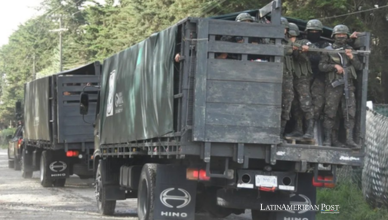
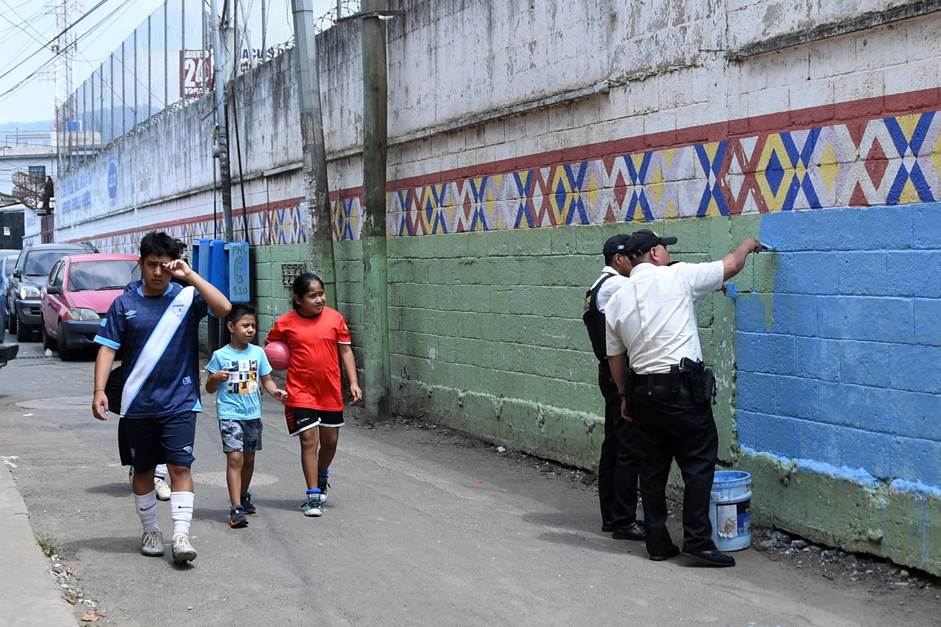
President Bernardo Arévalo’s government has declared states of siege and prevention this year in red zones, allowing combined deployments of police and the Guatemalan army. Custodio Boteo said this strengthened operational capacity and made it possible to board public transportation daily, thereby protecting passengers.
That has symbolic force in Guatemala. Public buses have been among the cruelest stages of gang extortion, places where working people pay twice, once for fare and once through the hidden cost of fear. When police and soldiers board a bus, the state is saying it has returned to a space it had too often arrived late to.
But Latin America knows the danger of leaning too heavily on militarized solutions. Armies can recover ground, yet they cannot by themselves produce legitimacy. Emergency measures may reduce pressure in a neighborhood, but if courts fail, if prosecutors are overwhelmed, if prison systems transmit orders instead of cutting them off, the cycle renews itself.
Guatemala’s strategy also depends on isolating gang leaders through a new maximum-security prison opened last year, according to the police chief’s account to EFE. The logic is clear: stop the phone calls that order crimes from behind bars. Across the region, prisons have too often become headquarters rather than places of punishment. Any credible security policy must face that scandal directly.
Authorities are also trying to choke the illegal economy by seizing weapons. Custodio Boteo said firearms confiscations have increased by more than 32 percent so far in 2026 compared with the previous period. That figure matters, but it also raises a harder question. More seizures may show stronger police work, or they may reveal a larger flow of guns into gang hands. Probably both.
The police chief’s deepest frustration, however, is judicial. He told EFE that officers risk their lives capturing criminals who harm Guatemalans, only to see repeat offenders released within 72 hours because of weak laws, substitute measures, or plea mechanisms. “It is regrettable that sometimes, after 72 hours, this criminal is again free in the streets,” he said.
For Guatemala, and for Latin America, that is the cruel hinge. Security forces can arrest. Communities can cooperate. Schools can resist. But if justice cannot hold the line, gangs learn the state is loud, not strong.
The maras’ move into trafficking is a warning beyond Guatemala. It shows how local gangs can evolve when extortion profits meet drug markets, technology, and institutional weakness. It also shows why Latin America cannot police its way out of a crisis built from exclusion, corruption, geography, and demand. The street corner and the cocaine route are now speaking the same language. Guatemala is listening because it has to.
Also Read: Guatemala’s Pacific Graves Show Climate Crisis Eating Latin America’s Shoreline