El Salvador Rewrites Its Rules as Bukele Locks in Power
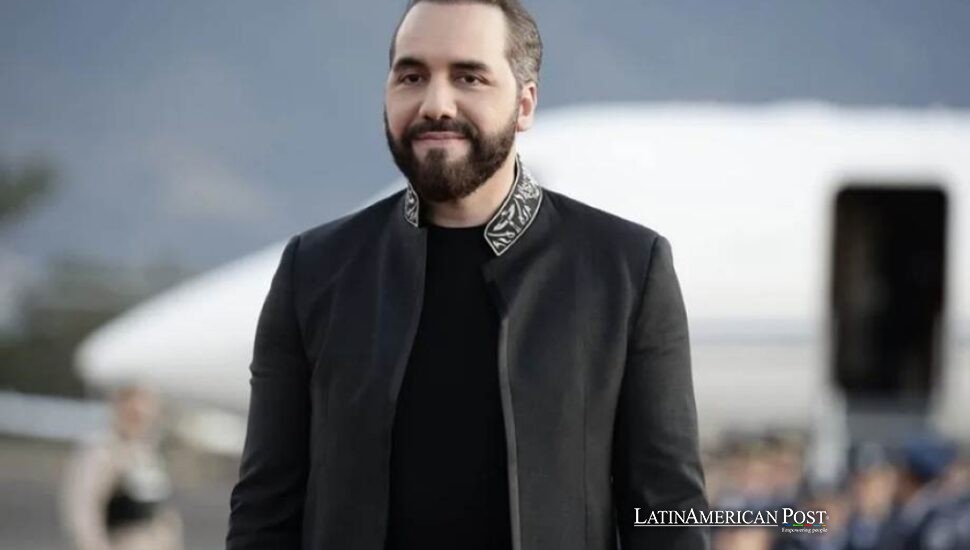
In El Salvador, constitutional reform has become political speed, as Nayib Bukele’s allies reshape elections, courts, punishment, and representation, raising a regional warning about democracy, popularity, security, and the quiet legal machinery that can make power permanent.
A Constitution Moving at Presidential Speed
In El Salvador, the old warning signs do not always arrive with tanks in the street. Sometimes they come as legal text, passed at night, ratified in hours, defended as efficiency, and wrapped in the language of popular will.
That is what critics now see in the string of constitutional reforms approved and ratified by Nuevas Ideas, the ruling party of President Nayib Bukele. Across two consecutive legislatures, the party has pushed through at least nine constitutional changes, touching some of the most sensitive nerves of democratic life: reelection, electoral rules, party financing, criminal punishment, representation abroad, and the structure of the electoral authority itself.
The government presents the changes as necessary for the country. Its opponents, legal analysts, rights groups, and international observers see something else: a Constitution being refitted around one leader and one political project.
An attorney and analyst consulted by EFE, who requested anonymity for security reasons, said the latest reforms repeat the same defects as the earlier ones: no real discussion, little clarity, little transparency, many unanswered doubts, and a shared purpose of concentrating power. Her conclusion was direct. El Salvador’s Constitution, she argued, is being molded to fit Bukele and his circle.
That sentence lands heavily in a country still shaped by the memory of civil war, postwar party fatigue, gang terror, migration, and failed institutions. Bukele did not rise from nowhere. He rose from a country exhausted by Arena and the FMLN, the two great parties of the postwar era. He won in 2019 because many Salvadorans wanted rupture. He promised order where people had known extortion, fear, corruption, and political boredom.
But rupture can become a habit. And when a leader with high popular support gains control over the legislature, the courts, the electoral machinery, and the security narrative, the boundary between reform and capture becomes dangerously thin.

From Popular Mandate to Legal Machinery
The numbers explain the architecture of power. Bukele first governed from mid-2019 to early 2021, during which time the Legislative Assembly was opposition-dominated. Then, in 2021, his popularity delivered Nuevas Ideas 56 of 84 seats, plus support from allied parties. That majority changed the country’s institutional rhythm. In 2023, the legislature reduced the number of congressional seats from 84 to 60 and changed the formula for assigning them. Critics warned at the time that the reform would help preserve the ruling party’s grip. In 2024, Nuevas Ideas won 54 of the 60 seats.
That is not merely a victory. It is near-total control over the lawmaking field.
The key move came in April 2024, when Nuevas Ideas and its allies approved a reform to Article 248, the article governing constitutional reform itself. Before that, constitutional amendments required two different legislatures, one to approve and another to ratify. The delay was not a bureaucratic nuisance. It was a democratic brake, a pause built into the system so no temporary majority could quickly rewrite the rules of national life.
In January 2025, under a second legislature controlled by Nuevas Ideas, the new procedure was ratified, allowing constitutional amendments to be completed in the same legislative period. From there, the speed increased.
On July 31, 2025, in just hours, Nuevas Ideas and its allies approved and ratified reforms to Articles 75, 80, 152, and 154. The changes enabled indefinite presidential reelection, eliminated the presidential runoff, unified elections, and extended the presidential term to six years. In February 2025, Article 210 was removed, eliminating public financing for political party campaigns, which further weakened an already battered opposition. By late March 2026, the Constitution was changed again to allow life imprisonment for homicide, rape, and membership in a terrorist organization, including for minors and adults.
Each reform can be defended separately, and that is part of the strategy. Diaspora representation sounds democratic. Tougher punishment sounds popular in a country traumatized by violence. Electoral streamlining sounds efficient. But taken together, the pattern is much clearer. The ruling party is not just governing within the Constitution. It is redesigning the Constitution while governing.
The reforms also sit atop an earlier institutional rupture. Bukele began his second consecutive mandate in June 2024 despite strong local and international objections that multiple constitutional articles prohibited it. His candidacy was approved by the Supreme Electoral Tribunal based on a ruling from a questioned Constitutional Chamber, whose members had been chosen after Nuevas Ideas removed the previous magistrates.
That history matters because democracy is not only about election day. It is who counts the votes, who interprets the Constitution, who finances campaigns, who can compete, who can appeal, and who has time to resist before the rules change again.

Latin America Watches a New Model Form
For Latin America, El Salvador is no longer only a security story. It is a political model under observation.
Bukele’s regional appeal rests on a brutal fact: many Latin Americans are tired of being told to respect institutions that never protected them. In neighborhoods crushed by gangs, extortion, corruption, and impunity, the promise of order can feel more real than abstract constitutionalism. That is why his image travels. It reaches countries where citizens look at homicide rates, broken courts, and frightened shopkeepers and wonder whether liberal democracy has become a luxury language.
But the Salvadoran case reveals the trap. Security legitimacy can become constitutional permission. A popular president can argue that the people want him, that opponents are corrupt, that rights groups are foreign scolds, that speed is necessary, and that checks and balances are obstacles planted by the old order. The danger is not that every reform is unpopular. The danger is that popularity becomes the solvent that dissolves limits.
In August 2025, Cristosal warned that the indefinite reelection reforms confirmed the regime’s intention to remain in power and pointed to a dark scenario in a country already immersed in a human rights crisis. That warning is not theoretical. It speaks to a broader Latin American pattern in which leaders from different ideologies have learned that institutions can be weakened legally, gradually, and with applause.
This is where El Salvador’s case becomes geopolitical. Washington, Latin American capitals, investors, and voters all read Bukele through competing lenses. Some see a security success story. Others see democratic backsliding. Many see both, and that ambiguity is exactly what makes the model exportable. It offers order first, constitutional questions later.
The result is a new regional temptation: democracy without alternation, elections without real uncertainty, courts without independence, punishment without proportionality, and opposition without oxygen. El Salvador’s Constitution is not being burned. It is being edited. And in Latin America, where history has often taught people to fear uniforms, the more modern danger may be quieter: a pen, a supermajority, and a leader popular enough to make permanence look like the people’s will.
Also Read: Colombia’s Displaced Millions Expose Latin America’s New Map of Uprooting