Mexico City Club Charges Americans More as Nomad Backlash Burns

A Roma Norte nightclub’s viral pricing policy has turned Mexico City nightlife into a mirror of resentment, where U.S. wealth, digital nomads, Trump-era insults, rising rents, and Latin American dignity collide at the door after dark.
A Cover Charge With Teeth
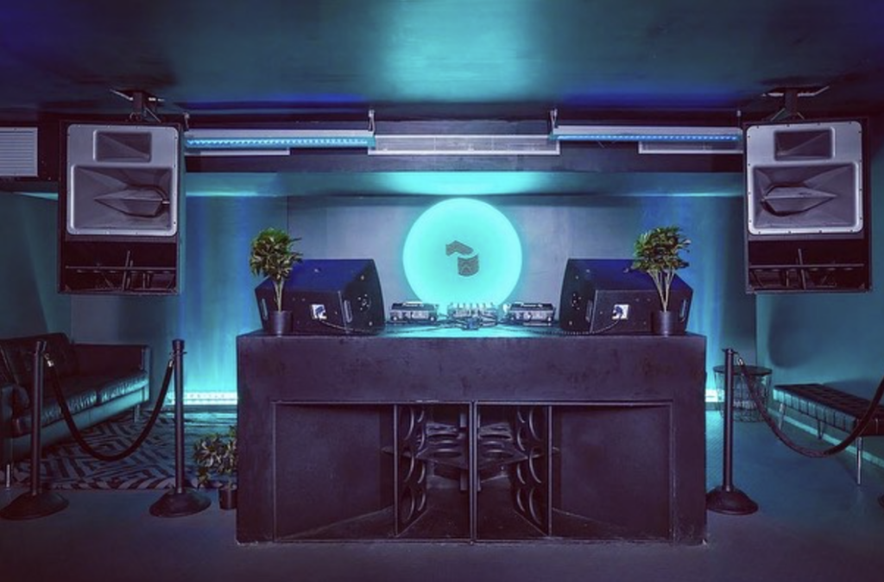
The door of a nightclub is usually where the city sorts itself quietly. Who gets in? Who waits. Who pays. Who belongs. But at Japan, a nightclub in Mexico City’s Roma Norte neighborhood, the cover charge has become something sharper than a nightlife rule. It has become a small public trial of power.
The venue has implemented a pricing policy that charges U.S. citizens 5,000 pesos to enter, while offering steep discounts to others. According to a viral Instagram announcement cited in the notes, citizens from other foreign countries pay roughly $20. Latin Americans and Mexicans pay about $14. Students and teachers can enter for 150 pesos.
The post, which has drawn more than 26,000 likes, framed the system not as punishment, but as access. “It’s not that ‘we charge gringos more’, it’s that we offer discounts to people who need it,” representatives of the club said.
That explanation is doing a lot of work. On paper, it is a tiered discount system. In public conversation, it reads like a political statement written in pesos. Americans pay full price. Others receive mercy. In a city where money has begun to change the language of neighborhoods, even a nightclub line can start to feel like a border checkpoint.
Club owner Federico Crespo made the political meaning explicit. He said the pricing model reflects strained relations between Mexico and the United States. He called it a response to insults directed at Mexico by U.S. leadership. “This is a response to a year of insults directed at us, as a country, by the United States,” Crespo said. He also linked the move directly to Donald Trump’s attacks against Mexico.
This is where the story stops being only about a club. In Latin America, resentment toward the United States rarely stems from a single policy, a single president, or a single bad headline. It accumulates. It lives in memory. It lives in visa lines, border language, military history, trade imbalances, immigration raids, deportation threats, campaign speeches, and the tired feeling of being spoken about as a problem.
Japan’s door policy turns that long resentment into something immediate. Not a manifesto. Not a march. A price.

The Digital Nomad Becomes a Symbol
The American digital nomad did not create Latin America’s housing crisis. That would be too simple and too convenient. Mexico City’s affordability crisis has many fathers: local speculation, weak housing policy, short-term rental platforms, uneven wages, real estate hunger, class inequality, and the old Latin American habit of letting certain neighborhoods be remade for people with stronger currencies.
But the digital nomad has become the visible face of the wound.
Roma and Condesa were already fashionable, already contested, already layered with memory, class, and displacement. Then came the pandemic-era flood of remote workers, many earning U.S. salaries while spending in pesos. For some locals, their arrival felt, at first, like curiosity, then pressure, then an invasion by spreadsheet. Rents rose. Short-term rentals spread. English appeared more often in cafes, menus, gyms, and streets where Spanish had once carried the rhythm of ordinary neighborhood life.
To some Americans, Mexico City became a lifestyle hack: cheaper rent, better food, beautiful streets, cultural depth, same Zoom job. To many residents, it looked different. It looked like landlords were discovering foreign wallets. It looked like neighbors were leaving. It looked like a city praised by outsiders at the very moment locals could no longer afford the version being praised.
That is the emotional geography behind the nightclub policy. Crespo said the price hike responds not only to geopolitics, but also to rapid gentrification and “touristification.” He said the additional revenue from 5,000 peso cover charges goes to staff, arguing that workers are among those most affected by rising rents, soaring costs, and longer commutes.
“It’s a way to give that money to the people most affected by this issue,” he said, referring to the burden on workers who must travel farther as living costs rise.
There is something theatrical about that solution, and something revealing as well. A nightclub cannot fix housing. It cannot regulate Airbnb. It cannot rewrite the migration law or raise wages across a metropolis. But it can stage a reversal. For once, the person with the stronger passport and stronger currency is the one being charged for the imbalance.
That reversal is why the policy went viral.
A Region Tired of Being Cheap
What does this mean for Latin American sentiment toward Americans in general? It means the mood is shifting from hospitality without conditions to hospitality with memory.
Latin America has always absorbed outsiders, often with generosity far greater than it receives in return. U.S. citizens arrive in Mexico, Colombia, Costa Rica, Brazil, Argentina, or Guatemala expecting warmth, affordability, and cultural richness. Many come respectfully. Many learn the language, build friendships, pay fairly, contribute locally, and understand that they are guests. But the region is increasingly less willing to confuse foreign admiration with solidarity.
The digital nomad is now caught up in a larger debate over extraction. Not extraction in the old mining sense, though Latin America knows that story well. This is a softer extraction, cleaner looking, harder to prosecute. A neighborhood becomes content. A market becomes aesthetic. A local price becomes a bargain. A working city becomes a backdrop for foreign reinvention.
That is why the Mexico City nightclub story feels almost like a true crime scene without a corpse. The crime is diffuse. No single person holds the knife. But something is being taken: proximity, affordability, language, public space, neighborhood continuity, the right to remain.
For Americans, the lesson should not be defensiveness. It should be humility. Latin American frustration is not hatred of foreigners. It is fatigued with being treated as convenient. It is anger at hearing Mexico insulted in U.S. politics. At the same time, U.S. citizens enjoy Mexico’s cultural, labor, and cost advantages. It is the contradiction of a country demonized at the border and romanticized on Instagram.
For Mexico City, Japan’s policy is both provocation and symptom. It may be criticized as discriminatory. It may be defended as redistribution. It may attract exactly the kind of attention it claims to resist. But it has already exposed the nerve.
The region is asking a question that Americans abroad can no longer ignore: Are you arriving as neighbors, or as consumers of someone else’s crisis?
In Roma Norte, the answer now has a cover charge.
Also Read: Panama Profits as War Turns Ordinary Shipping Into Corporate Panic