Mexico World Cup Faces Women’s Safety Reckoning Beyond Stadium Lights
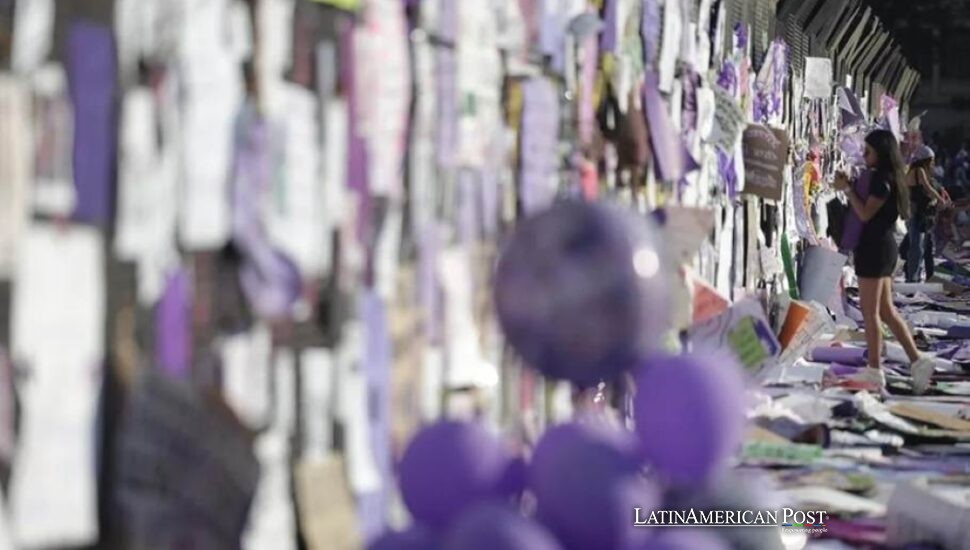
As fans pour into stadiums across North America, advocates warn the Mexico World Cup could intensify violence against women and girls, from homes and streets to hotels, rideshares, and tourist corridors where celebration too often hides danger in plain sight.
The Party Has a Shadow
The World Cup sells itself as color, song, and national joy. A jersey pulled over a work shirt. A family squeezed around a television. A city pretending, for ninety minutes, that rent, fear, and exhaustion can wait. In Mexico, where soccer is both ritual and argument, the tournament feels like a public inheritance.
But Wendy Figueroa, director of Mexico’s National Network of Shelters, is asking a harder question: who pays the emotional and physical cost when mass euphoria spills into the street, the bar, the bus, and the home?
In interviews reported by EFE’s Efeminista, Figueroa did not blame soccer itself. That distinction matters. “We are not saying football generates violence,” she said, according to EFE, because the violence already exists in public and private spaces. What changes during major sporting events is the intensity. The noise rises. Alcohol flows. Crowds thicken. Rivalries become permission slips. Inside homes, where so much harm stays hidden, a goal, a loss, or a bad call can become the spark for something that was already waiting.
That is the uncomfortable underside of the World Cup in the United States, Mexico, and Canada. The tournament brings tourism, money, prestige, and the soft-power theater every host nation craves. It also brings the possibility of increased harassment, sexual violence, domestic abuse, and trafficking for sexual exploitation. These are not side issues. They are part of the same social map that makes a mega-event profitable.
Mexico’s shelter network has already documented that during local championship matches, it receives between 15 percent and 20 percent more emergency calls. That figure is not abstract. It suggests women calling from bathrooms, bedrooms, sidewalks, and borrowed phones. It suggests children learning the sound of a father’s celebration turning into rage. It suggests that for some families, the final whistle is not the end of danger but the beginning of it.
Where Euphoria Turns into Control
Figueroa’s warning, as reported by EFE, lands with force because it understands how normalized violence hides behind performance. In many Latin American cultures, men are taught to experience soccer through the body: shouting, pounding walls, insulting rivals, ripping shirts, drinking hard, and treating emotional excess as proof of passion. That behavior is often dismissed as a harmless release. Sometimes it is. Sometimes it becomes control.
The problem is not passion. The problem is what some men believe passion allows.
EFE quotes Figueroa describing how male euphoria, anger, and rivalry are often naturalized through shouting, insults, breaking objects, and then directing those emotions against women, children, and girls nearby. That is a precise cultural diagnosis. Violence does not always announce itself as violence. It can arrive dressed as frustration, as fandom, as “that’s just how he gets during games.”
The data from abroad strengthens the point. A study from Brazil found that between 2015 and 2018, on days when local teams played, threats against women rose 23.7 percent and physical assaults rose 20.8 percent. A Lancaster University study in England, based on police reports from the 2002, 2006, and 2010 World Cups, found domestic violence risk increased 26 percent when England won or tied, and 38 percent when it lost.
Those numbers puncture a lazy myth. Violence does not only follow defeat. It can follow victory too. Winning can produce entitlement. Losing can produce humiliation. Both can be dangerous when masculinity has been trained to seek someone smaller to absorb the blow.
That is why Mexico’s National Network of Shelters is coordinating with counterpart organizations in the United States and Canada. The strategy is regional because the tournament is regional. The risks move with fans, workers, tourists, and victims. The RNR plans informational brigades in Mexico’s host locations: Mexico City, Nuevo León, and Jalisco. Those are not random dots on a FIFA map. They are also among the states with the highest reports of family violence in Mexico, according to data from the country’s public security system cited in the EFE notes.
The network is also preparing for cross-border returns. Figueroa told EFE that if a Mexican woman is stranded in the United States or Canada, the network will assume the cost of bringing her back safely. If a Canadian or U.S. woman is in Mexico and needs to return home, the network will help cover that transfer under its security protocol.
That is not public relations. It is infrastructure for the moment after the camera leaves.
Trafficking Follows the Money
The other risk is darker and harder to count: trafficking for sexual exploitation. Major events create crowds, demand, short-term lodging, informal hiring, and anonymity. In that fog, criminal networks look for openings.
Nayely Sánchez, head of programs at the United Nations Office on Drugs and Crime in Mexico, told EFE that job offers are often the main lure used by trafficking networks around mass events. The offer sounds like a rescue: airfare, lodging, a chance to earn. Then the person arrives and is sexually exploited. The World Cup, she warned, can become a breeding ground for this crime.
The phrase is chilling because it points to the economics beneath the spectacle. Every host city dreams of full hotels, packed restaurants, busy airports, and fans moving through nightlife districts with money to spend. Traffickers read the same conditions differently. They see mobility, desire, distraction, and gaps between police agencies.
Sánchez also warned, according to EFE, that networks may move victims among the three host countries during the tournament to avoid detection. That possibility should worry every authority involved. A North American World Cup is sold as a logistical triumph. For victims, the same cross-border scale can become another layer of disappearance.
UNODC has launched a campaign with Sin Trata, Uber, and Mexico City’s Citizen Council for Security and Justice to help World Cup attendees identify possible exploitation. It also has an agreement with Airbnb to warn hosts in strategic areas about guests who may be traffickers or people being exploited. These partnerships matter because violence during mega-events rarely stays inside stadium security perimeters. It moves through cars, rentals, hotels, bars, and streets where ordinary people may be the first to notice that something is wrong.
Still, Sánchez told EFE there is underreporting, meaning the true scale remains unknown. She recalled that trafficking was detected around the Paris Olympics, yet could not be properly quantified because cases were not fully reported. That is the old problem: what is not counted is easier to ignore.
So the Mexico World Cup faces a test larger than soccer operations. A successful tournament cannot be measured only by attendance, goals, tourism revenue, or television spectacle. It must also be measured by whether women and girls can move through the celebration without being treated as collateral damage.
Figueroa put it plainly to EFE: there can be no celebration if women, boys, and girls are at risk. That sentence should sit at the entrance of every fan zone. Not to ruin the party. To make the party worthy of the name.
Also Read: Mexico’s World Cup Axolotl Masks a Species Vanishing at Home