Colombia-Born Quiñones Turns Mexico’s World Cup Dream Into Living Proof
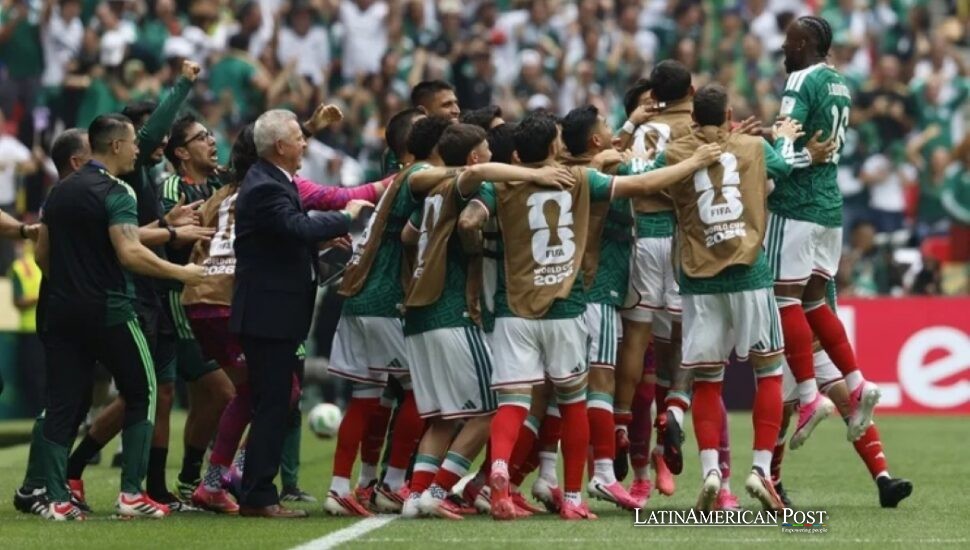
Julián Quiñones, born in Colombia and remade in Mexico, scored and assisted against Ecuador, pushing El Tri toward history while turning a social media declaration of nationality into one of this World Cup’s most human and complicated immigrant soccer stories.
One Word, One Country, One Gamble
The clip was not good theater. Julián Quiñones looked more like a striker waiting for a pass than a man built for scripted social media charm. He gave his biographical details, smiled through the bit, named chilaquiles as his favorite food, and then reached the line that mattered. Nationality? Mexican.
It sounded small then, almost ceremonial. A paperwork answer. A federation video answer. Something made for timelines and comment sections.
Now it reads differently.
On Tuesday night, after scoring once and assisting another in Mexico’s 2-0 win over Ecuador, Quiñones made that word feel less like branding and more like biography. He did not just wear Mexico’s green shirt. He carried it with the body language of a man who knows what it means to be invited in, doubted, tested, and finally sung back into belonging.
His third goal of the tournament pulled him level with Rafael Márquez and Cuauhtémoc Blanco on Mexico’s all-time World Cup scoring list. One more would tie him with Javier “Chicharito” Hernández and Luis “El Matador” Hernández. These names do not sit lightly in Mexican soccer memory. That is the statistical shock of his tournament. The human shock is stranger. A Black forward from Colombia, once pulled from a nonprofit academy in Cali, is now close to becoming the most productive Mexican World Cup scorer ever.
That sentence should stop people in their tracks for a moment. It contains migration, labor, race, fandom, and all the contradictions of Latin América.
From Cali Dust to Mexican Myth
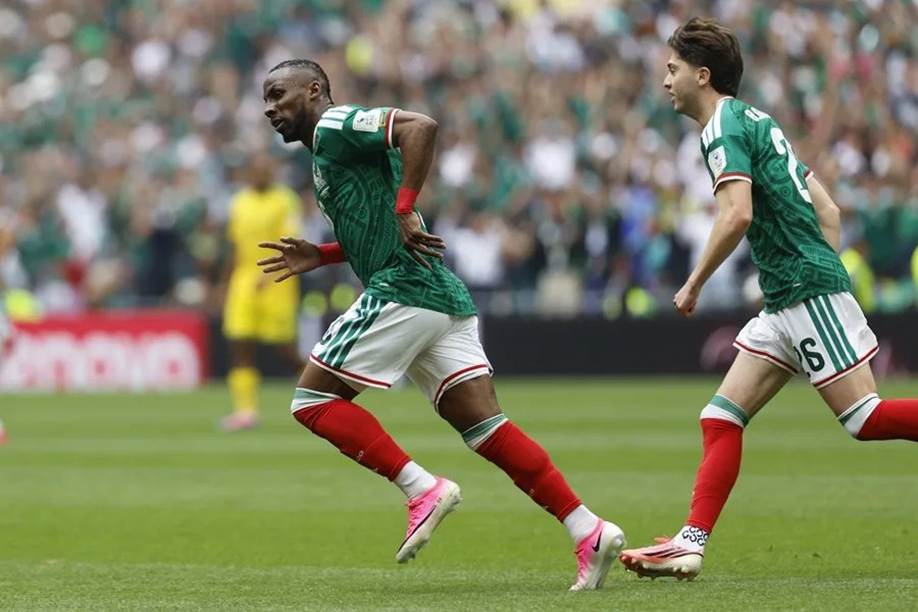
Quiñones’ story begins in Colombia, but not in the neat way countries prefer to tell sporting stories. He came through Futbol Paz, a nonprofit academy in Cali with a mission that joined sport, education, and social opportunity for children who needed more than a ball. Then Tigres saw him and brought him north as a teenager.
For many Mexicans, migration usually points the other way. It means the uncle in Houston, the cousin in Chicago, the neighbor in Los Angeles, the envelope of dollars, the sacrifice that becomes a family’s second language. Quiñones knows that story, but his route inverted it. Mexico was his “American dream,” the destination where work could become dignity, where talent could pay back a family’s faith.
After the Ecuador match, he spoke about that with unusual tenderness. People go to the United States looking for a better life, he said, and that sacrifice should be applauded. No one should feel less for wanting the best for their family.
That is not a slogan. It is a Latin American truth. The region has always been moved by people chasing breath: Colombians to Mexico, Mexicans to the United States, Venezuelans across the Andes, Central Americans through deserts and checkpoints. Soccer likes to package nationality as blood and anthem. Still, Latin América knows identity is often assembled on buses, in borrowed rooms, in training grounds, in remittance lines, in the kitchen where someone learns to love another country’s breakfast.
Quiñones chose Mexico after playing for Colombia at the U-20 level. He left the senior Colombia door closed because Mexico had opened something larger. He fell in love with the country and with Ana Gabriela, his Mexican wife. He believed he would be respected more in green than in Colombia’s yellow.
Respect, though, was never automatic. He earned it the hard Mexican way, through club trophies and noise. He won Liga MX titles with Tigres. He became a star in Atlas’ back-to-back title run, a miracle in a city that knows how long hunger can last. Then he went to Club América, the grande that turns every signing into a referendum, and won again, consecutively.
By the time he left for Saudi Arabia, the case should have been settled. It was not. Javier Aguirre joked at one point that nobody watches the Saudi league. Then Quiñones scored enough to force the conversation back open, beating Cristiano Ronaldo and Ivan Toney to the golden boot. Numbers have a way of embarrassing old assumptions.
Belonging Is Scored, Not Granted
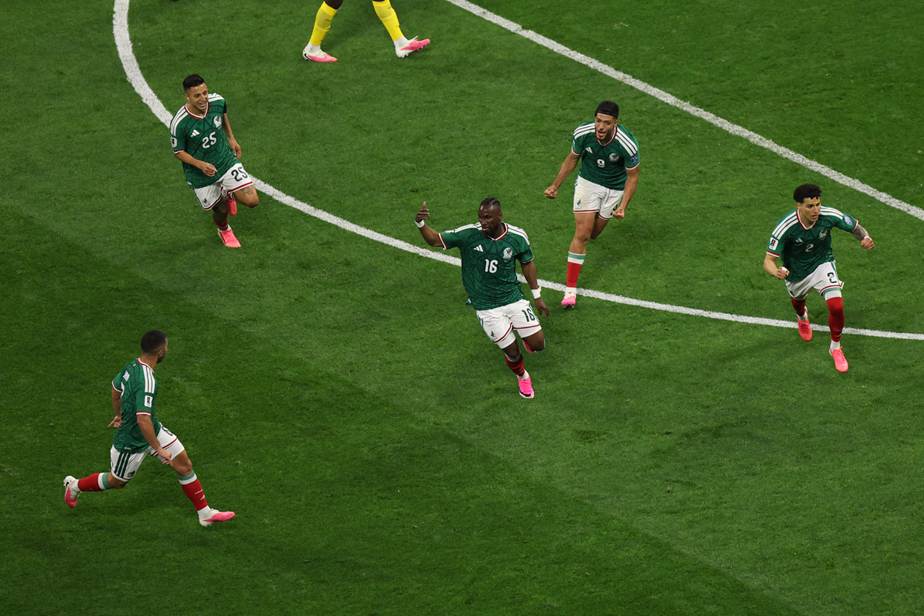
Against Ecuador, Quiñones looked like the attacker Mexico had spent years trying to invent. He surged forward with the ball as if contact only clarified his path. He combined neatly. He stretched the field from the wide areas, the position where he once built his name, rather than staying central as he had with Al-Qadsiah. Alongside Raúl Jiménez, he gave El Tri a vertical cruelty it has often lacked. Roberto “Piojo” Alvarado’s precise pass released him for the opener, but Quiñones still had to finish the sentence.
He did. Then he helped write the second, assisting Jiménez and sealing a start so sharp that Ecuador’s defense seemed stunned by the speed of Mexico’s passing.
The data matters because it exposes the size of the turn. Few expected Quiñones to become this central to Mexico’s World Cup. His early goal against South Africa bought him more minutes. Those minutes became proof. Three goals in the tournament, an assist in a knockout match, and Mexico’s first knockout round win in 40 years. Suddenly, fans were putting his face on a 500-peso bill and singing his name as if they had always known the chorus.
They had not.
Criticism of Quiñones has not always stayed within soccer’s ordinary cruelty. Mexican sports culture can be harsh on anyone, especially when club rivalries infect the national team, but his case carried extra poison. He is Black. He was born outside Mexico. For some, that made every missed touch a passport inspection.
Quiñones refuses to play that game. He said he is not shutting anybody up because he did not answer when criticized, and he has even less to say now. In happy moments, he said, he thinks only about enjoying them.
There is grace in that. Also discipline.
Mexico now waits at Estadio Azteca for the winner of England and DR Congo, with a quarterfinal place close enough to touch. Quiñones says the team’s strength is work, union, family. Familiar soccer words, yes, but in his mouth they feel earned. He rarely talks unless required, as he was named Man of the Match on Tuesday. His argument is made in sprints, pressure, tackles, angled runs, and that stubborn refusal to look surprised by his own rise.
The social media clip still exists, awkward and useful. Chilaquiles. Name. Nationality. Mexican.
At the time, it looked like an announcement. Now it feels like a warning to anyone who thinks identity is only inherited. Sometimes it is chosen, suffered for, defended, and recorded in the record books by a kid from Colombia who found in Mexico not just a jersey but a home.
Also Read: Tijuana Adopted Iran as World Cup Politics Crossed the Border