Mexico’s World Cup Axolotl Masks a Species Vanishing at Home
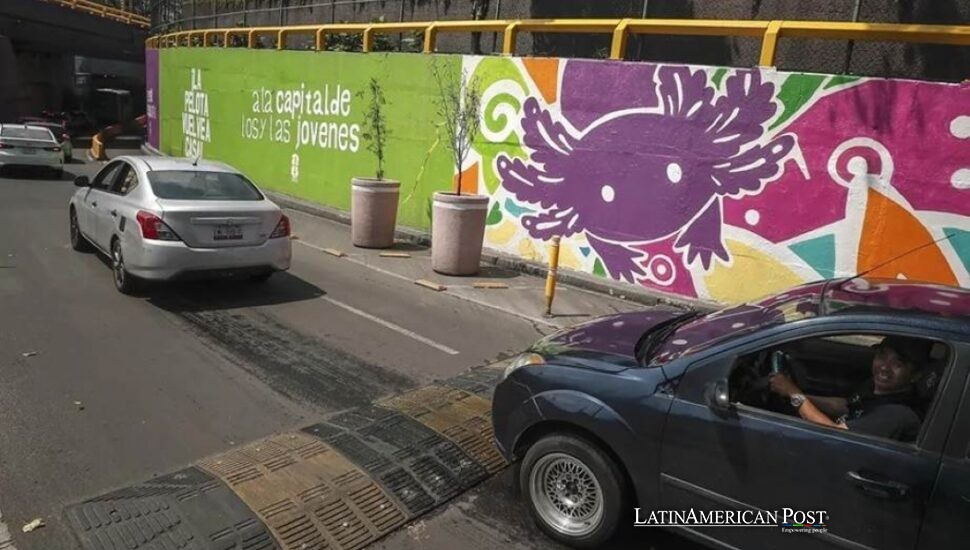
Across Mexico City, the axolotl smiles from murals, plush toys, and World Cup promotions. In Xochimilco, its last wild refuge, scientists are finding almost none. The capital’s beloved mascot has become a warning about conservation without habitat, money, or restraint.
A Celebrity Missing From Its Own Home
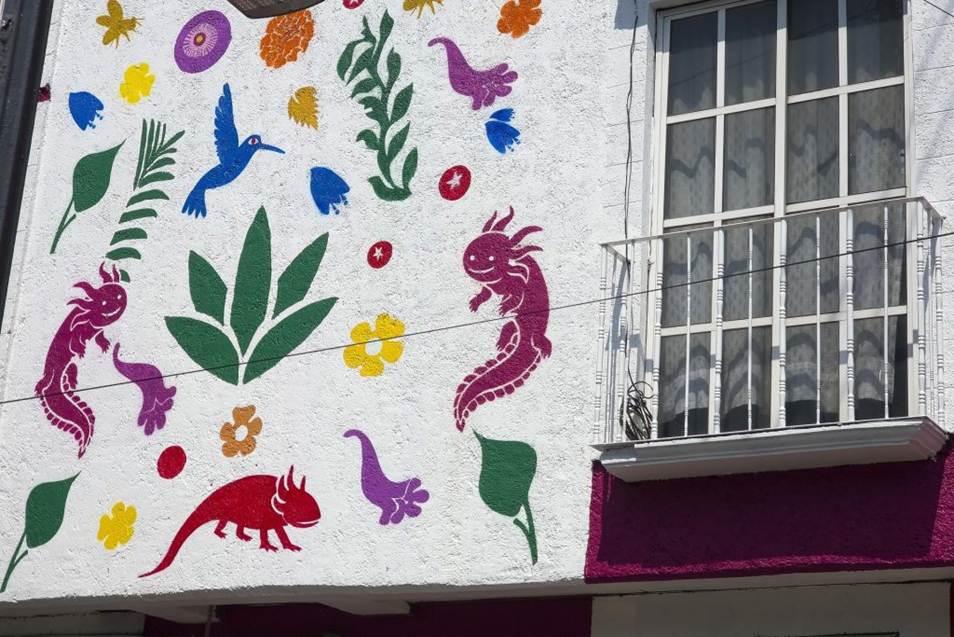
Mexico City has found an irresistible face for the 2026 World Cup. The axolotl appears on station walls, in public spaces, on keychains, and on stuffed toys. It is cute, ancient, and unmistakably local. It is also critically endangered, and the harder the capital sells its image, the stranger the silence around its disappearance becomes.
The animal, Ambystoma mexicanum, survives naturally only in the canals, lakes, and wetlands of Xochimilco, a protected landscape recognized by UNESCO and the Ramsar Convention. There, beneath tourist boats and beside surviving chinampas, the species is approaching a biological threshold that branding cannot soften.
UNAM surveys counted 6,000 axolotls per square kilometer in 1998. By 2014, the estimate had fallen to 36, a 99.4 percent collapse in 16 years. A decade later, a team led by UNAM biologist Luis Zambrano caught zero axolotls using traditional census methods. Environmental DNA still detected the species, proof that some remain, but not proof of a viable population. Presence is not recovery.
Michel Balam, an environmentalist with the Simac Civil Association’s Axolotl Sanctuary, told EFE Verde that official UNAM counts and local indicators suggest the axolotl could disappear from its natural habitat “in less than a year.” The timeline is a warning, not a stopwatch, but the direction is clear.
The axolotl’s biology makes the loss more improbable. Unlike most salamanders, it never fully leaves its juvenile aquatic form. It keeps its external gills and reaches reproductive maturity without completing metamorphosis, a condition called neoteny. It can regenerate limbs, eyes, and parts of the brain. Yet the animal famous for rebuilding itself cannot rebuild a poisoned wetland.

The Pink Mascot Problem
The contradiction extends to color. Wild axolotls are generally mottled brown, gray, or nearly black, camouflage suited to Xochimilco’s murky floor. The pink version favored by merchandise is usually leucistic or albino, a captive-bred form selected for appearance. Balam told EFE Verde that the campaign rewards a mutation associated with greater vulnerability. “The real axolotl is the black axolotl, not the pink axolotl,” he said.
That distinction is more than cosmetic. The market prefers an animal that photographs well and asks nothing of the city except affection. The wild axolotl asks for clean water, controlled development, healthy vegetation, fewer invasive fish, and limits on disturbance. One version fits on a backpack. The other requires government.
The species, linked in Mexica tradition to the god Xolotl, appears on Mexico’s 50-peso banknote and in pop culture. Captive populations thrive in laboratories, zoos, and homes. But many are genetically inbred, while the wild population shaped by Xochimilco is collapsing. Abundance in aquariums can mask in situ extinction.
The causes are concrete. Zambrano cited polluted water, habitat loss, and the introduction of carp and tilapia, which eat young axolotls and compete for food. Urbanization also reaches beyond informal settlements. Agricultural land has been converted for mass tourism, soccer fields, and floating parties. Together, those changes alter water quality, noise, land use, and the local economy that once helped maintain the canals.
This is why Zambrano rejects the city’s “axolotlization” of urban improvements as greenwashing. A more efficient metro or renovated park may be worthwhile, but attaching an axolotl to those projects does not restore Xochimilco. The species becomes a stamp of environmental virtue while its habitat remains outside the frame.
A World Cup With a Wetland Bill
The World Cup sharpens that imbalance. Xochimilco sits near Azteca Stadium, the tournament’s largest venue, making the wetland an obvious destination for visitors. Zambrano told EFE Verde that officials are treating it as a receiver of mass tourism, even though noise, pollution, and cultural distortion already harm the axolotl.
Mega-events in Latin America often concentrate spending where cameras will see it: transportation corridors, stadium approaches, and tourist districts. The costs arrive quietly. Water systems strain, and protected zones become entertainment infrastructure. In Xochimilco, the mascot helps sell the journey while the journey itself can intensify the danger.
Balam said people in the wetland are living the moment “with sadness.” He accused the government of spending millions of pesos remodeling tourist sites while failing to remove what is directly killing the species. He also pointed to inadequate funding, corruption, and weak enforcement inside an area protected on paper.
There is still a path, but it runs through habitat rather than publicity. In 2025, scientists released 18 captive-bred axolotls into artificial wetlands near Mexico City, a modest sign that managed refuges can help. Survival at scale, however, depends on restoring water quality, supporting traditional chinampa agriculture, controlling invasive fish, enforcing land-use rules, and regulating tourism.
Zambrano’s argument is political. Xochimilco is urban and rural, ecological and commercial, ancestral and modern. Farmers, residents, tour operators, developers, scientists, and public agencies all claim a stake. Saving the axolotl requires aligning those interests around a living wetland, not merely a marketable animal.
The axolotl will not play in the World Cup. But as Mexico City celebrates it on walls and souvenirs, the species is playing for something quieter and more final: the right to remain wild in the only home it has known.
Also Read: Honduras Sees Cedeño Disappear as Global Climate Injustice Comes Ashore