Uruguayan Legend Rubén Rada Made the Whole World Dance Candombe
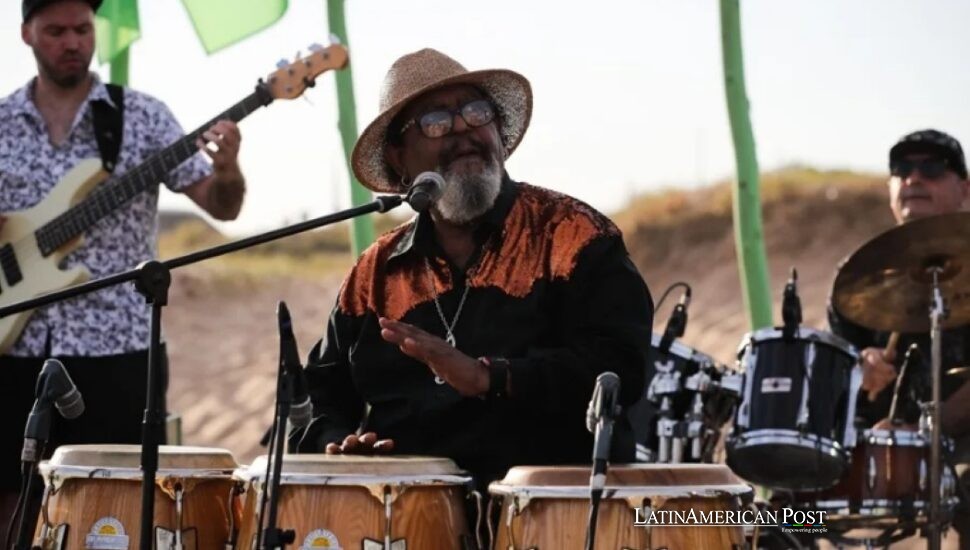
Rubén Rada, the singer and percussionist who carried Afro-Uruguayan candombe from Montevideo’s Barrio Sur into rock clubs, jazz sessions and international stages, died at 83, leaving Uruguay to mourn not merely an artist, but a living rhythm of national memory.
A Final Message From the Family
The family statement arrived with the precise hour grief sometimes demands: 3:30 p.m. on Wednesday. After a month fighting pneumonia and its complications, Rada was gone. His relatives called him their “beloved husband, father and grandfather,” then thanked the medical team that had done everything possible. EFE carried those words across a continent familiar with his laughter, gravelly tenderness and restless percussion.
He was 83, but the news felt abrupt. Rada never seemed old in the ordinary way. Even seated, he projected movement. A phrase became a joke, a joke turned into melody, and melody summoned drums. His warmth sometimes disguised the seriousness of his achievement: he changed what Uruguayan popular music believed it could contain.
Weeks before his death, on July 16, he opened another door. ¿Quién va a cantar?, an audiovisual series built around musical exchanges, began with La Vela Puerca interpreting his work while Rada and his band entered theirs. It was a fitting final project. He did not arrange younger musicians beneath him as disciples. He met them inside the song.
The title now lands differently. Who will sing? Plenty will. The harder question is who can reproduce Rada’s peculiar human weather, that mixture of mischief, dignity, melancholy and swing that made virtuosity feel like neighborhood conversation.

The Beat That Changed Uruguay
Omar Ruben Rada Silva was born in 1943 in Barrio Sur, one of Montevideo’s historic candombe centers. By 10, he was singing in the Comparsa Morenada. He did not discover Afro-Uruguayan rhythm as an adult seeking roots or novelty. He entered music through a living community practice, carried through families, streets, and drum calls.
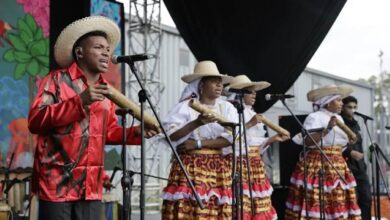
UNESCO describes candombe as both an expression of resistance and a collective social practice transmitted in communities of African descent. Its drums do more than mark tempo. They speak across generations and neighborhoods. In a nation often narrated through European immigration and River Plate modernity, candombe insists on another Uruguay, Black, Atlantic, working-class and foundational.
Rada’s revolution was not to abandon that inheritance for modern music. It was to deny that modernity belonged elsewhere. With Eduardo Mateo and El Kinto in the 1960s, he helped create candombe beat, placing Afro-Uruguayan percussion inside rock’s electricity and the urgency of Spanish-language song. At a time when Latin American rock often looked north for permission, El Kinto sounded as though Montevideo itself had plugged into an amplifier.
Then came Tótem in the early 1970s, with a heavier fusion of candombe and rock, and later Opa, the jazz-fusion group led by Hugo and Osvaldo Fattoruso in the United States. Rada contributed to Magic Time in 1977 and played among musicians including Ray Barretto, Hermeto Pascoal and Flora Purim. These encounters placed Uruguay within a wider Afro-American map linking the Río de la Plata, Brazil, the Caribbean, and jazz.
His career kept moving because Latin American careers often had to. Buenos Aires offered a larger market in the 1980s. Mexico became home from 1991 to 1994, when he composed and arranged for performers including Tania Libertad and Eugenia León. The United States supplied studios and international networks. Yet migration did not dilute Montevideo in his work. Distance turned the city into sound.
The albums Montevideo and Montevideo II made that process explicit. Recorded with international musicians, they reached Japan, France, Italy, Sweden, Germany, and the United States. Montevideo went platinum at home. His music crossed borders not by disguising its origin, but by making local detail portable.
A Country Inside His Voice
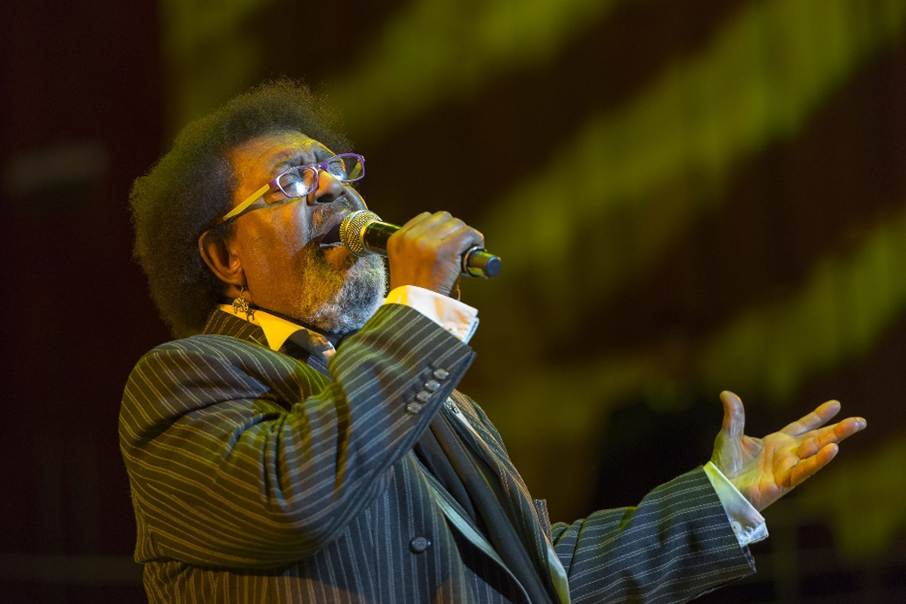
More than 30 albums followed, along with songs that entered Uruguay’s shared vocabulary: “Mi País,” “Las Manzanas” and “Muriendo de Plena.” The Latin Recording Academy gave him its Lifetime Achievement Award in 2011. Berklee later honored his commitment to Afro-Latin music and his role in advancing Uruguayan culture.
Awards explain stature, but not affection. Rada could be experimental without becoming remote, national without sounding official, and comic without reducing himself to comic relief. He worked in radio and television, acted, voiced Frozone in the Argentine dub of The Incredibles, and moved easily between children’s entertainment and difficult musical architecture. That range was part of his democratic instinct.
For Afro-Uruguayans, his prominence carried another weight. Rada stood at the center of national culture while sounding unmistakably Black in a society that has often celebrated candombe more comfortably than it has confronted racial inequality. His success did not solve that contradiction. But he made erasure harder. Every international stage where those drums sounded challenged the idea that Uruguay’s Black history belonged only to Carnival or the past.
His influence traveled by unexpected routes. Milton Nascimento, Herb Alpert and Lani Hall recorded his songs. Decades later, “El Ómnibus” surfaced in a sample used by Freddie Gibbs and The Alchemist. A durable catalog waits in records, then finds another century’s ears.
Rada, la película gathered his life into an intimate documentary portrait, but his finest autobiography had already been dispersed across recordings. There was Barrio Sur in the tamboril, migration in the arrangements, racial history in the pulse, and a performer’s stubborn delight in refusing solemnity as the only language of importance.
Now Uruguay must perform the strange work that follows the death of a national artist. Public grief will produce tributes, archival footage and familiar choruses. Yet Rada’s legacy deserves more than ceremonial nostalgia. It asks whether the country will honor the communities that created candombe, teach the history beneath the rhythm and give new artists room to be locally rooted and globally unruly.
The drums will continue. They were never his alone, and he knew it. But for six decades, Rubén Rada made them travel with his grin, his rasp, his timing and his generous insistence that tradition was not a museum room. It was alive, argumentative and ready to dance. Uruguay has lost one of its great translators. The language remains.
Also Read: Mexico’s Blue Demon Jr. Trades Wrestling Glory for Healing Hands